

I’ve spent the better part of my life in San Antonio attics, and if there is one thing I’ve learned, it’s that Texas heat is a predator. It doesn’t just make you uncomfortable; it hunts for the weakest link in your mechanical systems and exploits it until you’re sitting in a 90-degree living room at midnight.

As a contractor, I see it every day. A homeowner hears a faint rattling or notices the house is taking an extra hour to cool down, but they push it to the back of their mind. "I'll deal with it next payday," they say. But in South Texas, your air conditioner isn't just an appliance—it’s a high-performance machine running a marathon in a sauna. Ignoring those early warning signs is the fastest way to turn a minor adjustment into a total system replacement.
The San Antonio Humidity Trap
Most folks think the heat is the main enemy. It’s not. It’s the moisture. Our humidity levels in San Antonio can be brutal, and your AC unit is the only thing standing between you and a moldy, swampy home. When your system is working correctly, it’s pulling gallons of water out of the air. But when the evaporator coils get dirty or the refrigerant levels dip, that moisture starts to freeze.
Once that ice builds up, the airflow stops, and your compressor—the most expensive part of the machine—starts to overheat. If you’re lucky, the thermal overload switch kicks in. If you’re unlucky, the motor burns out. This is why localized AC Repair San Antonio is so vital. We aren't just looking at the temperature; we’re looking at the dew point and how your system is handling the massive condensate load that our climate demands.
Common Signs Your System is Gasping for Air
You don’t need to be an HVAC expert to know when something is wrong. You just need to pay attention to the "personality" of your unit.
- The Never-Ending Cycle: If your AC runs for 45 minutes, shuts off for two, and kicks back on, it’s "short-cycling." This is usually caused by an oversized unit or a failing sensor, and it will absolutely murder your electric bill.
- The Warm Breeze: If the air coming out of the vents feels like a weak fan rather than a crisp blast, you’ve likely got a capacitor issue or a refrigerant leak.
- The Biological Smell: That "dirty sock" smell isn't just annoying; it’s a sign of bacterial growth on your coils.
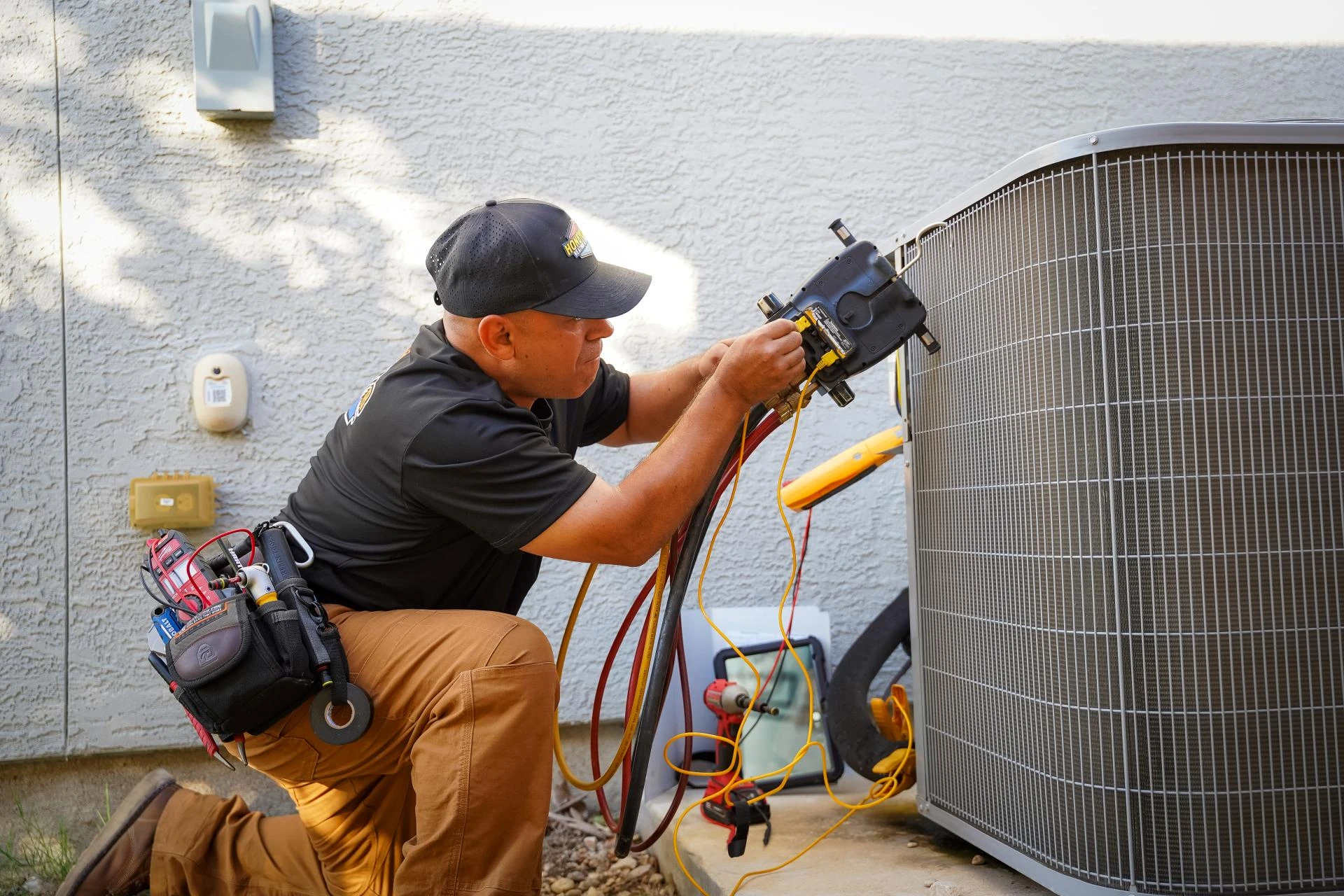
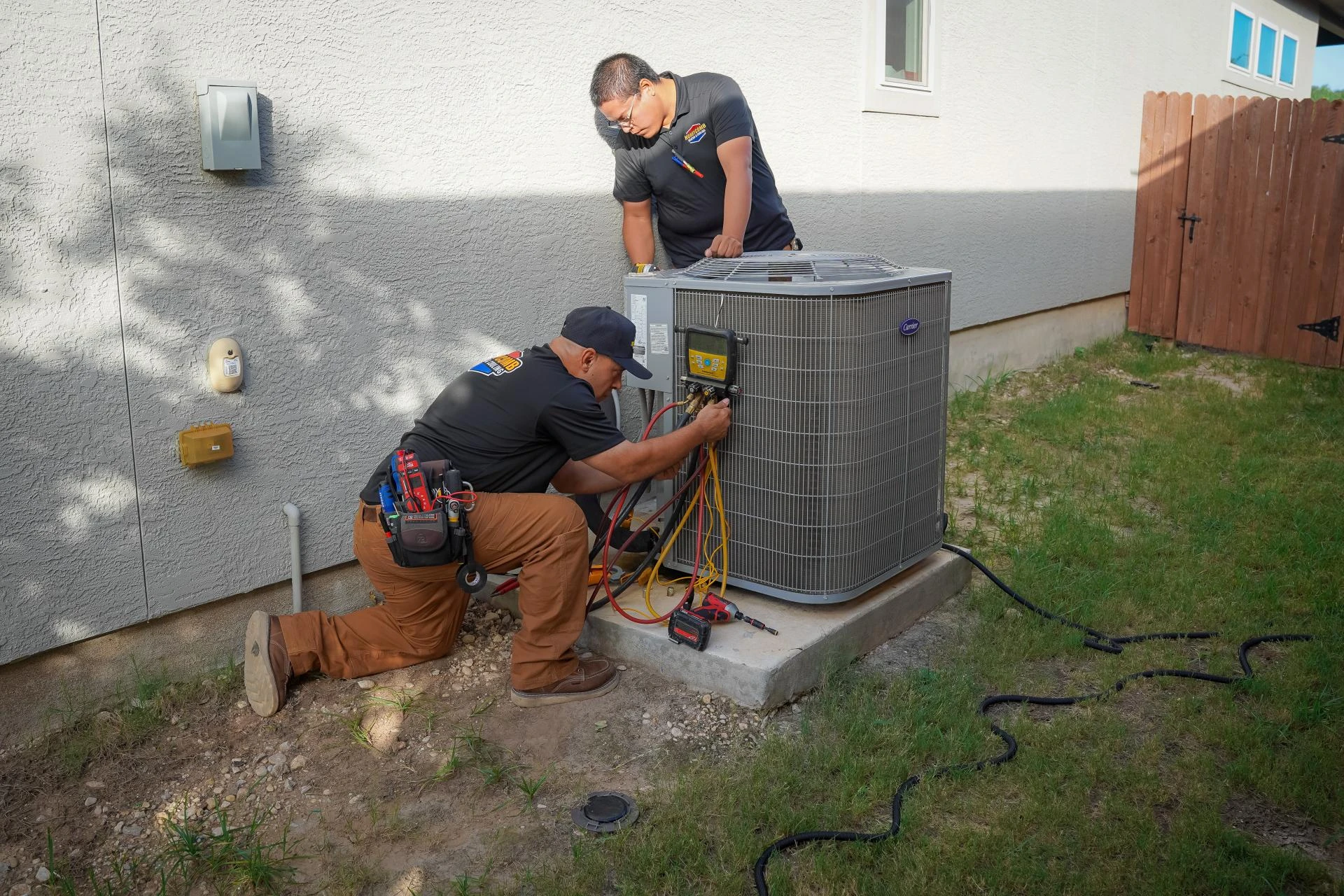
When these issues pop up, you need a pro to perform an AC Repair that actually addresses the root cause, not just the symptoms. I’ve seen too many "techs" just swap a fuse and leave, only for the fuse to blow again the next day because they didn't find the short circuit.
Why "DIY" Refrigerant is a Nightmare
I’ve walked into garages and seen those cans of refrigerant from the hardware store. Let me be blunt: don’t do it. Modern AC systems are precision-tuned. Adding the wrong amount—even by a few ounces—can change the pressures enough to liquid-slug the compressor. If that happens, the unit is junk.
Beyond that, if your system is low, it’s because there is a hole in the copper. Refrigerant isn't "fuel" that gets used up. It’s a chemical that stays in a closed loop forever unless there’s a break. A real contractor uses electronic leak detectors and ultrasonic tools to find that pinhole, weld it shut, and vacuum the system down to remove moisture. That is the only way to ensure your house stays cold when the Texas sun is relentless.
The Hidden Danger of the "Secondary" Drain
In many San Antonio homes, the AC unit is in the attic. This means if the primary drain line clogs with algae, that water has to go somewhere. Most units have an emergency pan underneath them. If you ever see water dripping from a small PVC pipe sticking out of your soffit or over a window, that is a 911 call for your HVAC.
That "secondary" drain is your last line of defense before water starts rotting your ceiling joists and ruining your drywall. It’s a simple fix if caught early, but it’s a disaster if ignored. We make it a point to flush those lines and treat them with anti-algae tablets because we know how fast the Texas heat turns stagnant water into a sludge-filled mess.
Don't Gamble with Your Comfort
At the end of the day, your home is your sanctuary. In San Antonio, that sanctuary depends entirely on a box of fans and coils sitting in the sun. Don't let a "budget" repairman take shortcuts with your family's comfort. Look for someone who stands by their work, explains the "why" behind the failure, and respects the fact that you’re working hard for every dollar.






























Sign in to leave a comment.