

The Scandinavian Defense, beginning with the moves 1.e4 d5, represents one of the oldest and most direct responses to White's king pawn opening. This chess opening has earned a peculiar reputation within the chess community—celebrated by club players for its straightforwardness yet viewed with skepticism by many elite competitors. For beginners, it offers an appealing entry point into counterattacking chess, requiring minimal theoretical knowledge while delivering immediate strategic clarity. However, its relative absence from the highest echelons of competitive play raises important questions about its true competitive value. This article examines whether grandmasters genuinely embrace the Scandinavian Defense, explores its practical applications across different skill levels, and reveals why this opening remains relevant for players seeking effective beginner chess strategies in their journey toward chess mastery.
What is the Scandinavian Defense?
The Scandinavian Defense launches with the provocative first move 1.e4 d5, immediately striking at White's central pawn before any other piece has moved. This represents a fundamentally different philosophy from most Black openings—rather than allowing White to establish a pawn center and then undermining it gradually, Black challenges the e4 pawn instantly, forcing an immediate tactical confrontation.
After White captures with 2.exd5, Black faces a critical decision that defines the character of the entire game:
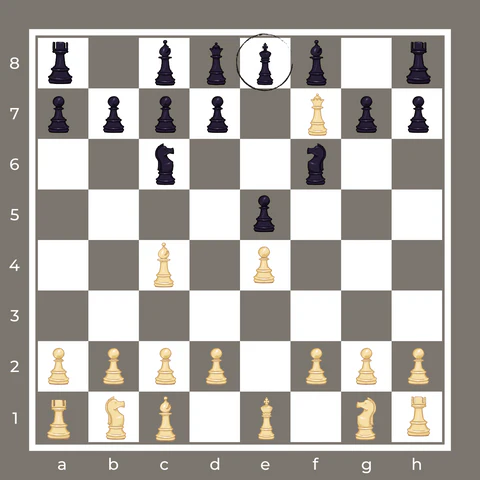
- 2...Qxd5 (Classical Main Line): Black recaptures with the queen, leading to rapid development after 3.Nc3 Qa5. This approach prioritizes quick piece mobilization and accepts that the queen will move multiple times in the opening.
- 2...Nf6 (Modern Variation): Black develops the knight first and recaptures the pawn later, maintaining more flexibility and avoiding early queen exposure. This typically continues with 3.d4 Nxd5 or 3.c4, leading to different pawn structures.
What makes this chess opening particularly attractive for those studying beginner chess strategies is its conceptual transparency. You're not drowning in twenty moves of forcing variations or subtle move-order nuances. Instead, you're learning essential principles: how to generate piece activity when slightly behind in space, when to accept structural concessions for dynamic compensation, and how to coordinate your pieces toward concrete objectives. The Scandinavian teaches you to play chess, not just memorize sequences, making it an ideal educational tool that grows with your understanding.
Historical Background and Popularity
The Scandinavian Defense carries one of the longest pedigrees in chess opening theory, with recorded games stretching back to the 15th-century Göttingen manuscript. Despite this ancient lineage, the opening has experienced cycles of popularity rather than sustained mainstream acceptance.
Key Historical Milestones:
- Romantic Era Popularity: During the 19th century, when tactical brilliance outweighed positional considerations, the Scandinavian enjoyed periodic favor among attacking players
- Modern Revival: The late 20th and early 21st centuries saw renewed interest as strong players developed deeper understanding of its strategic nuances
- Contemporary Status: Today it exists as a respected if secondary option in elite chess, appearing regularly at club level but sparingly in super-tournaments
Notable Grandmaster Advocates:
- Matthias Wahls (Germany): Transformed the Scandinavian from a curiosity into a respectable competitive weapon through deep analysis, extensive practical play, and authoritative written work
- Sergey Tiviakov (Netherlands/Russia): Perhaps the opening's most successful modern practitioner, wielding it throughout his career with impressive results against world-class opposition
- Nigel Short (England): Former World Championship challenger who has occasionally deployed the Scandinavian in critical games, demonstrating its viability even at the elite level
- Other Contributors: Players like Bent Larsen, Curt Hansen, and numerous strong grandmasters have contributed games and ideas to the opening's development
Why It Remains Less Popular at Elite Levels:
- Significantly underrepresented compared to mainstream defenses like the Sicilian Defense, Ruy López, or Queen's Gambit Declined
- This disparity reflects not inherent weakness but rather conservative preferences in grandmaster strategie
- Elite players typically favor openings that contest rather than concede central space from the opening moves
- The positional concession of allowing White's central pawn duo makes it less attractive for players seeking maximum theoretical advantage
The Scandinavian's historical journey reveals an opening that has proven its practical worth across centuries while never quite achieving mainstream status at the highest competitive levels.
Scandinavian Defense in Grandmaster Play
When examining grandmaster-level competition, the Scandinavian Defense occupies a fascinating niche—present enough to prove its viability, yet rare enough to retain surprise value. Statistical analysis of elite tournament databases reveals that the Scandinavian appears in approximately 2-4% of games at the grandmaster level, a fraction compared to mainstream defenses. This rarity, however, masks its strategic sophistication when wielded by specialists.
Advantages for Grandmasters:
- Surprise and Preparation: Opponents expecting Sicilian, French, or Caro-Kann variations suddenly face unfamiliar territory, potentially equalizing the preparation gap against theoretically superior opponents
- Reduced Memorization Burden: The opening requires understanding over rote memorization, freeing mental energy for middlegame planning
- Psychological Disruption: Breaking opponents' rhythm by avoiding their prepared lines can create practical difficulties even when objectively slightly worse
- Quick Development: Black achieves rapid piece mobilization, creating practical chances in faster time controls
Disadvantages at Elite Levels:
- Spatial Disadvantage: White typically establishes pawns on d4 and e4, controlling key central squares and restricting Black's piece placement
- Early Queen Development: The main line exposes Black's queen to harassment, costing valuable tempos
- Limited Winning Ambitions: Against accurate play, Black often finds themselves defending slightly worse positions rather than playing for advantage
- Theoretical Improvements: Computer analysis has refined White's responses, giving well-prepared opponents comfortable positions with minimal risk
Contemporary grandmaster strategies involving the Scandinavian tend toward selective deployment—a surprise weapon for must-win situations, rapid tournaments, or against specific opponents whose preparation can be circumvented. Players like Tiviakov demonstrate that profound understanding can overcome the opening's theoretical drawbacks, but even specialists acknowledge they're fighting uphill against optimal defense. The opening's grandmaster-level validity thus depends less on objective evaluation than on practical factors: preparation, surprise value, and psychological warfare.
Benefits for Beginner and Intermediate Players
For players still developing their chess foundation, the Scandinavian Defense offers educational dividends that transcend its objective evaluation. Unlike theoretical labyrinths such as the Najdorf Sicilian or Marshall Attack, which demand extensive memorization before achieving playability, the Scandinavian welcomes newcomers with open arms, requiring only understanding of its core strategic themes.
The opening provides exceptional training in several fundamental areas. First, it crystallizes the concept of center control—you experience firsthand what it means to concede the center and must learn active methods to challenge White's spatial advantage. Second, it emphasizes piece development urgency since Black cannot afford wasted moves when already behind in space. Third, it teaches pattern recognition around specific pawn structures, particularly the isolated queen pawn positions that sometimes arise, helping players understand when to exchange pieces and when to maintain tension.
Practical advantages for developing players include:
- Minimal opening theory required to start playing competitively
- Clear strategic objectives that guide middlegame planning
- Regular practice against unprepared opponents at club level
- Excellent vehicle for studying counterattacking chess principles
- Transferable skills applicable to other openings and positions
For those eager to play chess online now, the Scandinavian offers immediate applicability. You can learn the basic setup in fifteen minutes and begin playing rated games, accumulating practical experience while your theoretical knowledge grows. Platforms like Chess.com and Lichess provide extensive databases of Scandinavian games, allowing you to observe typical plans, common mistakes, and successful strategies. As you progress, the opening's flexibility permits gradual deepening—you can start with simple, solid setups and progressively incorporate more aggressive or sophisticated variations. This scalability makes the Scandinavian an ideal companion for your improvement journey, serving both as a practical weapon and an educational framework for beginner chess strategies that build genuine chess understanding rather than superficial pattern memorization.
Common Mistakes to Avoid
Even an accessible opening like the Scandinavian contains pitfalls that derail inexperienced players. The most prevalent error involves excessive queen movement in the opening phase—after retreating to a5 or d8, beginners often move the queen again to "better" squares, squandering critical development time. Remember: each unnecessary queen move represents a knight or bishop that remains undeveloped, leaving your position vulnerable to White's initiative. Develop all your pieces first, castle your king to safety, and only then consider repositioning your queen if strategically justified.
Another common blunder involves neglecting kingside development while focusing exclusively on queenside activity. Many Scandinavian players become so absorbed in maneuvering their queen and queenside pieces that they forget their king remains in the center, vulnerable to tactics. Prioritize getting your king to safety through efficient development—typically Nf6, Be7 or Bd6, and castling kingside—before launching any aggressive operations.
Additionally, beginners frequently exchange pieces without strategic justification, believing that trades automatically benefit the side with less space. While exchanges can indeed alleviate cramping, indiscriminate trading can also eliminate your active pieces while leaving your opponent's strong pieces on the board. Evaluate each potential exchange: Does it solve a specific problem? Does it improve your pawn structure? Does it transition toward a favorable endgame? Whether playing over the board or deciding to play chess online now, disciplined piece management separates successful Scandinavian practitioners from those who struggle with the opening's inherent positional concessions.
How to Practice and Learn the Scandinavian Defense
Developing genuine proficiency in the Scandinavian Defense requires structured practice beyond simply playing games. Begin your study with high-quality instructional resources—Matthias Wahls's "The Scandinavian" and John Emms's "Play the Scandinavian" provide comprehensive coverage from beginner through advanced levels. Supplement book study with video content from platforms like YouTube, where titled players explain the opening's ideas in accessible formats.
Effective practice methods include:
- Opening Explorer Study: Use Chess.com or Lichess opening explorers to examine the most popular continuations, studying grandmaster games in each variation
- Tactical Training: Solve puzzles specifically from Scandinavian positions to recognize tactical patterns unique to this opening
- Positional Drills: Set up critical middlegame positions and practice finding the best plans without moving pieces immediately
- Game Review: After each game with the Scandinavian, spend 10-15 minutes identifying where you deviated from principles or missed opportunities
When ready to play chess online now, adopt a deliberate practice mindset. Rather than blitzing through dozens of rapid games, play slightly longer time controls that permit genuine thinking. After each session, review at least one game thoroughly, preferably with engine assistance to identify tactical oversights and strategic misconceptions. Keep a simple notebook documenting recurring mistakes or particularly instructive positions—this personalized database becomes invaluable for tracking improvement. Over time, this systematic approach transforms the Scandinavian from a memorized sequence into an intuitive strategic framework you can apply confidently across all your games.
Conclusion
The Scandinavian Defense occupies a distinctive position in chess opening theory—simultaneously accessible to beginners and sophisticated enough to appear occasionally in grandmaster competition. While elite players employ it selectively due to its inherent positional concessions, the opening delivers exceptional value for developing players seeking practical results combined with genuine chess education. Its straightforward strategic themes, minimal theoretical demands, and surprise value at club levels make it an attractive addition to any improving player's repertoire. Whether you're just beginning to explore beginner chess strategies or seeking a reliable secondary weapon against 1.e4, the Scandinavian Defense merits serious consideration. Experiment with it when you play chess online now, study its characteristic middlegame positions, and you may discover that this ancient opening still offers fresh ideas and competitive opportunities in modern chess. The question isn't whether grandmasters play it—they do, when circumstances favor it—but whether you'll add this versatile chess opening to your arsenal and unlock the strategic understanding it offers.



























Sign in to leave a comment.