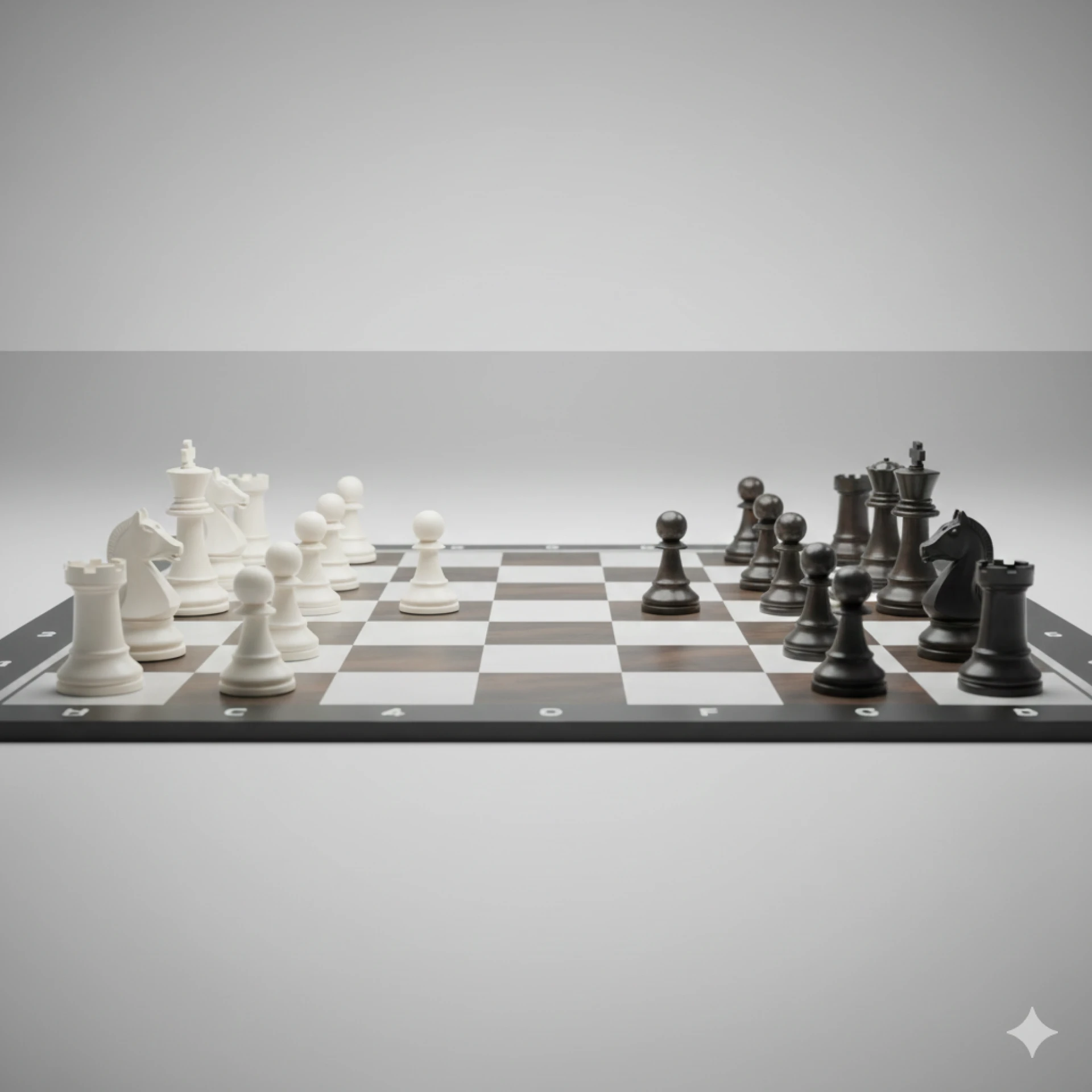

The Modern Defense presents a unique challenge for White players. Unlike classical openings where Black immediately contests the center, the Modern allows White to establish a pawn center freely—then strikes back with undermining moves. Many players mistakenly believe this gives White an easy advantage, but experienced Modern Defense practitioners know how to turn White's center into a target. White should aim to maintain central control, develop harmoniously, and convert spatial advantage into lasting pressure without overextending or creating weaknesses.
Core Ideas Behind the Modern Defense

The Modern Defense embodies hypermodern chess principles: instead of occupying the center with pawns, Black controls it from a distance with pieces. This chess opening strategy seems passive but contains hidden venom.
Black's typical plan involves:
- Fianchettoing the kingside bishop to g7, creating a powerful diagonal aimed at White's center
- Delaying central pawn advances (...d6, ...e6) to maintain flexibility
- Waiting for White to commit before choosing counterplay with ...c5 or ...e5
The g7 bishop becomes Black's most important piece, exerting pressure on the long diagonal and supporting various pawn breaks. White must respect this piece throughout the game, as ignoring it leads to tactical disasters and positional concessions.
Building a Strong but Flexible Center
White's central control is both an advantage and a responsibility. The ideal pawn structure typically involves pawns on d4 and e4, creating maximum space and restricting Black's pieces.
However, flexibility matters more than rigidity. White should:
- Support central pawns with pieces, not just more pawns
- Maintain the tension rather than releasing it prematurely
- Be prepared to adjust the structure based on Black's chosen setup
The biggest danger is overextending. Pushing pawns forward without adequate support creates targets. A pawn on e5 without proper backing becomes weak rather than strong. White must balance ambition with caution, expanding only when pieces are coordinated and king safety is secured.
Development Comes First

Before launching any attacks or pushing aggressively, White must complete piece development and ensure king safety. The Modern Defense punishes premature aggression more than most openings.
Best piece placements for White:
- Knights on c3 and f3, controlling key central squares
- Bishops developed actively (e3, g5, or fianchettoed depending on system)
- Queen positioned flexibly (d2 or e2 typically)
- Rooks connected and ready to support pawn breaks
Early castling is essential. Many games are lost when White delays castling to pursue attacking chances, only to face a devastating counter-strike down the center. The Modern Defense may look passive, but Black's counterplay arrives quickly once White's king remains in the center.
Why premature attacks fail: Without complete development, White's pieces lack coordination. Black can defend accurately, then counter-attack while White's pieces are poorly placed. Patience in the opening leads to power in the middlegame.
Reliable Setups for White
Classical Setup (Nc3, Be3, Qd2)
This solid approach emphasizes control without risk. White develops naturally, prepares castling queenside or kingside depending on circumstances, and maintains central stability. The bishop on e3 supports the center while the queen on d2 connects rooks and prepares potential pawn breaks.
Pros: Flexible, safe, suitable for positional players
Cons: Less forcing, allows Black multiple setups
Austrian-Style Aggressive Setup
This system features an early f2-f4, supporting the e4 pawn and preparing a potential kingside pawn storm. White aims for direct attacking play, often sacrificing long-term structure for immediate threats.
Pros: Creates immediate pressure, tests Black's defensive resources
Cons: Committal, can backfire if Black defends accurately
Fianchetto Setup
White develops the kingside bishop to g2, creating a mirror image of Black's setup. This strategic approach leads to slower, more maneuvering games where both sides develop fully before the main battle begins.
Pros: Solid structure, good long-term prospects
Cons: Allows Black comfortable development, less forcing
Each system has merit. The key is choosing one that fits your style and studying it deeply. Play chess online using your chosen system repeatedly to understand its nuances.
Handling Black's Counterplay
Black's main counterplay comes through two pawn breaks: ...c5 and ...e5. Understanding how to respond determines whether White maintains advantage or faces equality.
Responding to ...c5:
When Black plays this queenside expansion, White must decide whether to maintain tension with d4-d5 or exchange with dxc5. Generally, maintaining tension keeps more pieces on the board and preserves White's spatial edge. However, if Black's pieces are poorly placed, capturing on c5 followed by exploiting the resulting weaknesses works well.
Managing ...e5:
This central challenge directly confronts White's center. White typically responds with d4-d5, gaining space and restricting Black's dark-squared bishop. Alternatively, dxe5 opens the position, which favors White only if development is superior.
Controlling key central squares like d5 and e5 prevents Black from achieving comfortable piece placement. A knight on d5 or e5 becomes a powerful asset, cramping Black's position and supporting further advances.
Timing Central Pawn Breaks
Knowing when to push d5 or e5 separates strong players from weak ones. These pawn advances gain space but also commit White to a specific structure.
Push d4-d5 when:
- Black plays ...c5 and you want to close the center
- Your pieces control the squares around d5
- You have a space advantage and want to restrict Black further
Push e4-e5 when:
- Black's knight is on f6 and you can gain time attacking it
- You've castled kingside and want to start a pawn storm
- Black's king safety is compromised
Maintaining tension often proves stronger than releasing it. When central pawns haven't exchanged, Black must constantly worry about multiple possibilities. This psychological pressure creates mistakes and limits Black's options. Only release tension when you've calculated a concrete advantage from the resulting position.
The effect on piece activity is critical. After d4-d5, White's light-squared bishop often becomes restricted. After e4-e5, White's pieces may become more active but pawn weaknesses can appear. Consider these trade-offs carefully.
Common Mistakes White Must Avoid
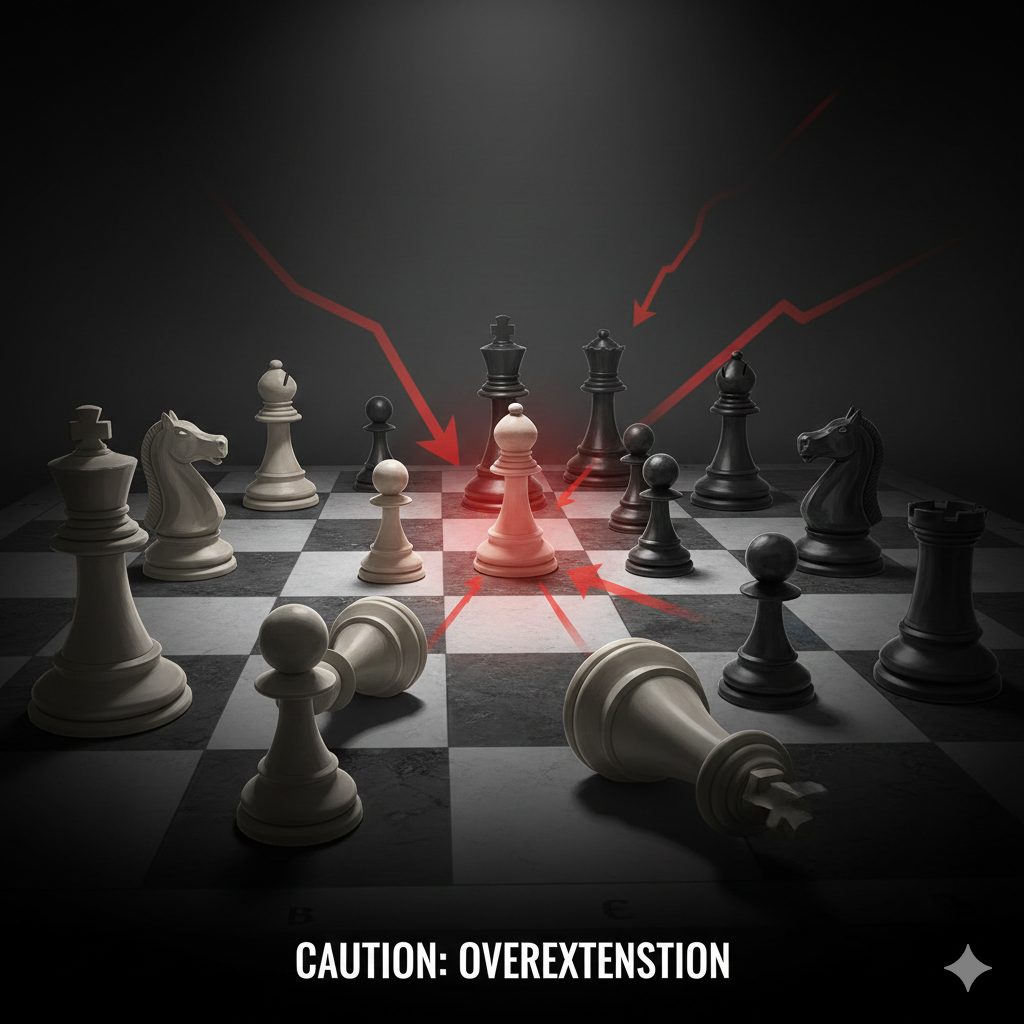
Attacking too early is the most frequent error. White sees Black's seemingly passive setup and launches an immediate assault. But without full development and king safety, such attacks usually fail. Black defends accurately, then counter-punches while White's pieces are out of position.
Ignoring Black's main ideas leads to strategic disasters. If you don't prepare for ...c5 or ...e5, these moves arrive with devastating effect. Always keep Black's counterplay options in mind when choosing your moves.
Weakening key squares around your king or in the center creates long-term problems. Moves like f2-f3 (without concrete justification) or h2-h3 (when unnecessary) give Black targets to attack. Similarly, allowing Black's pieces to occupy strong central outposts undermines White's spatial advantage.
King safety negligence is particularly dangerous against the Modern Defense. The g7 bishop can quickly participate in attacks if White's king remains exposed. Castle early and keep defensive pieces nearby.
Studying Model Games
Model games are essential for understanding any opening deeply. Rather than memorizing moves, study how strong players convert advantages in typical positions.
What to focus on when studying:
- How did White develop in the opening?
- When did White push central pawns forward?
- How did White handle Black's counterplay?
- What was the key moment that decided the game?
Typical winning plans for White include:
- Converting space advantage into a kingside attack
- Exploiting weak squares in Black's position (especially d5 or e6)
- Transitioning to favorable endgames where White's central pawns become decisive
- Using superior piece activity to win material or create unstoppable threats
Watch how grandmasters balance aggression with patience. They develop fully, maintain flexibility, then strike when Black's position shows concrete weaknesses. This methodical approach wins far more games than premature violence.
Practical Tips for Club Players
Choose one system and master it. Whether you prefer the classical setup, Austrian Attack, or fianchetto approach, deep understanding of one system beats superficial knowledge of many. Study typical positions, memorize key ideas (not just moves), and play it consistently.
Play for long-term pressure rather than immediate tactics. The Modern Defense often requires positional play over 30-40 moves. White gradually improves piece placement, restricts Black's counterplay, and converts spatial advantage into concrete gains. This demands patience and strategic understanding.
Turning space advantage into wins requires technique:
- Improve your worst-placed piece
- Restrict Black's piece activity
- Create multiple threats across the board
- Don't rush—maintain pressure and wait for mistakes
Chess improvement in this opening comes from playing many games and analyzing them afterward. When you play chess online, focus on one system against the Modern Defense. After each game, ask: "Did I develop efficiently? Did I overextend? How did I handle Black's counterplay?" This reflective practice accelerates learning.
Understanding chess tactics matters too, but strategy dominates in Modern Defense positions. Focus on positional concepts: space, piece activity, pawn structure, and king safety. Master these principles and tactical opportunities will arise naturally.
Conclusion
Playing against the Modern Defense successfully requires understanding rather than memorization. White should build a solid center, develop harmoniously, maintain flexibility, and convert spatial advantage into lasting pressure. Avoid premature attacks, respect Black's counterplay, and choose one reliable system to master. By following these principles and studying model games, you'll handle the Modern Defense with confidence and consistently achieve advantageous positions. Remember: patience and strategy defeat passive-looking but venomous defenses.



























Sign in to leave a comment.