
France is easy to cross and surprisingly hard to rush.
The rail network makes it tempting to treat the country like a checklist—Paris to Lyon, Lyon to the coast, coast back to Paris. Fast. Efficient. Forgettable.
The scenic train journeys are different. They slow things down without feeling inefficient. They let the landscape do some of the work for you. And they remind you that France isn’t just cities stitched together by high-speed lines.
If you’ve already figured out the basics—or you’re traveling with a bit more time—these routes show a side of the country most people miss while staring at arrival boards.
Paris to Clermont-Ferrand: The Quiet Shift
Leaving Paris toward Clermont-Ferrand doesn’t feel dramatic at first.
Suburbs. Flat farmland. Nothing special.
Then the land changes. Gradually. Hills roll in. Old volcanic shapes appear. Villages space out. By the time you arrive in the Auvergne, France feels older and more rural.
Most people fly or skip this region entirely. That’s the mistake. This route is about noticing transition, not spectacle. Sit on the left side if you can.
Nice to Tende: Where the Coast Disappears
The train from Nice to Tende is one of the most surprising journeys in the country.
You start with palm trees and the Mediterranean. Less than two hours later, you’re climbing into alpine valleys, crossing high viaducts, and slipping through tunnels carved into rock.
I remember looking up from my book halfway through and realizing the sea was long gone. No announcement. No moment. Just a quiet shift.
Most people miss this because they assume inland routes are dull. This one isn’t.
Strasbourg to Colmar: Small Distance, Big Payoff
On paper, Strasbourg to Colmar looks too short to matter.
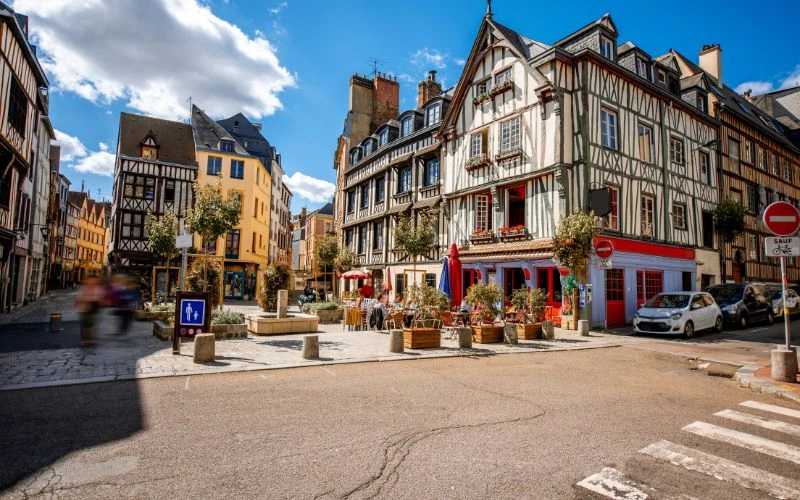
In reality, it’s a gentle introduction to Alsace. Vineyards appear. Half-timbered houses line the route. Church spires pop up between fields.
It’s not dramatic. That’s the point.
Take a regional train, not the fastest option. You’ll see more, even if it costs you an extra ten minutes.
Lyon to Avignon: Rivers, Vineyards, and Time
The stretch from Lyon to Avignon follows the Rhône River, and it shows.
Water, vineyards, industrial edges, then sudden bursts of color in the south. You feel the temperature change. You feel the light soften.
This is where trips often go wrong. People book the fastest TGV and miss everything. Slower trains run too. Choose them if you can.
I once did this route on a regional service with locals commuting, windows cracked open in summer. Completely different experience.
Bayonne to Saint-Jean-Pied-de-Port: Into the Basque Interior
From Bayonne to Saint-Jean-Pied-de-Port, the train snakes gently into the Pyrenees foothills.
Green hills. Sheep. Rivers that look too clear to be real.
This is not a fast route. That’s why it works.
Most passengers aren’t tourists. They’re going home. Watching that rhythm tells you more about the region than any guidebook paragraph.
Paris to Granville: Normandy Without the Rush
Heading west from Paris reminds you how quickly landscapes change in France.
The line to Granville passes through Normandy’s farmland before ending near the coast, with sea air and gulls waiting.
Most people race toward Mont-Saint-Michel and skip everything else. Granville itself is calm, working, and quietly coastal.
The journey feels like an exhale after Paris.
Corsica’s Coastal Line: Short but Memorable
On Corsica, trains don’t pretend to be fast.
The coastal sections between towns like Ajaccio and Bastia hug mountains, cut through valleys, and reveal views you don’t get from the road.
Seats aren’t fancy. Schedules aren’t tight. But the scenery does most of the work.
This is a place where you adjust expectations—and enjoy it more because of that.
Why Scenic Trains Change How You Travel France
Scenic routes force you to slow down. They make distances feel real.
This is also where carefully planned itineraries—sometimes bundled into broader options like France travel packages from UAE—can quietly help, especially if you’re combining multiple regions without wanting to micromanage tickets and transfers.
The key is choosing when speed matters and when it doesn’t.
Final Thoughts
France’s scenic train journeys aren’t about ticking off famous routes. They’re about noticing the in-between.
Choose at least one slower line. Sit by the window. Let the country unfold without narration.
If you do that, France feels less like a destination and more like a place you’ve actually moved through.
FAQs
1. Are scenic train routes slower than high-speed trains?
Yes, usually—but the experience is richer.
2. Do I need to reserve seats in advance?
For regional trains, often no. For longer routes, it helps.
3. Which side of the train is best?
It depends on the route, but window seats matter more than sides.
4. Is train travel in France expensive?
Regional trains are affordable. TGV prices vary by timing.
5. Can I combine scenic trains with city travel easily?
Yes. France’s network is well connected.
6. Are scenic routes suitable for first-time visitors?
Absolutely, especially if you’re not in a rush.























Sign in to leave a comment.