
Choosing the right seal material is critical in industrial applications. Whether it's oil resistance, temperature tolerance, or environmental durability, selecting between NBR, EPDM, and Silicone can directly impact equipment lifespan, safety, and maintenance costs.
This guide provides an overview to help engineers, procurement teams, and industrial buyers understand the key differences, applications, and selection criteria.
What Are Industrial Seal Materials?
Industrial seals are essential components used to prevent leakage, maintain pressure, and protect machinery. Materials like NBR (Nitrile Rubber), EPDM, and Silicone are widely used due to their unique chemical resistance, flexibility, and durability.
Choosing the wrong material can lead to premature failure, downtime, and increased operational costs.
NBR vs EPDM vs Silicone: Quick Comparison
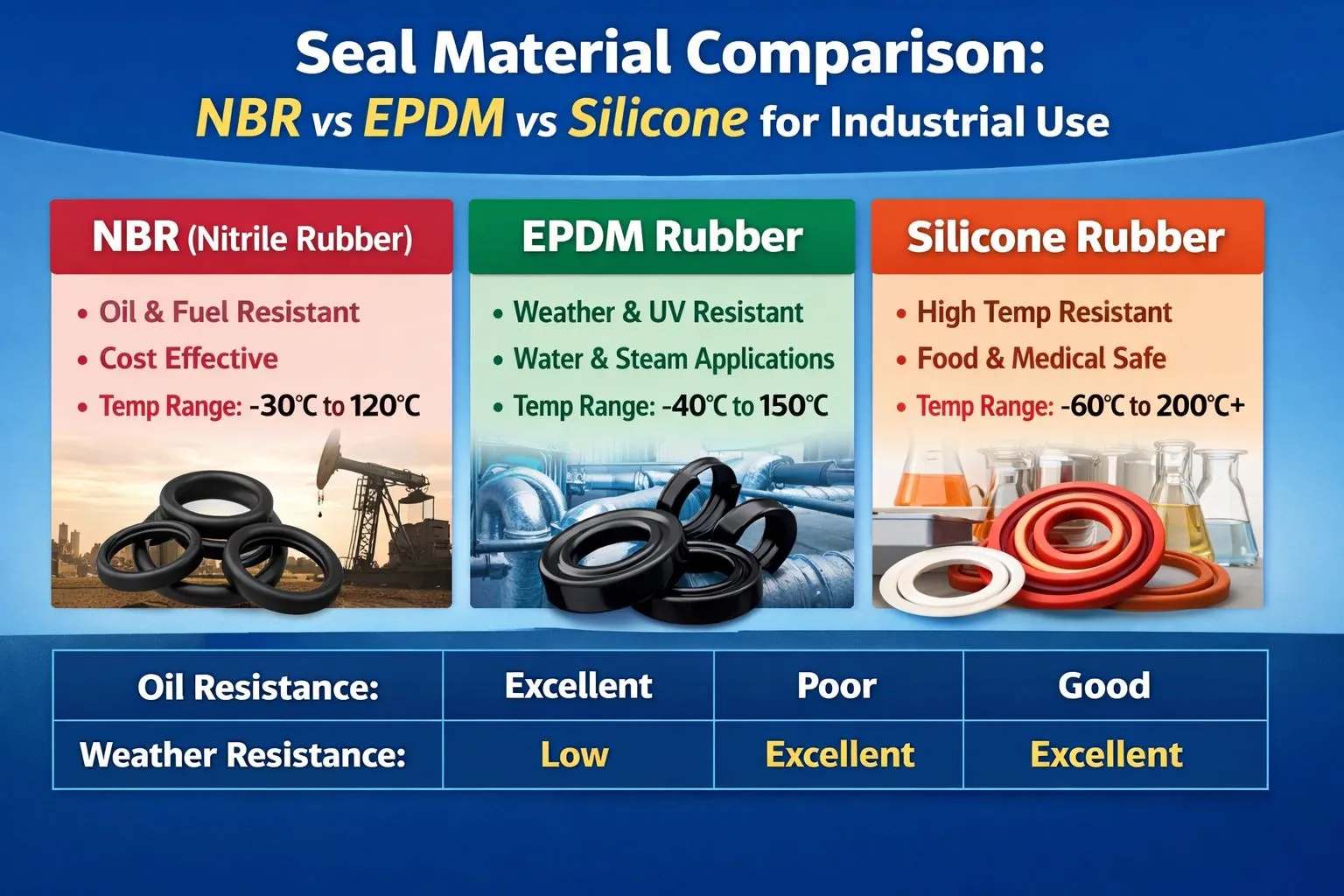
| Property | Nitrile Rubber | EPDM Rubber | Silicone Rubber |
| Temperature Range | -30°C to 120°C | -40°C to 150°C | -60°C to 200°C+ |
| Oil Resistance | ⭐ Excellent | ❌ Poor | ❌ Poor |
| Weather/UV Resistance | ❌ Low | ⭐ Excellent | ⭐ Excellent |
| Chemical Resistance | Moderate | High (water, acids) | High (inert) |
| Mechanical Strength | High | High | Moderate |
| Flexibility | Moderate | Good | ⭐ Excellent |
| Cost | Low | Medium | High |
NBR (Nitrile Rubber): Best for Oil & Fuel Applications
Key Features of NBR
- Excellent oil and fuel resistance
- Good abrasion resistance
- Cost-effective and widely available
NBR is the most commonly used seal material in industries dealing with petroleum-based fluids. It performs well in hydraulic systems, automotive seals, and fuel handling equipment.
Limitations
- Poor resistance to UV, ozone, and weathering
- Limited performance in high-temperature environments
Best Applications
- Hydraulic seals
- Oil seals
- Fuel system components
EPDM Rubber: Ideal for Outdoor & Water-Based Systems
Key Features of EPDM
- Outstanding weather, UV, and ozone resistance
- Excellent for water, steam, and outdoor environments
- Long lifespan even under harsh conditions
EPDM is widely used in HVAC systems, construction, and water treatment applications due to its durability and environmental resistance.
Limitations
- Not suitable for oil, fuel, or hydrocarbon exposure
- Moderate high-temperature tolerance
Best Applications
- Outdoor sealing systems
- Water pipelines and HVAC seals
- Roofing and automotive weather seals
Silicone Rubber: Best for Extreme Temperatures & Hygiene
Key Features of Silicone
- Wide temperature range (-60°C to 200°C+)
- Excellent flexibility and compression set resistance
- Safe for food-grade and medical applications
Silicone is preferred in industries requiring high purity and thermal stability, such as pharmaceutical, food processing, and electronics.
Limitations
- Lower mechanical strength and tear resistance
- Expensive compared to NBR and EPDM
Best Applications
- Food-grade gaskets
- Medical seals
- High-temperature environments (ovens, autoclaves)
How to Choose the Right Seal Material
Selecting the right material depends on operating conditions and environment:
1. For Oil & Fuel Exposure → Choose NBR
- Best for automotive and hydraulic systems
- Handles petroleum-based fluids efficiently
2. For Outdoor & Water Applications → Choose EPDM
- Ideal for UV exposure, weather, and steam systems
- Long-lasting in external environments
3. For Extreme Temperature & Clean Environments → Choose Silicone
- Suitable for high heat, cold, and sterile conditions
- Preferred in food and medical industries
Industrial Use Cases Comparison
- Automotive Industry: NBR dominates due to fuel resistance
- Construction & HVAC: EPDM is preferred for weather durability
- Food & Pharma: Silicone is essential for safety and compliance
Conclusion
There is no one-size-fits-all solution when it comes to industrial sealing materials.
- Choose NBR for oil-heavy environments
- Choose EPDM for outdoor and water exposure
- Choose Silicone for extreme temperatures and hygienic applications
Making the right choice ensures longer service life, reduced maintenance, and better operational efficiency.
Visit DST Rubber here for more details about Rubber Seal Materials
FAQs
1. Which seal material lasts longer?
EPDM generally lasts longer in outdoor environments due to its resistance to UV and ozone, while NBR lasts longer in oil-based systems.
2. Is silicone better than EPDM?
It depends on the application. Silicone is better for high temperatures, while EPDM excels in weather resistance.
3. Can EPDM be used with oil?
No, EPDM is not compatible with oils and fuels and can degrade quickly.
4. Why is NBR widely used in industries?
Because of its low cost, durability, and excellent oil resistance, making it ideal for general industrial use.
5. Which material is best for food-grade sealing?
Silicone is the best choice due to its non-toxic and FDA-compliant properties.

























Sign in to leave a comment.