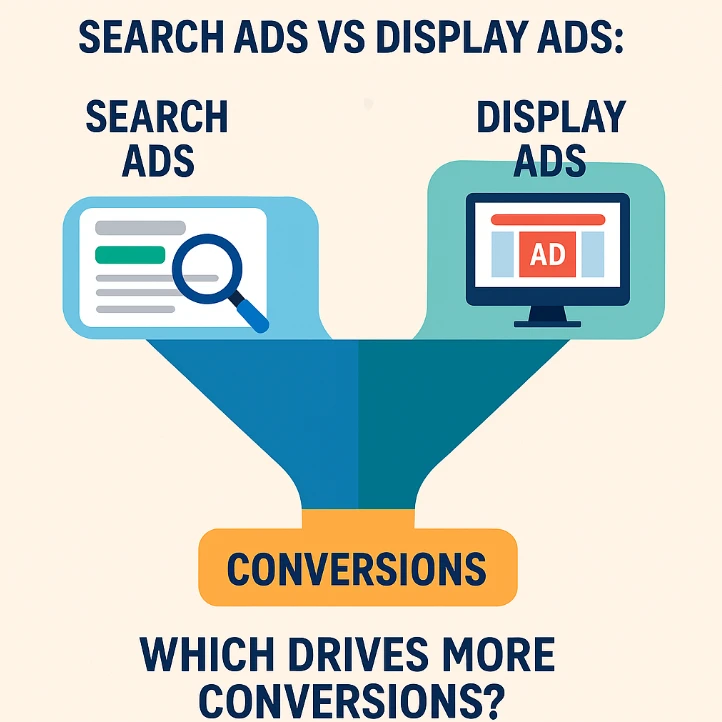

Online advertising presents marketers with various options to reach their desired audience. The ongoing debate between search ads vs display ads remains at the forefront of many marketing discussions.
Both methods offer distinct benefits, yet their effectiveness varies significantly based on specific business needs. Understanding these differences helps businesses allocate their marketing budgets more effectively.
The Core Differences
Search advertising connects businesses with people actively searching online. These text-based ads appear in search results when someone types in specific phrases or questions.
A local bakery might show up when someone searches for "fresh bread nearby," directly addressing the searcher's needs. Search ads work particularly well for businesses offering solutions to immediate problems or specific product searches.
Display advertising takes a different route. These visual ads show up on websites, in apps, and across social media platforms. Rather than responding to active searches, display ads reach people while they read news, check social media, or browse other content online.
Display ads excel at creating brand awareness and reaching potential customers before they start actively searching for products or services.
Converting Viewers Into Customers
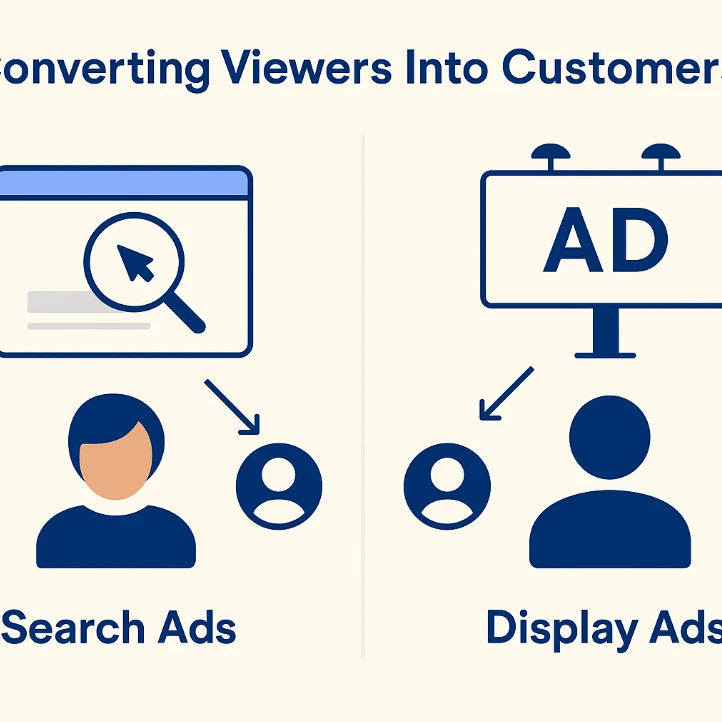
Search ads tend to perform well because they reach people who already want something specific. When someone searches for "emergency plumber near me," they need help right now.
This immediate need often leads to higher conversion rates for search advertising.
The directness of search ads makes them particularly effective for services and products that solve immediate problems.
Display ads work better for longer-term marketing goals. They build familiarity over time, showing products or services to people who might need them later. While they might not lead to instant sales, display ads keep brands visible to potential customers. This visibility often proves valuable when customers eventually need related products or services.
Making Smart Budget Decisions
The cost difference between search ads and display ads can be substantial. Search advertising often demands higher prices because it targets people ready to buy. Display ads usually cost less per click but might need more total views to achieve similar results. The real value comes from understanding how each type fits into a complete marketing strategy.
These key factors affect advertising costs:
- Monthly budget limits
- Target audience size
- Competition level
- Seasonal changes
- Location targeting
Picking The Right Approach
Small businesses often start with just search ads or display ads before expanding. The choice depends heavily on business type, target market, and marketing goals. Service-based businesses might find more immediate success with search ads, while new product launches could benefit more from display advertising's broader reach.
Here's what works best in different situations:
- Direct response goals
- Brand recognition needs
- Available marketing budget
- Competition levels
- Target market behavior
Getting Results
Search Ad Performance
Strong search ads need clear writing and relevant keywords. The pages they link to should match what the ad promised. Regular checks help improve how well these ads work over time. Creating effective search ads requires understanding customer search patterns and adjusting strategies based on performance data.
Display Ad Success
Good display ads catch attention without annoying viewers. They work best with clean designs and careful placement on relevant websites. Different versions of the same ad often reveal which designs work better. The visual nature of display ads demands regular creative updates to prevent ad fatigue among viewers.
Working Together
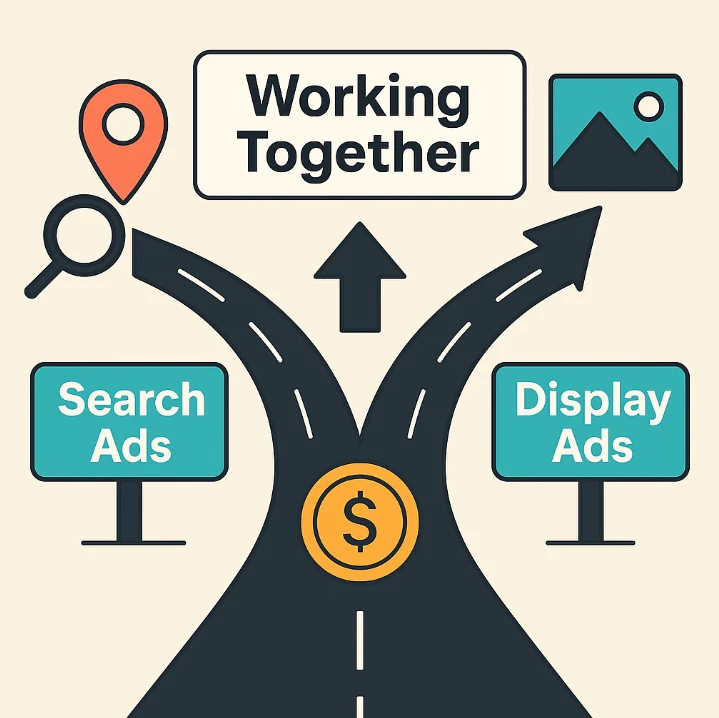
Running both search and display ads can create better results than using just one type. While search ads catch people who need something now, display ads build recognition that might lead to future sales.
This mix helps businesses reach more potential customers throughout their buying process. The combination often creates a more robust marketing presence across different platforms.
Measuring Success
Tracking how well search ads vs display ads perform reveals which method works better. Looking at real sales numbers and costs shows the true value of each approach. These results guide future choices about where to spend advertising money. Regular performance reviews help businesses adjust their strategies for better returns.
Looking Forward
The choice between search ads and display ads depends on what a business needs right now. Each type works differently and reaches people in its own way. Success comes from matching the right kind of advertising to specific business goals. The digital advertising world continues to change, making flexibility in approach increasingly valuable.
Starting small and expanding based on results makes sense for most businesses. Testing different approaches while watching the numbers leads to smarter advertising choices. The key is finding what works best for reaching and converting the right customers.
Over time, most successful businesses develop a balanced approach that leverages the strengths of both search and display advertising.































Sign in to leave a comment.