

Introduction
As businesses increasingly move toward cloud-native applications, security has become one of the most critical concerns in software development. Modern organizations need applications that are scalable, reliable, and secure, while also reducing infrastructure management. This is where serverless computing plays a vital role.
Serverless development allows developers to build and deploy applications without managing servers or complex infrastructure. Instead, cloud providers automatically handle scaling, maintenance, and resource allocation. When combined with .NET Core and Azure Cloud, serverless development becomes even more powerful.
Using .NET Core with Azure Functions, developers can build secure, event-driven applications that automatically scale based on demand. Additionally, Azure Cloud security features such as identity management, encryption, and monitoring help ensure that applications remain protected against cyber threats.
What Is Serverless Development?
Serverless development is a cloud computing model where developers focus only on writing application code while the cloud provider manages the underlying infrastructure.
Instead of provisioning servers, applications run as small functions triggered by events such as:
- HTTP requests
- Database updates
- File uploads
- Queue messages
- Scheduled tasks
With Azure Functions and .NET Core, developers can easily create serverless applications that respond to events instantly.
Key Characteristics of Serverless Architecture
- No server management
- Automatic scaling
- Pay-as-you-go pricing
- Faster deployment
- Event-driven architecture
This approach enables companies to build highly scalable and cost-efficient applications while focusing more on innovation.
As cloud technology continues to evolve, secure serverless development using .NET Core and Azure will become an essential strategy for building modern and reliable applications.
Why Use .NET Core for Serverless Applications?
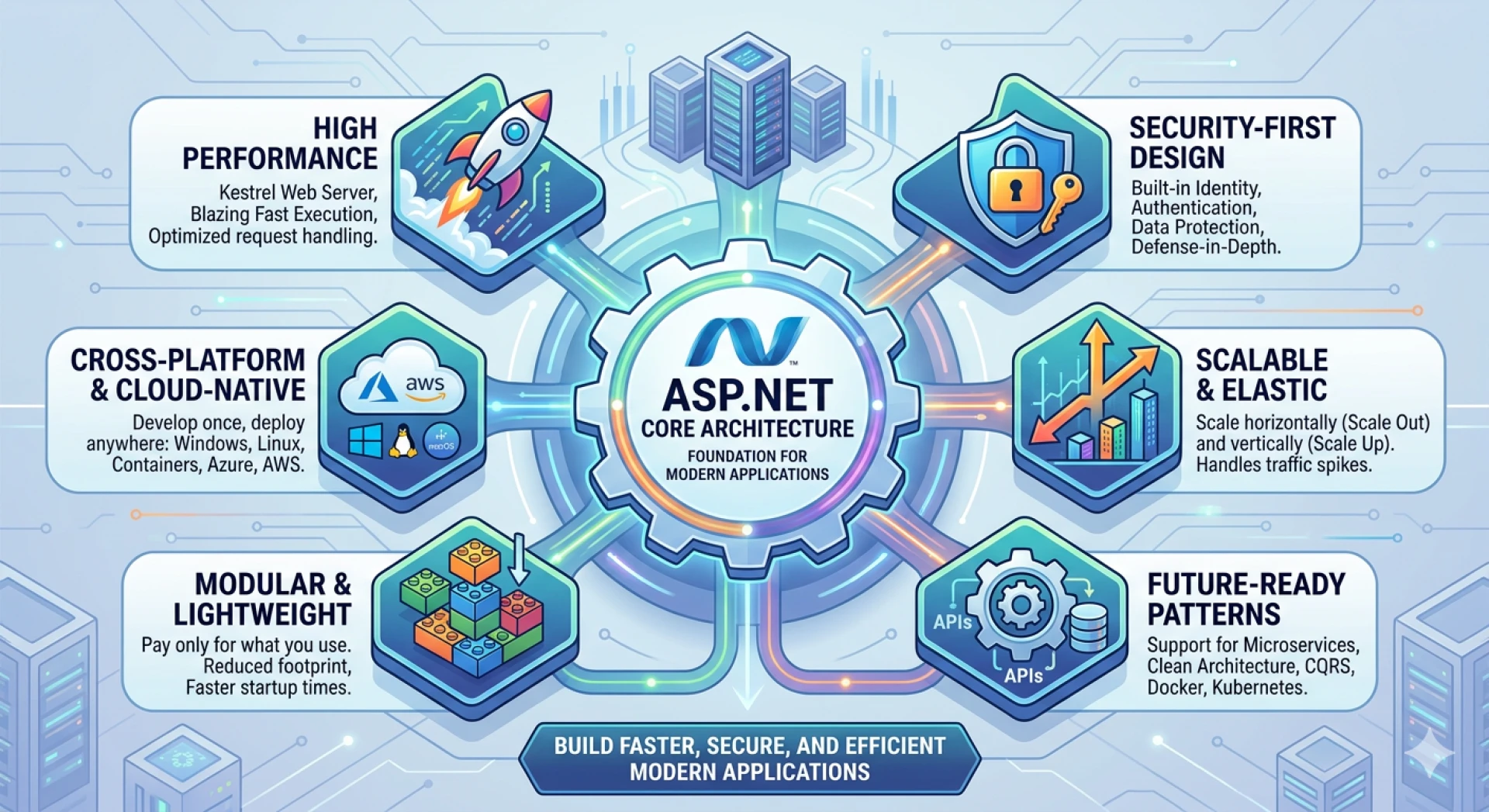
.NET Core is a powerful, open-source, cross-platform framework widely used for building modern applications.
When integrated with Azure serverless services, it provides several advantages.
1. High Performance
.NET Core is known for its fast execution and optimized performance, making it ideal for serverless applications that need quick response times.
2. Cross-Platform Support
Developers can run .NET Core applications on Windows, Linux, and macOS, providing flexibility for cloud development.
3. Strong Security Features
.NET Core includes built-in security features such as authentication and authorization, as well as secure configuration management.
Role of Azure Functions in Secure Serverless Development
Azure Functions is Microsoft’s serverless computing and Azure App Service that allows developers to run code in response to events without managing infrastructure.
It works perfectly with .NET Core, enabling developers to build secure and scalable cloud applications.
Benefits of Azure Functions
1. Automatic Scaling
Azure automatically scales functions based on incoming traffic or events.
2. Cost Efficiency
You only pay for the time your code runs, which reduces operational costs.
3. Integration with Azure Ecosystem
Azure Functions can easily connect with services such as:
- Azure Storage
- Azure SQL Database
- Azure Service Bus
- Azure Serverless Service
This makes it easier to build secure and event-driven serverless systems.
Security Challenges in Serverless Applications
While serverless architecture offers many benefits, it also introduces some security challenges.
1. Unauthorized Access
Improper authentication or access control can allow attackers to access serverless functions.
2. Data Exposure
Sensitive data may be exposed if encryption and secure storage are not implemented.
3. Misconfigured Permissions
Incorrect role permissions may allow users to access resources they should not.
4. Insecure APIs
Serverless applications often rely on APIs, which can become vulnerable if not properly secured.
Advantages of Secure Serverless Development
Implementing secure serverless architecture with .NET Core and Azure Cloud offers several advantages.
1. Reduced Infrastructure Management
Developers no longer need to manage servers or infrastructure.
2. Improved Scalability
Applications automatically scale based on demand.
3. Faster Development
Serverless architecture allows developers to focus on writing code rather than managing infrastructure.
4. Cost Optimization
Businesses only pay for the compute resources used.
Future of Secure Serverless Development
Serverless computing continues to grow as organizations adopt cloud-first strategies.
Emerging technologies such as:
- AI-powered cloud security
- Automated threat detection
- Cloud-native security tools
will further enhance the security of serverless applications. With the strong ecosystem provided by .NET Core development and Azure Cloud, developers can build future-ready applications that are secure, scalable, and efficient.
Conclusion
Secure serverless development is transforming how modern applications are built and deployed. By combining .NET Core with Azure Cloud, developers can create highly scalable, event-driven applications without worrying about server management.
However, security must remain a top priority when building serverless systems. Implementing best practices such as Azure Active Directory authentication, Azure Key Vault, role-based access control, and secure API management helps protect applications from potential threats.
With the right approach and tools, organizations can take full advantage of serverless architecture while maintaining strong security standards.
FAQs
1. What is serverless computing in Azure?
Serverless computing in Azure allows developers to run application code without managing servers. Services like Azure Functions automatically handle scaling, infrastructure, and resource allocation.
2. Why use .NET Core for serverless applications?
.NET Core offers high performance, cross-platform support, and built-in security features, making it ideal for building scalable and secure serverless applications.
3. How does Azure ensure serverless security?
Azure provides several security features, including:
- Azure Active Directory authentication
- Azure Key Vault for secret management
- Role-Based Access Control (RBAC)
4. What are common security risks in serverless applications?
Common risks include:
- unauthorized access
- insecure APIs
- exposed secrets
These risks can be minimized by implementing strong security best practices.





















Sign in to leave a comment.