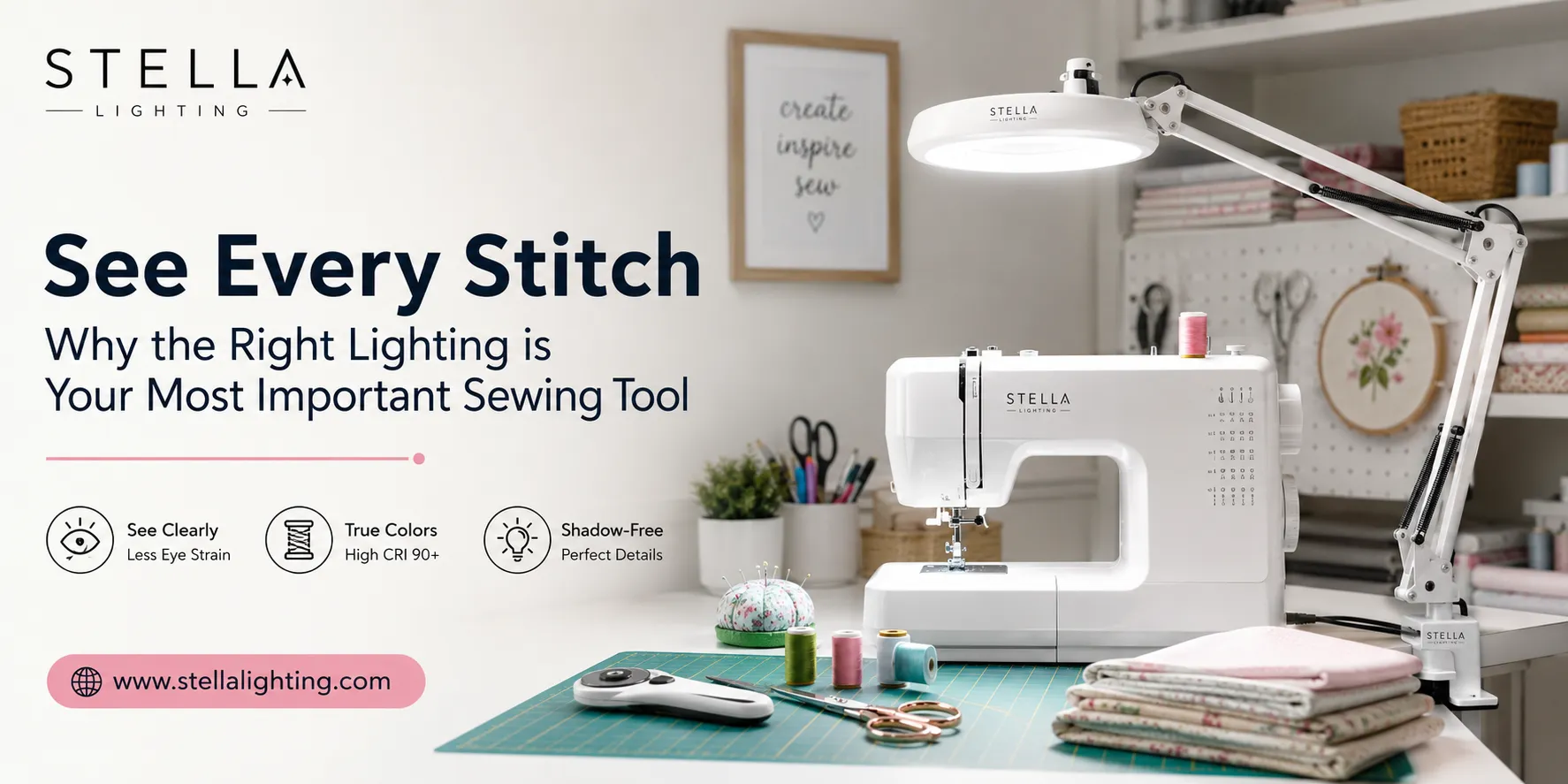

For anyone passionate about sewing, quilting, or embroidery, the magic happens in the details. Whether you are matching precise thread colors for an appliqué project or navigating the complex tension of a new fabric, your ability to see clearly is the difference between a masterpiece and a frustrating redo. At Stella Lighting, we know that great craft starts with great vision.
If you’ve ever found yourself squinting at your needle or dealing with late-night eye fatigue, it’s time to rethink your setup. Here is why investing in the best desk lamp for eyes and a dedicated sewing table lamp is the ultimate game-changer for your creative space.
Why "Standard" Lighting Isn’t Enough
General room lighting often creates harsh shadows and uneven brightness. When your eyes constantly struggle to adjust between a dimly lit room and a brightly lit workspace, they tire quickly. This leads to the all-too-familiar "after-sewing headache."
The best desk lamp for eyes is designed to eliminate these issues through three core features:
- Flicker-Free Technology: Cheap LEDs can "strobe" at a frequency that, while invisible to the naked eye, forces your pupils to pulse and work overtime. High-quality lamps ensure a steady, smooth stream of light.
- High Color Rendering Index (CRI): A CRI of 90+ is non-negotiable for fiber artists. It ensures that the fabric color you see in your sewing room is the true color it will be in natural daylight.
- Glare Reduction: The best lamps use advanced diffusers to soften the light, preventing that sharp, reflective glare on your needles, scissors, or glossy materials.
Elevating Your Craft with a Sewing Table Lamp
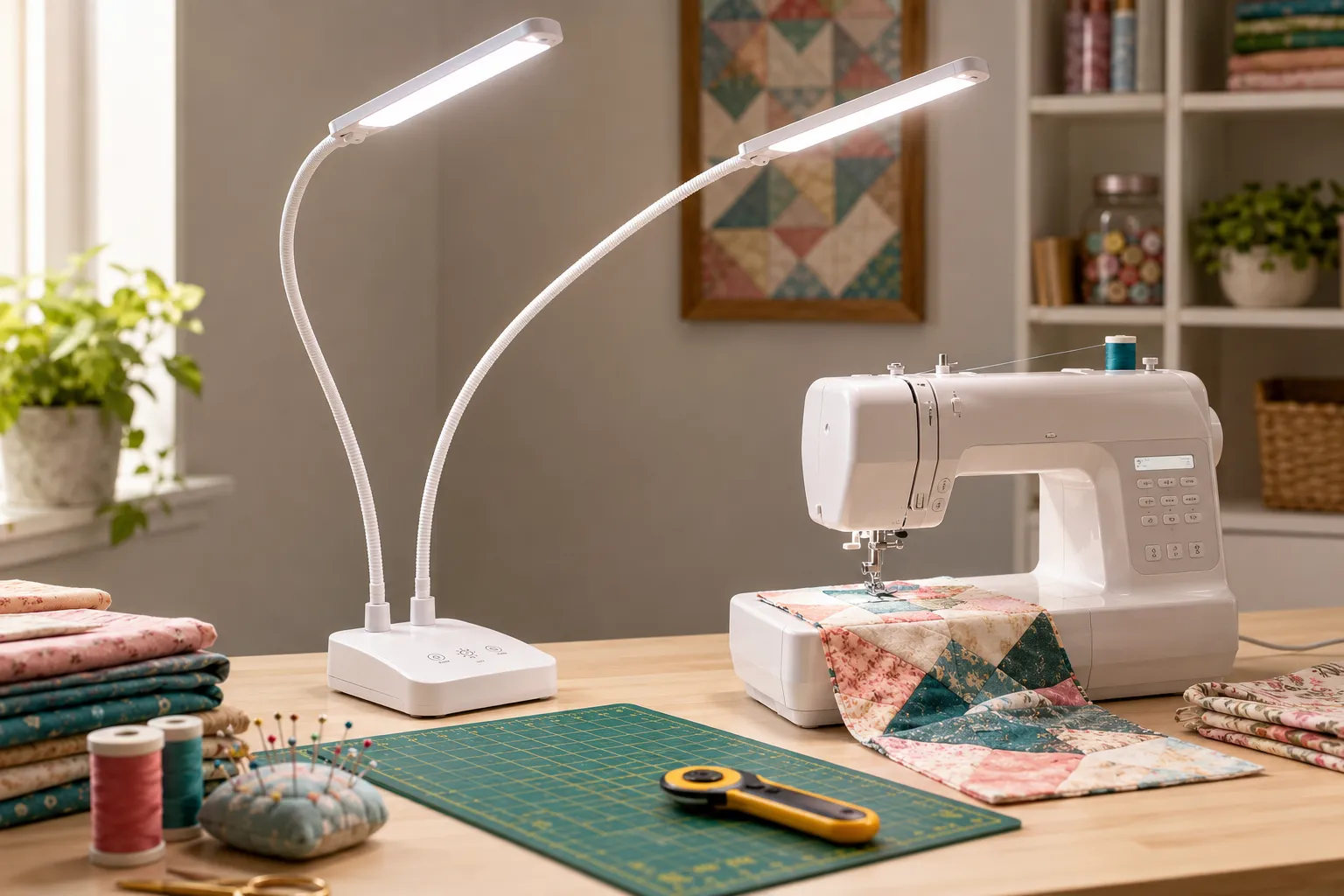
A dedicated sewing table lamp serves as your "detail hero." Unlike a standard desk lamp, a professional-grade sewing lamp is engineered to solve specific craft-related challenges:
- Shadow-Free Zones: By utilizing multi-pivot arms or wide-beam technology, these lamps flood your needle plate and cutting mat with light from multiple angles, virtually eliminating the shadows cast by your hands or the machine’s own head.
- Daylight Simulation: Sewing requires precision. Using a lamp that mimics "daylight" (typically 5000K to 6500K) keeps your brain alert and allows you to distinguish between subtle shade differences in threads that might look identical under warm, yellow light.
- Space Efficiency: Many of the top-tier sewing lamps feature clamp-on bases. This is vital for small studios, as it clears your table surface of bulky bases, giving you more room to maneuver large quilts or yardage.
Pro-Tips for a Strain-Free Sewing Station
- Layer Your Light: Don't rely on just one source. Use your ceiling light for general ambient glow and your focused sewing lamp for the "close-up" work. This minimizes the contrast that causes eye strain.
- The 20-20-20 Rule: Every 20 minutes, take a 20-second break and look at something 20 feet away. It’s the easiest way to reset your eye muscles after intense focus.
- Placement Matters: Position your lamp to the side of your dominant hand to ensure your hand doesn’t block the light while you are guiding fabric.
Frequently Asked Questions (FAQ)
1. What color temperature is best for sewing?
For sewing, aim for the "daylight" range, which is between 5000K and 6500K. This range provides a crisp, cool white light that reveals the true color of threads and fabrics, making it much easier to see intricate details.
2. Can a desk lamp really reduce eye fatigue?
Yes. By providing even, flicker-free, and glare-reduced illumination, a quality lamp reduces the effort your eyes exert to focus. This prevents the squinting and strain that lead to headaches and fatigue.
3. Is a clamp-on lamp better than a base-style lamp for sewing?
For sewing, clamp-on lamps are often superior. They save valuable table space for your fabric and sewing machine, and they offer better stability and more flexible positioning to reach over large projects without tipping.
4. What does CRI mean, and why does it matter for my projects?
CRI stands for Color Rendering Index. A high CRI (90+) ensures that the colors you see under your lamp are accurate. Without it, you might pick the wrong thread color or struggle to match fabric patterns, only to find the error when you step into natural light.
5. Can I use a regular household LED bulb in my sewing lamp?
It is not recommended. Most household LEDs are not designed for task-specific precision; they may lack the necessary brightness, proper color spectrum, or flicker-free certification needed for detailed craft work. A dedicated sewing lamp is an investment in your long-term eye health and the quality of your work.
Don’t let poor lighting hold your creativity back. Upgrade your studio with Stella Lighting and see your stitches with the clarity and precision they deserve.




















Sign in to leave a comment.