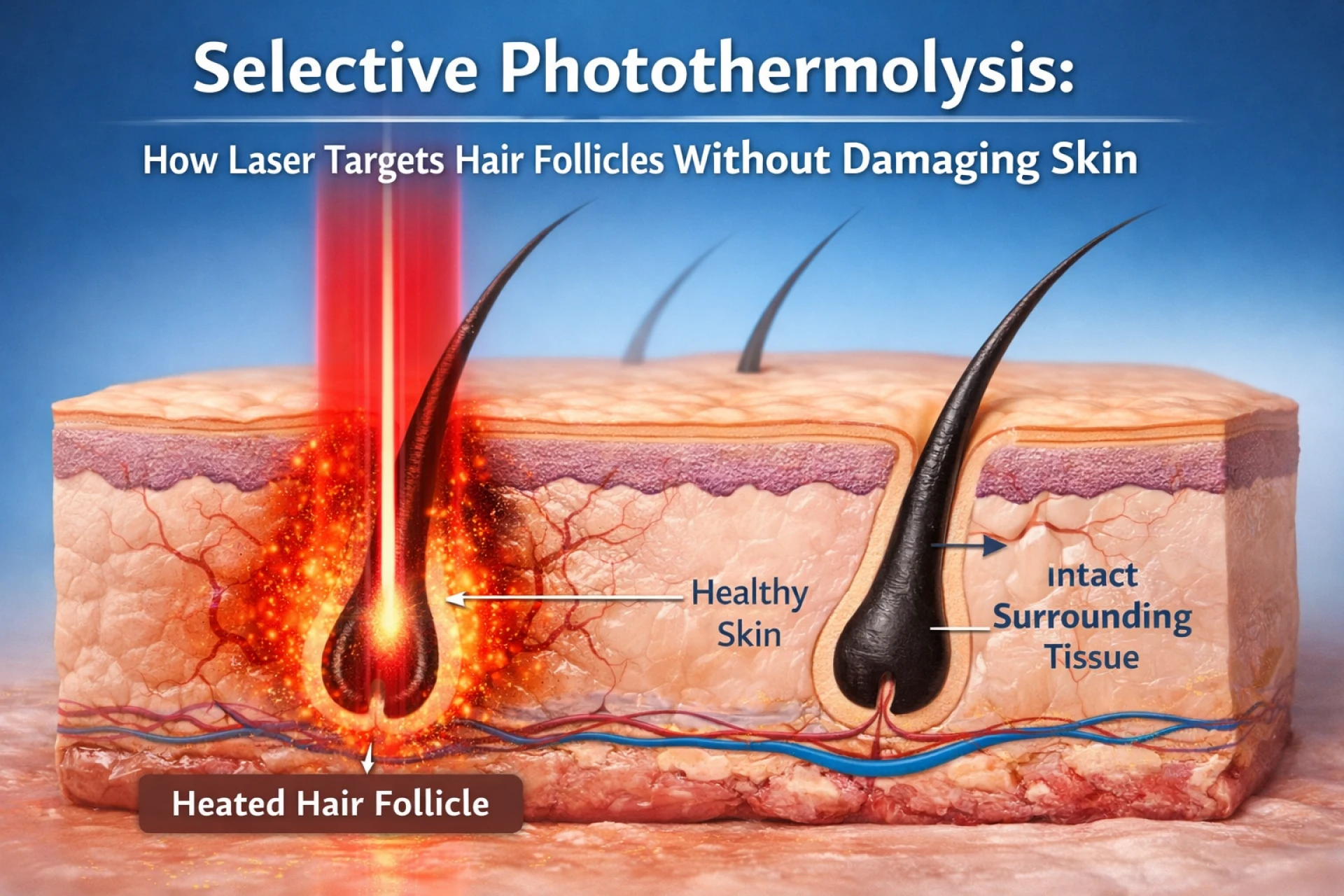

Have you ever wondered how a laser can remove unwanted hair without burning the surrounding skin? Many people are curious about the science behind laser treatments and how they manage to focus on hair follicles while leaving nearby skin unharmed. This ability comes from a precise scientific principle known as selective photothermolysis.
In simple terms, this process allows light energy from a laser to target specific pigments inside hair follicles. The laser converts light into heat, which damages the follicle and slows future hair growth. Because the energy is absorbed mainly by the pigment in the hair, the surrounding skin stays safe.
Understanding the science behind this treatment helps people feel more confident when considering professional hair removal procedures. Let’s explore how this technology works, why it is effective, and why modern laser treatments are considered one of the safest ways to manage unwanted hair.
What Is Selective Photothermolysis?
Selective photothermolysis is the scientific principle that allows lasers to target hair follicles while protecting surrounding skin. The laser focuses on pigment in the hair, turning light energy into heat. This heat damages the follicle and slows future hair growth.
The Science Behind Targeted Light Energy
The term may sound complex, but what is selective photothermolysis becomes easy to understand when broken down:
- Photo refers to light energy
- Thermo refers to heat
- Lysis means destruction
When combined, the term describes a process where light energy is absorbed by a target and converted into heat that destroys that target.
In hair removal treatments, the target is the melanin pigment inside hair follicles.
When laser light hits the skin:
- Pigment in the hair absorbs the light.
- The light energy converts into heat.
- The heat damages the follicle.
- The follicle becomes unable to grow hair normally.
This is the core idea behind selective photothermolysis explained in medical laser technology.
Quick Fact - Laser technology used in dermatology has been researched for decades. Early clinical studies on selective photothermolysis were published in medical journals in the 1980s and remain the basis for modern laser systems.
How Laser Hair Removal Works at the Follicle Level
Laser treatments work by delivering controlled pulses of light that penetrate the skin and reach hair follicles. The pigment in the hair absorbs the energy, which creates heat that damages the follicle. This process gradually reduces hair growth over several treatment sessions.
Understanding the Hair Growth Cycle
To understand how laser hair removal works, it helps to know that hair grows in different phases:
- Anagen (Growth Phase) – Hair is actively growing and connected to the follicle.
- Catagen (Transition Phase) – Hair growth slows.
- Telogen (Resting Phase) – Hair eventually sheds.
Laser treatments are most effective during the anagen phase, because the follicle is fully connected to the hair shaft.
This is why multiple sessions are necessary. Each treatment targets hairs that are currently in the growth stage.
Why the Laser Focuses on Pigment
The laser is designed to identify melanin, the pigment responsible for hair color.
When the laser pulse reaches the hair:
- Dark pigment absorbs the energy.
- Heat forms inside the follicle.
- The follicle structure becomes damaged.
This process is known as laser targeting hair follicles, which allows the treatment to affect only the hair structures without harming nearby skin.
Tip - Shaving before treatment helps the laser focus energy directly into the follicle rather than the hair above the skin.
Why Laser Energy Does Not Damage the Surrounding Skin
Laser treatments are designed to focus energy on the pigment inside hair follicles while avoiding surrounding skin tissue. Advanced cooling systems and carefully calibrated wavelengths help protect the skin during treatment. This precision makes the procedure both effective and safe.
Controlled Wavelength Technology
One reason people ask Why doesn’t laser hair removal damage skin? is because lasers sound intense. In reality, medical lasers are carefully calibrated.
Each laser uses a specific wavelength of light that:
- penetrates the skin safely
- targets melanin
- avoids water and other skin structures
This controlled wavelength helps the treatment focus only on the follicle.
Skin Cooling Systems
Modern laser devices include cooling systems that protect the surface of the skin.
Cooling methods include:
- contact cooling tips
- cold air devices
- cooling gel layers
These systems reduce discomfort and prevent overheating.
Quick Fact - According to the American Academy of Dermatology, laser hair removal is considered a safe and widely used cosmetic procedure when performed by trained professionals.
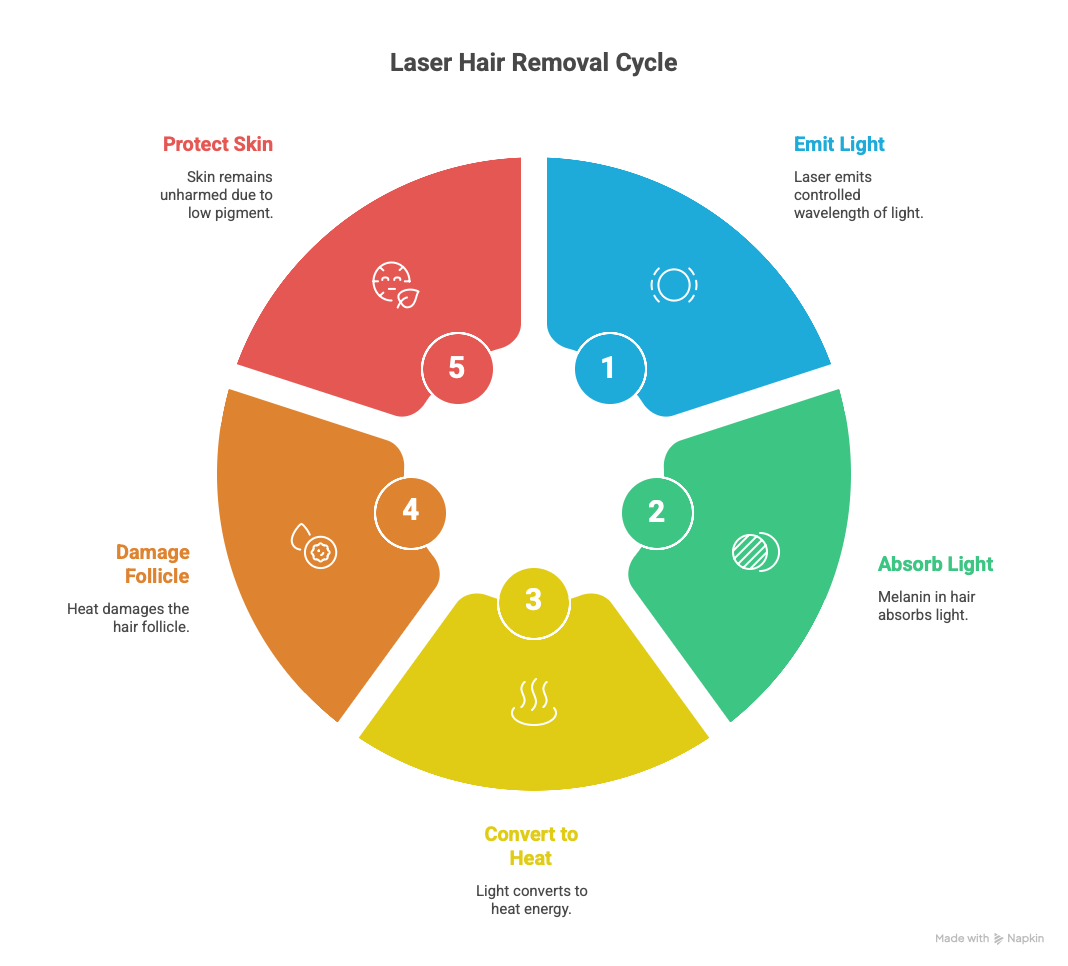
How Laser Destroys Hair Follicles Safely
Laser treatments weaken hair follicles by heating the melanin inside them. This heat damages the follicle structure while avoiding surrounding tissues. Over time, repeated sessions reduce hair growth and create smoother skin.
Gradual Follicle Damage
The goal of treatment is not to destroy skin tissue but to disrupt the follicle’s ability to grow hair.
During each session:
- laser heat damages follicle cells
- hair growth becomes slower
- regrowth becomes thinner
This process explains how laser destroys hair follicles safely over time.
Why Multiple Sessions Are Needed
Hair grows in cycles, so a single treatment cannot target every follicle.
Most people require:
- 6–8 sessions
- treatments spaced several weeks apart
This schedule allows each growth cycle to be treated effectively.
Tip - Avoid sun exposure before and after treatment sessions to reduce skin sensitivity.
What Makes Laser Hair Removal Safe?
Laser hair removal safety comes from controlled technology, trained professionals, and precise targeting of hair follicles. Proper equipment settings and skin protection measures reduce risks. These factors make the treatment widely trusted in dermatology.
Medical Technology and Regulation
Laser systems used in dermatology clinics are regulated medical devices. These devices are designed to deliver energy at safe levels while maintaining precise targeting.
The U.S. Food and Drug Administration regulates medical lasers to ensure safety standards are met.
Importance of Professional Treatment
Professional clinics evaluate several factors before treatment:
- skin tone
- hair color
- treatment area
- medical history
These evaluations help determine the correct laser settings for each person.
This careful planning plays a major role in What makes laser hair removal safe?
Who Benefits Most From Laser Hair Removal Treatments
Laser hair removal works best for individuals with darker hair and lighter skin because the laser can easily detect pigment differences. However, modern technology has improved treatment options for many skin types. A professional consultation helps determine the best approach.
Ideal Hair and Skin Combinations
Laser energy works best when there is a strong contrast between hair and skin.
Examples include:
- dark hair with light skin
- medium skin with dark hair
However, newer lasers have improved safety and effectiveness for many skin tones.
Areas Commonly Treated
Popular treatment areas include:
- face
- underarms
- legs
- bikini line
- back
For people seeking advanced options such as laser hair removal in Norfolk VA or anywhere near you, professional clinics can provide customized treatments based on individual skin and hair characteristics.
Key Takeaways
- Selective photothermolysis allows lasers to target hair follicles without harming surrounding skin.
- Laser treatments work by converting light energy into heat that damages hair follicles.
- Melanin in the hair absorbs the laser energy, making the treatment precise.
- Cooling systems and controlled wavelengths protect the skin.
- Multiple sessions are required because hair grows in cycles.
- Professional evaluation helps ensure safe and effective treatment.
Conclusion
Understanding the science behind laser hair removal helps people feel more comfortable when considering treatment. The principle of selective photothermolysis allows lasers to focus precisely on hair follicles, turning light into heat that disrupts hair growth while protecting surrounding skin.
Modern laser systems combine controlled wavelengths, cooling technology, and professional expertise to deliver effective results with minimal risk. These advancements have made laser hair removal one of the most trusted solutions for long-term hair reduction.
At Spa & Laser Center, experienced professionals focus on advanced laser technologies and personalized treatment plans designed to deliver safe and effective results. By understanding your skin type, hair characteristics, and treatment goals, the team ensures each procedure is tailored for comfort and long-term improvement.
When performed by trained specialists using modern equipment, laser hair removal can provide a reliable and convenient way to manage unwanted hair and maintain smoother skin.
Frequently Asked Questions
1. How many laser hair removal sessions are usually required?
Most people need between 6 and 8 sessions to achieve optimal hair reduction because treatments must target hair during different growth phases.
2. Is laser hair removal permanent?
Laser treatments significantly reduce hair growth. While some hair may return over time, it is usually thinner and lighter.
3. Does laser hair removal hurt?
Most patients describe the feeling as a mild snapping sensation, similar to a rubber band against the skin.
4. Can laser hair removal treat sensitive areas?
Yes. Treatments can safely target areas such as the face, underarms, and bikini line when performed by trained professionals.
5. How long does each treatment session take?
Session length depends on the treatment area. Small areas may take only a few minutes, while larger areas like legs can take up to an hour.
Ready to Experience Safer, Long-Term Hair Reduction?
Are you tired of shaving, waxing, or dealing with constant hair regrowth? Understanding the science behind laser treatments is the first step toward choosing a smarter and longer-lasting solution.
If you are exploring professional laser treatments and want guidance from experienced specialists, the team at Spa & Laser Center can help you understand your options and design a treatment plan that fits your goals.
Contact Us to speak with a specialist and schedule your consultation. Could the right laser treatment finally be the solution that gives you smoother, low-maintenance skin?




























Sign in to leave a comment.