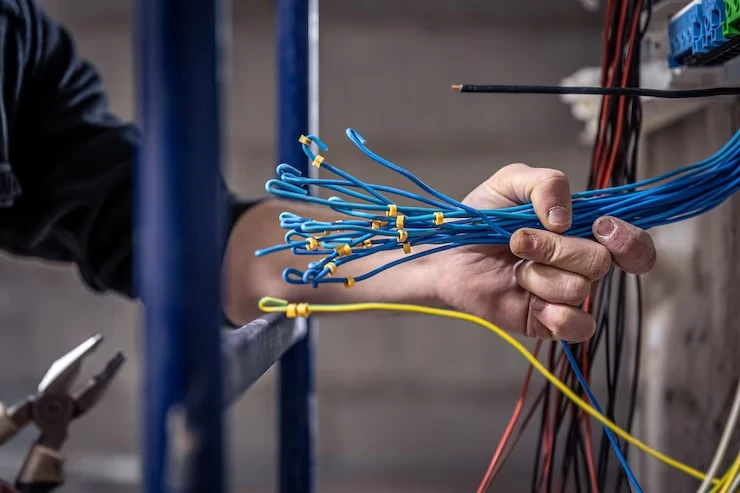

When we hear "biometrics," we usually think of fingerprint scanners or facial recognition – ways to identify people. But what if we applied that concept – the idea of unique, measurable characteristics – to quality control in manufacturing? While we're not exactly fingerprinting cables, the principles behind biometrics are inspiring new ways to ensure quality in cable production, using advanced sensors that mimic biological senses. Let's dive into how these "biometric-inspired" approaches are taking quality control (QC) beyond what the human eye can easily see.
What Do We Mean by "Biometric-Inspired" QC Here?
Okay, let's clarify. We're not scanning cables for fingerprints! Instead, we're talking about two related ideas:
- Advanced Sensing Mimicking Biology: Using sophisticated sensors that act like enhanced versions of human senses (sight, touch) to detect tiny flaws, inconsistencies, or characteristics in cables with superhuman accuracy. Think machine vision systems that "see" defects or sensors that "feel" subtle variations in texture or dimension.
- Human Operator Verification (A Secondary Link): In some high-security or critical applications, actual biometric authentication (like a fingerprint scan) might be used to verify which trained operator performed a specific manual QC check, ensuring accountability and traceability.
For this discussion, we'll focus primarily on the first point – the exciting advancements in sensor technology for direct cable inspection.
Why Traditional QC Isn't Always Enough
Human inspectors are skilled, but they face limitations:
- Fatigue: Inspecting miles of cable visually is tiring, and concentration can waver.
- Subjectivity: What one inspector flags, another might miss. Consistency can be challenging.
- Speed Limits: Manual inspection can't keep up with high-speed production lines.
- Hidden Flaws: Many critical cable properties (like insulation uniformity or microscopic surface defects) are invisible to the naked eye.
- Destructive Testing: Some traditional tests require cutting the cable, meaning you only test samples, not the entire length.
Advanced, "biometric-inspired" sensing aims to overcome these hurdles.
Advanced Sensing Technologies in Action
These systems use sensors and AI to analyze cable properties continuously and objectively:
1. Machine Vision ("Super Sight")
- High-Resolution Cameras: These systems use multiple high-speed cameras to continuously scan the cable's surface as it's produced.
- AI-Powered Analysis: Sophisticated software analyzes the images in real-time, comparing them against a 'perfect' digital model. It can detect:
- Surface Defects: Scratches, bumps, pinholes, discoloration.
- Dimensional Accuracy: Precisely measuring diameter, ovality (out-of-roundness), and insulation thickness consistency.
- Print Legibility: Ensuring markings on the cable jacket are clear and correct.
- Benefit: Catches tiny flaws humans might miss, operates at high speed, provides objective data.
2. Non-Contact Dimensional Gauging ("Laser Touch")
- Laser Micrometers: These devices use laser beams to measure the cable's diameter and ovality with incredible precision without ever touching the cable.
- Multi-Axis Measurement: Often use multiple lasers to get a complete cross-sectional profile.
- Benefit: Highly accurate, non-contact (won't damage the surface), provides continuous measurement along the entire cable length.
3. Electrical Property Sensing ("Electronic Feel")
- Capacitance Monitoring: Sensors can measure the electrical capacitance along the cable's length as it's being extruded. Variations in capacitance can indicate inconsistencies in insulation thickness or material properties.
- Spark Testing: Passes the cable through a high-voltage field to detect tiny pinholes or breaches in the insulation that could cause failures later.
- Benefit: Detects invisible electrical flaws critical to performance and safety.
4. Material Consistency Sensing (Advanced "Touch")
- While less common, research explores sensors (like ultrasonic or thermal) that could potentially detect variations in the density or composition of insulation/jacketing materials in real-time.
5. Operator Authentication (The Human Element)
- In secure or highly regulated applications, requiring operators to log in using a biometric scan before performing manual QC checks or approving batches adds a layer of traceability. It ensures that only authorized, trained personnel are making critical quality decisions. This data can be linked to specific batches sourced from quality cable suppliers in uae, providing end-to-end accountability.
Advantages of This Advanced QC Approach
- Enhanced Accuracy & Reliability: Sensors detect flaws beyond human perception.
- 100% Inspection: Continuous monitoring allows for inspection of the entire cable length, not just samples.
- Increased Speed: Keeps pace with modern high-speed production lines.
- Objectivity & Consistency: Removes human subjectivity from inspection.
- Data Generation: Creates valuable data logs for process improvement and traceability.
- Reduced Waste: Catches problems earlier, reducing the amount of scrap material.
Challenges and Considerations
- Initial Cost: Advanced sensor systems and AI software require significant investment.
- Calibration & Maintenance: Sensors need regular calibration and maintenance to ensure accuracy.
- Data Interpretation: Requires sophisticated software and potentially skilled personnel to interpret the complex data generated.
- Integration: Integrating these systems into existing production lines can be complex.
Leading cable manufacturers in uae are increasingly investing in these types of advanced QC systems as part of their commitment to producing high-quality, reliable products and embracing Industry 4.0 principles.
Conclusion: Sensing a Higher Standard of Quality
While we might not be giving cables eye scans, the concept of using unique, measurable characteristics – detected by advanced sensors mimicking biological senses – is revolutionizing cable quality control. These "biometric-inspired" systems offer unprecedented levels of accuracy, speed, and consistency, moving beyond the limitations of traditional methods. By embracing machine vision, laser gauging, and other sophisticated sensing technologies, the cable industry can ensure higher product quality, reduce waste, and build even greater trust in the vital connections they provide.
Your Biometric QC Questions Answered (FAQs)
- Are you actually using fingerprint scanners on cables?
- No, not directly on the cables themselves. The term "biometric-inspired" here refers more to using advanced sensors (like machine vision or lasers) that mimic biological senses (like sight or touch) to detect unique characteristics or flaws on the cable with high precision.
- What is the main advantage over human inspection?
- The main advantages are accuracy (detecting flaws invisible to humans), speed (keeping up with production lines), consistency (removing human subjectivity), and the ability to inspect 100% of the cable, not just samples.
- Is this technology very expensive?
- Yes, the initial investment in advanced sensor systems (high-resolution cameras, laser micrometers, AI software) can be significant compared to traditional manual inspection methods. However, the long-term benefits often include reduced scrap, fewer warranty claims, and improved efficiency.
- How does machine vision work for cable QC?
- High-speed cameras continuously capture images of the cable surface. AI software analyzes these images in real-time, comparing them to a digital standard to automatically detect defects like scratches, bumps, pinholes, incorrect dimensions, or printing errors.
- Where does actual human biometrics (like fingerprints) fit in?
- In some cases, actual biometric authentication might be used to verify the identity of the human operator performing critical manual QC checks or approving production batches. This adds a layer of traceability and accountability, ensuring qualified personnel are involved.


























Sign in to leave a comment.