

Is your hospitality business struggling to stand out in a crowded online market? If so, You’re not alone.
Many hotels and travel services invest heavily in marketing services to boost their online presence only to find that they’re not attracting the right guests or generating the bookings they anticipated.
Without proper SEO for the hospitality industry, your website might remain buried in search results, missing out on valuable traffic and potential customers. However, the good news is that SEO can significantly transform your online visibility and drive more qualified leads to your business.
In this blog, we’ll explore why SEO is a game changer for the hospitality industry and how implementing the right strategies can help you attract more guests, enhance your online presence, and boost your bookings.
Benefits of SEO for the Hospitality Industry
SEO efforts for the hospitality industry offer numerous benefits, helping businesses attract more guests and enhance their online presence. Here are some key advantages:
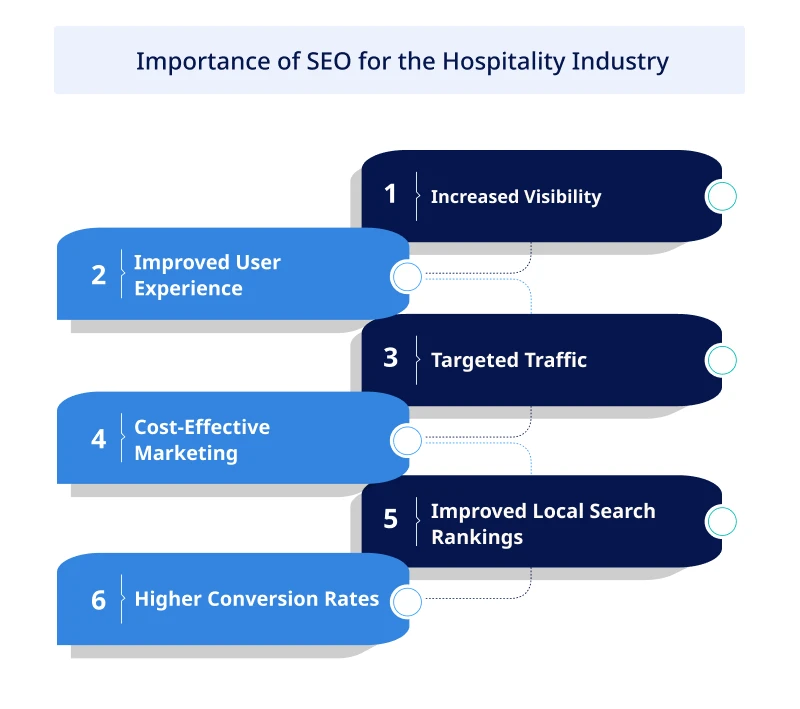
Increased Visibility: SEO enhances your online presence by improving your rankings on search engine results pages (SERPs). This increases the hospitality sector's exposure when prospective customers look for lodging or vacation possibilities. Travelers actively seeking your services are more likely to find your resort if it has a better ranking.
Improved User Experience: Making your website's content and design more user-friendly is necessary for effective SEO. This translates to quicker loading speeds, responsive design for mobile devices, and easy-to-use navigation for the hotel sector. These features all help to create a seamless experience for prospective customers and entice them to stay longer and interact more.
Targeted Traffic: SEO helps attract visitors actively searching for what you offer. Focusing on relevant keywords associated with your hospitality offerings, like "luxury hotels in Paris" or "best family resorts," draws in a more targeted audience that is more likely to become a customer.
Cost-Effective Marketing: In the long term, SEO is more economical than conventional advertising. Although optimization may require early investments, continuing costs are typically less than paid advertisements.
This means that, in the hospitality sector, you can attain great returns on investment without constantly investing in advertising by placing highly in search results.
Improved Local Search Rankings: Local SEO services make you more visible in local searches, which is important for the hotel sector since location is everything. SEO for hotels ensures visitors looking for lodging or local services reach your company more quickly, which raises the possibility of local bookings.
Higher Conversion Rates: Conversion rates are better on an optimized website with excellent search engine rankings and a positive user experience. This implies that more customers will finish reservations, subscribe to newsletters, or interact with your offerings, which is good news for the hotel sector.
SEO Strategies for the Hospitality Industry
Effective SEO strategies are essential to stand out in the competitive hospitality industry. Here’s how you can enhance your online presence and attract more guests:
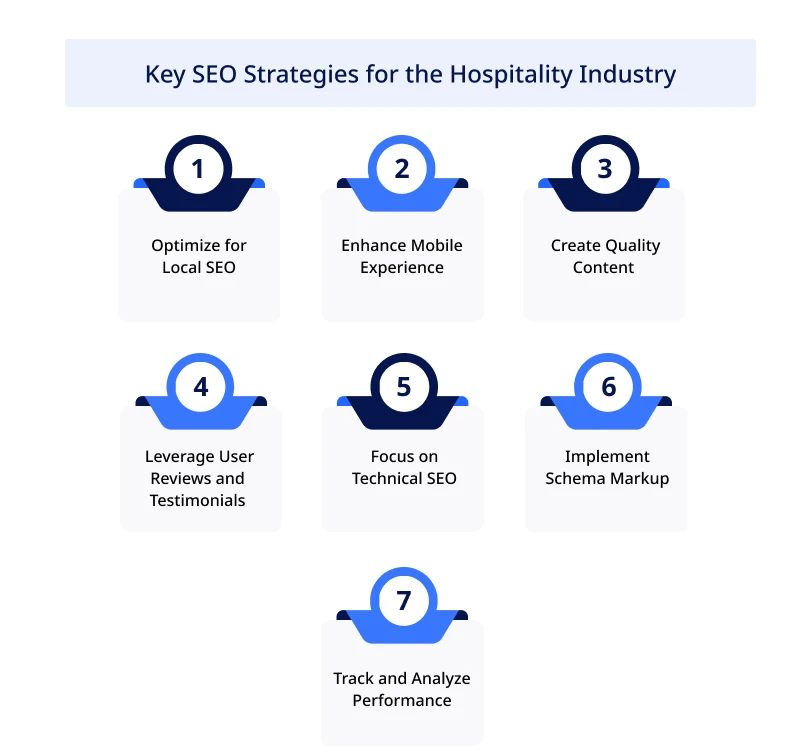
1.Optimize for Local SEO
Local SEO is crucial for the hospitality industry. It helps your business appear in search results when potential customers seek local accommodations or services. To optimize for local SEO, make sure your company is listed on Google My Business and other local directories.
For example, a Boston bed and breakfast should ensure that its location is correctly posted and updated on Google Maps and optimize its website for terms like "bed and breakfast in Boston."
2. Enhance Mobile Experience
It is crucial to have a mobile-friendly website because more and more people are using their smartphones to look for and book lodging. Ensure your website is responsive, enabling it to change to fit various screen sizes easily.
For instance, a hotel chain should make sure that its mobile device booking system has prominent buttons, straightforward navigation, and quick loading times to improve the booking experience for customers on the go.
3.Create Quality Content
Relevant, high-quality material draws in and keeps users interested. In the hospitality sector, this involves producing material for your target market, such as travel guides, summaries of nearby attractions, and blog entries promoting your offerings.
For example, a resort might write blog entries on neighboring sights and happenings to give prospective visitors useful information and raise their search engine rankings.
4. Check User Reviews and Testimonials
Good testimonials and reviews greatly impact SEO and your online reputation. ORM Services like encouraging pleased customers to post evaluations on Yelp, TripAdvisor, and Google can significantly boost your online presence.
For example, a boutique hotel may display client testimonials on its website and reply to reviews to increase trust and boost search visibility.
5.Focus on Technical SEO
Technical SEO ensures that your website's backend is search engine optimized. This involves ensuring your website is crawlable by search engines, optimizing meta tags, and increasing site speed.
For example, an XML sitemap, accurate meta descriptions for every page, and a quick loading speed are all necessary for search engines to properly index material on a resort's website.
6.Implement Schema Markup
Schema markup helps search engines understand your content better and can enhance your visibility with rich snippets. Using schema markup for reviews, star ratings, and business details will improve your listings' visibility in search results for the hospitality sector.
For example, by incorporating schema markup into your hotel's booking page, search results can show availability and star ratings immediately.
7. Track and Analyze Performance
By regularly monitoring and evaluating your SEO results, you can determine what is effective and what requires improvement. Track data like keyword rankings, conversion rates, and organic traffic with Google Analytics and Google Search Console.
For example, a travel agency can use these tools to determine which keywords generate the most traffic and modify its SEO approach accordingly.
Wrapping Up
A website not optimized for search engines misses crucial opportunities to attract potential guests and boost bookings.
Understanding why SEO for the Hospitality industry is a game changer and applying the strategies discussed can transform your digital presence from barely visible to becoming a top choice for travelers.
By enhancing your SEO efforts for hospitality, you’ll improve your search engine rankings, attract targeted traffic and ultimately drive more bookings.
Implement these SEO strategies to elevate your hotel's or travel service’s visibility and engage with potential customers more effectively. You can also partner with a specialized hotel SEO services company to achieve sustained growth and success with a tailored approach that ensures your SEO efforts are aligned with industry best practices.
































Sign in to leave a comment.