

In today's digital age, law firms need to adapt to remain competitive and attract clients. One crucial aspect of this adaptation is embracing Search Engine Optimization (SEO). But what exactly is SEO for lawyers, and how can you implement it effectively to ensure your law firm stands out in the crowded online marketplace?
This article offers a step-by-step guide on SEO for lawyers. Continue reading this article to learn how you can elevate your law firm’s online presence to new heights!
What Is SEO for Lawyers?
Lawyer SEO marketingaims to optimize a law firm's website for improved visibility and higher rankings in search engine results. This involves enhancing the quality and authority of website content, achieving page-one rankings for relevant keywords, and actively promoting the firm's website through online marketing efforts. By employing these strategies, lawyers can increase their presence on search engines like Google, drawing in more potential clients.
How to Start Lawyer SEO Marketing?
Here is a step-by-step guide for lawyer SEO marketing.
Step #1 - Ensure Your Company Appears on Google My Business
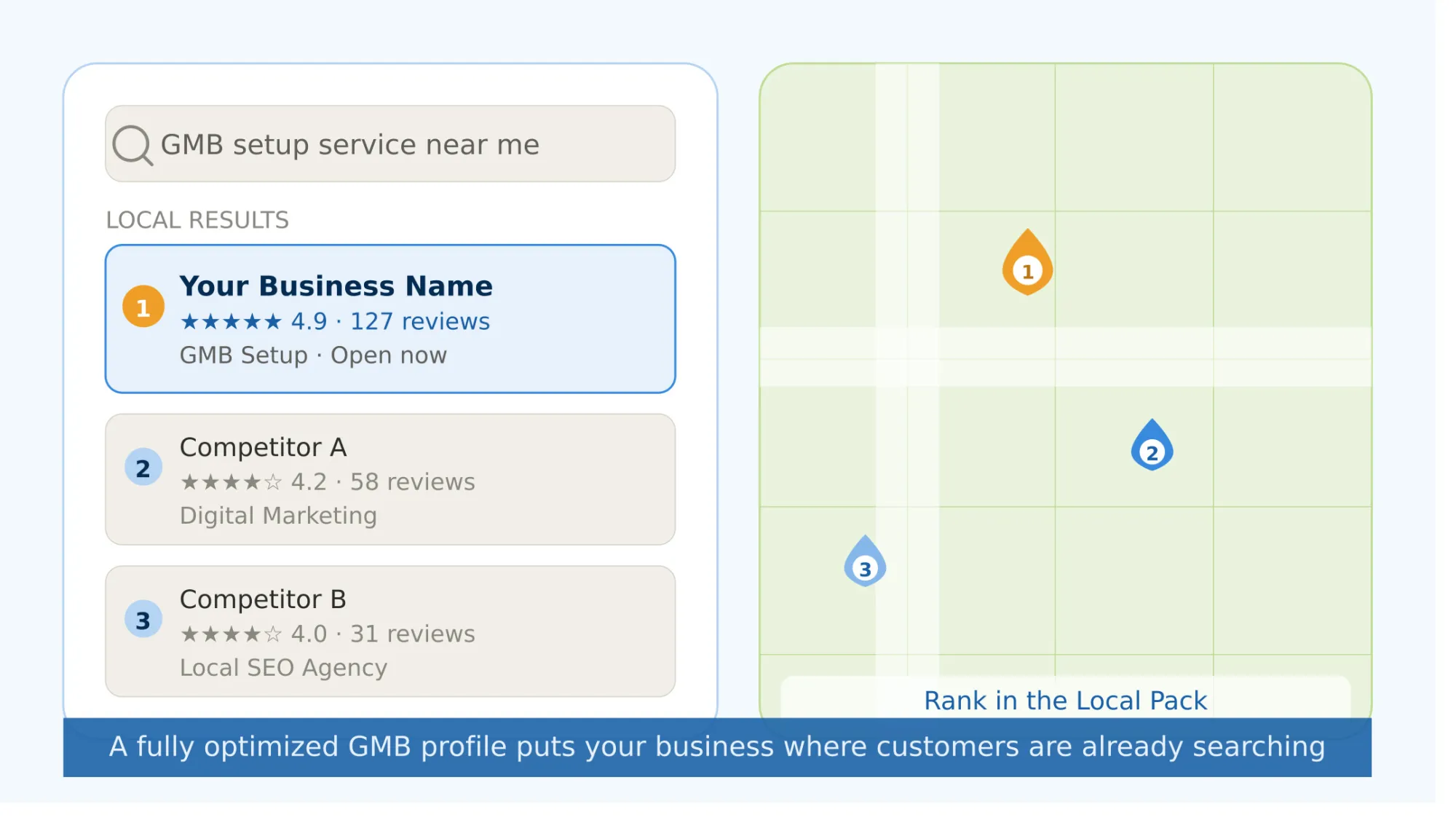
Take advantage of Google My Business to create a comprehensive profile for your company. This platform allows you to specify your business type, offer a concise description, and include vital information for visitors, such as:
AddressesRoutesWebsitePhone numbersServicesBusiness hoursPhotosGoogle My Business results also enable customers to leave comments or reviews about your business. This information can be accessed through local search engine results, Google Maps, and the knowledge panel, appearing when users search for entities or query by brand, company, or lawyer name.
Step #2 - Conduct Thorough Keyword Research
The pivotal first step in your SEO strategy involves in-depth keyword research. Recognize that certain terms may vary in popularity among different audiences. Understanding your client base and the keywords they use is essential for optimizing your site.
Keyword research allows you to create specific, relevant pages and guides the creation of blog articles, FAQ sections, and more. The more aligned your site is with user queries, the higher it ranks in the Search Engine Result Page (SERP). Utilize tools like Google Ads keyword tool, SemRush, or Serpstat for effective keyword research.
Step #3 - Provide Comprehensive Information About Your Services
Ensure your website contains detailed information about all the services you offer. It's advantageous for each service to have its dedicated page, arranged in a logical and understandable structure. You can also create a list of services categorized for clarity or grouped according to relevance.
Step #4 - Make Your Website SEO-Friendly
Ensure the website is optimized for SEO to secure a top position on the Search Engine Result Page (SERP). Key aspects to focus on include:
User-Friendly Design:Craft a website that is not only useful but also user-friendly. This ensures a positive experience for visitors.Crawler Accessibility:Make it easy for search engine crawlers to scan and comprehend your site's structure and content. This involves attention to several technical details:SEO-Friendly URL:Design a clear and intuitive web address that aligns with the overall structure of the site.txt:Employ a special UTF-8 encoded text file guiding crawlers on which URLs can be accessed, indicating pages crucial for indexing and specifying pages to be skipped.xml:Create another XML file listing all site pages, facilitating efficient crawling and indexing.Canonicalization:Utilize the rel=canonical element in the website code to guide crawlers on which page among similar or identical ones is the primary one for indexing.HTML Tags for SEO:Familiarize yourself with the essential HTML tags crucial for effective SEO practices. These tags play a pivotal role in signaling the relevance and structure of your content to search engines.Step #5 - Optimize Site Content
Tailor your site content based on the results of your keyword research:
Title tags:Keep them under 60 charactersand include relevant keywords.Meta description:Limited to 155 characters, this description appears below the page title in search results and should include key terms.Headings: Utilize H1 as the main title and incorporate keywords. Employ subheadings like H2 and H3, incorporating secondary keywords.In addition, you should optimize the text for usefulness and include keywords naturally. For instance, you can use short paragraphs, highlights, tables, and lists and incorporate visuals like graphs and images.
Step #6 - Implement Structured Data
Leverage structured data to effectively communicate page content to search crawlers, employing fixed schemas presented in tabular form. Schema.org offers various formats for such data, with Google recommending the use of the JSON-LD format.
Google may display some of this data in a snippet beneath your link in search results, making it crucial to select information that is both useful and intriguing to viewers. However, it's essential to note that structured data can only include information present on the page.
Step #7 - Initiate Link Building
An influential factor in search engine evaluations of a webpage is the presence of links leading to that page from other sites, commonly referred to as backlinks. When it comes to backlinks, the quantity, quality, and relevance of these external sites are pivotal considerations.
The most valuable backlinks are those that arise organically, such as when a blog article, study, or statistics from your site are shared or reposted. Positive client experiences, leading to voluntary sharing on platforms like Facebook with a backlink, exemplify the ideal scenario.
Some types of backlinks to include are those that:
Direct to the homepage or service pages.Include relevant keywords and the brand name.Are non-anchor links, avoiding specific keywords, such as "click here" or a straightforward URL like https://lawyerwebsite.com.A traditional approach to link building involves placing links on sites with similar or related topics.
For law firms, legal directories like Avvo, Best Lawyers, and Nolo.com carry significant weight.
Nevertheless, when selecting sites for link building, prioritize the domain's authority. There are numerous services, such as Moz, SEMrush, and Ahrefs, that calculate this metric. Once identified, initiate communication with the webmasters of the chosen sites.
For a comprehensive approach to SEO services for lawyers, start working with Search Berg. They specialize in SEO services for lawyers, ensuring your online presence reaches its maximum potential. Their team is committed to elevating your law firm's visibility and ranking on search engines. Contact them today!
About the Author
George A.is a seasoned digital marketing professional with a passion for helping law firms establish a robust online presence. He has over a decade of experience in the field and has successfully navigated the ever-evolving landscape of SEO for legal services. George’s expertise ranges from crafting user-friendly websites to implementing effective SEO strategies tailored to the unique needs of lawyers and law firms.





























Sign in to leave a comment.