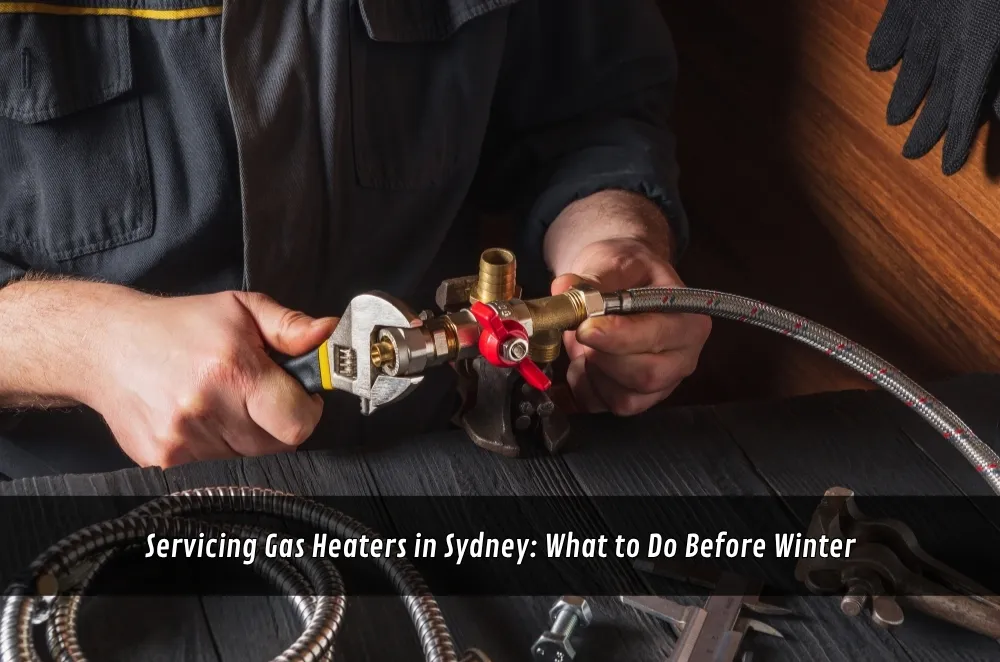

Sydney doesn’t get alpine winters, but it gets enough cold, damp nights to make a neglected heater feel like a personal vendetta.
Most people don’t notice the problem until the first proper chilly week—then it’s suddenly loud, smelly, uneven, or cutting out at the worst times.
A service isn’t about “making it perfect”; it’s about making it safe to run and boringly reliable.
Here’s what to focus on, what to avoid, and how to get it sorted without turning it into a drama.
Why a simple service can save a lot of hassle
Heaters tend to fail in the most annoying way: not completely dead, just inconsistent.
That’s when you get the room that won’t warm up, the unit that runs forever, or the stop-start cycling that makes everyone crank it higher.
Even if you don’t care about “efficiency” as a concept, you’ll care when the heater works harder and still doesn’t feel right.
A decent service gives a baseline so later you can tell the difference between “winter is colder” and “something has shifted”.
What a good service usually looks like in real life
Expect a technician to watch the heater through a full start-up and shut-down, not just glance at it and call it a day.
A lot of faults show up in the transitions—ignition, ramp-up, and the moment it turns off.
They’ll often look for obvious airflow issues (blocked vents, restricted returns, cramped placement) because bad airflow can mimic a mechanical problem.
They may also flag signs that suggest deeper issues, like unusual staining, sootiness, or heat stress, and explain what that could mean without making big promises.
If the unit’s older, a good operator will talk through options plainly: what’s worth fixing now, what might be a “monitor it” situation, and when it’s smarter to plan a replacement.
Common mistakes that cause repeat problems
Leaving it until you “need” it. By late May/June, booking windows can tighten and you end up accepting whatever slot you can get.
Assuming smells are just dust. A brief first-run dusty smell can happen, but anything persistent, sharp, or burning isn’t something to tough out.
Blocking vents with furniture or storage. It’s incredibly common in smaller Sydney homes and offices—then everyone blames the heater.
Resetting and forgetting. If it trips, locks out, or needs restarting more than once, it’s giving you information.
No paper trail in rentals/strata. Without a simple record, each visit starts from scratch and you pay for the same investigation twice.
Choosing a technician in Sydney: what to ask and what to listen for
The fastest way to sort this is to choose someone who can explain scope clearly.
Ask what a standard service covers, what counts as a repair, and how they handle follow-ups if parts are needed.
It’s also worth asking how they approach older units, because parts availability and “is it worth it?” decisions are different at 3 years versus 15 years.
A practical test: can they tell you what information to have ready (model details if possible, symptoms, when it happens, how often) and why it matters?
If you’re ready to line up a service, the Apex Gas Heater Service booking page lists the info that helps the appointment run smoothly.
Listen for calm, specific language—no scare tactics, no sweeping guarantees, just a clear explanation of what they observed and what they recommend next.
Operator Experience Moment
A scenario that comes up a lot is “it works… until it doesn’t”, especially during a damp run of nights when the heater is running longer than usual.
The unit might look fine on a quick test, then short cycle once it’s under real load.
When you actually watch start-up, steady run, and shut-down in one visit, the pattern usually becomes obvious and you stop guessing.
A simple 7–14 day plan (without overthinking it)
Days 1–2: Do a safe test run. Turn it on when you’re home, stay alert for repeat smells, rattles, or odd cycling, and make sure vents aren’t blocked.
Days 3–4: Write down the useful stuff. What happens, when it happens, and whether it’s getting worse; if you can find model details, note them too.
Days 5–7: Book before the weather forces your hand. The point is to create breathing room for follow-up if anything needs attention.
Days 8–10: Make access easy. Clear around the unit, make vents reachable, and tell the technician about any quirks (one room always cold, noise only at start-up, etc.).
Days 11–14: Keep the record somewhere you’ll actually find it. A photo of the notes in a dedicated folder beats “I’m sure it was done last year”.
Local SMB mini-walkthrough: a Sydney office situation
A small Inner West office notices the heater is louder and the front desks get warm while the back area stays chilly.
They put it off, then June hits and portable heaters start appearing under desks.
Storage boxes near the outlets are quietly choking airflow, so the main unit runs longer and sounds worse.
A service visit plus a quick layout change improves heat spread without anyone touching a thermostat.
The manager starts logging “symptoms + date” in a shared doc so patterns don’t get lost.
Next year, they schedule the check in late April instead of waiting for the first wet cold snap.
Practical Opinions
If a smell repeats, stop using the unit and get it checked instead of trying to “burn it off”.
If the heater is old and temperamental, plan the replacement early rather than paying for urgent call-outs all winter.
If more than one person uses the space, a simple written log prevents the same issue being re-explained every time.
Key Takeaways
- A solid service is about safety and consistency, not a dramatic “before and after”.
- Many problems show during start-up and shut-down, so observation matters.
- Don’t wait for the first cold week—book early so you have options.
- Pick a technician who can explain scope, trade-offs, and next steps plainly.
Common questions we hear from businesses in Sydney, NSW, Australia
Q1: How often should a gas heater be serviced?
Usually, once a year before winter is a sensible baseline if the heater is used regularly. A practical next step is to choose a repeatable timing (often late April or May in Sydney) and put it in the calendar as a recurring task.
Q2: What should be ready before the technician arrives?
In most cases, access and information matter more than anything—clear the area, don’t block vents, and list the symptoms in plain words. A practical next step is to note whether the issue happens on first start, after 20–30 minutes, or only on damp nights, because Sydney’s early-winter humidity can make patterns easier to spot.
Q3: Is it okay to keep running the heater if it smells odd?
It depends on whether it’s a one-off dusty smell after months off, or something that comes back again and again. A practical next step is to stop using the heater if the smell repeats and arrange an inspection rather than pushing through a cold week and hoping it settles.
Q4: What’s the simplest way to cut down repeated heater complaints in rentals or strata?
In most cases, consistency beats heroics: log what was reported, what was done, and what changed. A practical next step is to keep a basic home gas heater maintenance in Sydney record (date, symptoms, outcome) and schedule pre-winter servicing, which suits Sydney properties where heaters can sit unused for long stretches then run hard when the weather flips.


























Sign in to leave a comment.