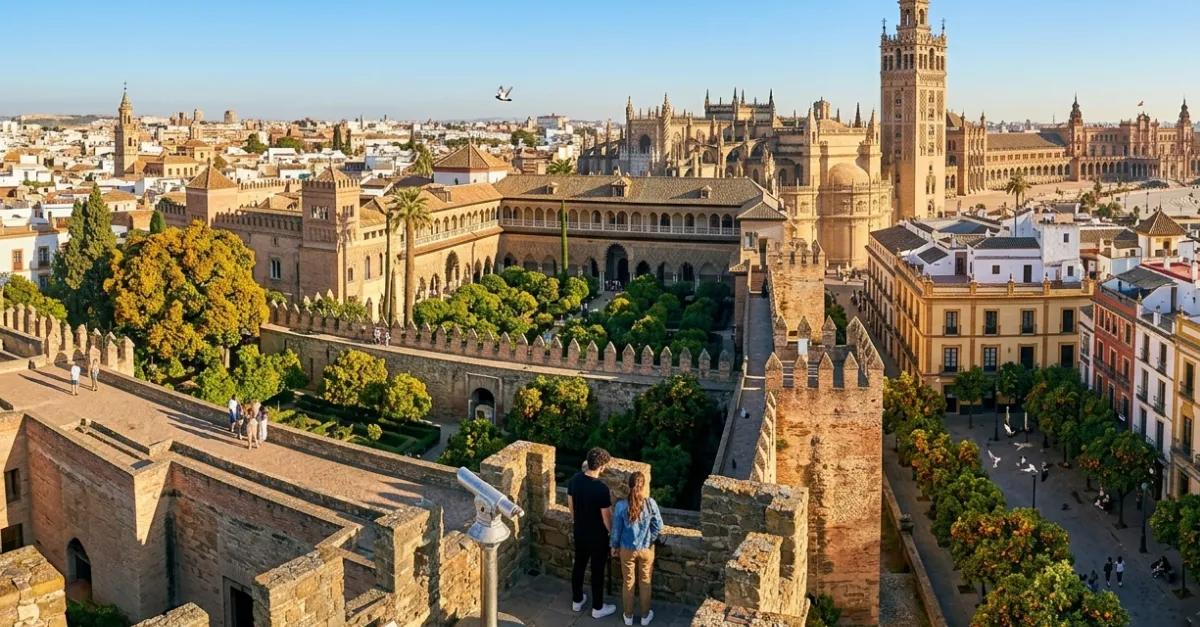

If you’ve never been to Seville, you’re in for a real treat. Southern Spain’s cultural capital mixes Moorish architecture, passionate flamenco, extraordinary food, and a rhythm of life so different from northern Europe that first-time visitors often feel like they’ve stepped into another world entirely. It’s sunny, walkable, and almost unfairly beautiful.
And the best part? It’s still a little underrated compared to Barcelona or Madrid, which means it doesn’t feel completely overrun. Here’s how to experience the very best of Seville without missing the good stuff.
The Real Alcázar: Spain’s Most Extraordinary Building
Let’s start at the top. The Royal Alcázar of Seville is, in my opinion, the most beautiful palace complex in Spain — and in a country with this much competition, that’s saying something. The Moorish architecture, the impossibly detailed tilework, and the serene formal gardens combine into spaces that genuinely take your breath away.
Game of Thrones fans will spot several familiar corners here (this was the Water Gardens of Dorne). One tip: tickets sell out and the queues get long, so book ahead. A Seville Cathedral, Giralda and Royal Alcázar guided tour gets you in with expert context, and the story of Christian and Moorish co-existence built right into these walls is genuinely fascinating once someone explains it to you. Give yourself two to three hours here — you won’t want to rush it.
Seville Cathedral: The World’s Largest Gothic Church
Built on the site of a great mosque, Seville’s cathedral is enormous, gold-drenched, and frankly a little overwhelming in the best way. Christopher Columbus is buried here, his tomb held aloft by four bearers. And the old minaret — the Giralda — was cleverly repurposed as the cathedral’s bell tower; climb its gentle ramps (no stairs, surprisingly) for sweeping panoramic views over the rooftops.
If you’d rather skip the lines and go at your own pace, there’s also a priority-entry private tour of the Cathedral, Giralda and Real Alcázar that lets you set the rhythm and ask all the questions you want. Quick heads-up: the dress code is enforced here, so cover your shoulders and knees.
The Barrio Santa Cruz
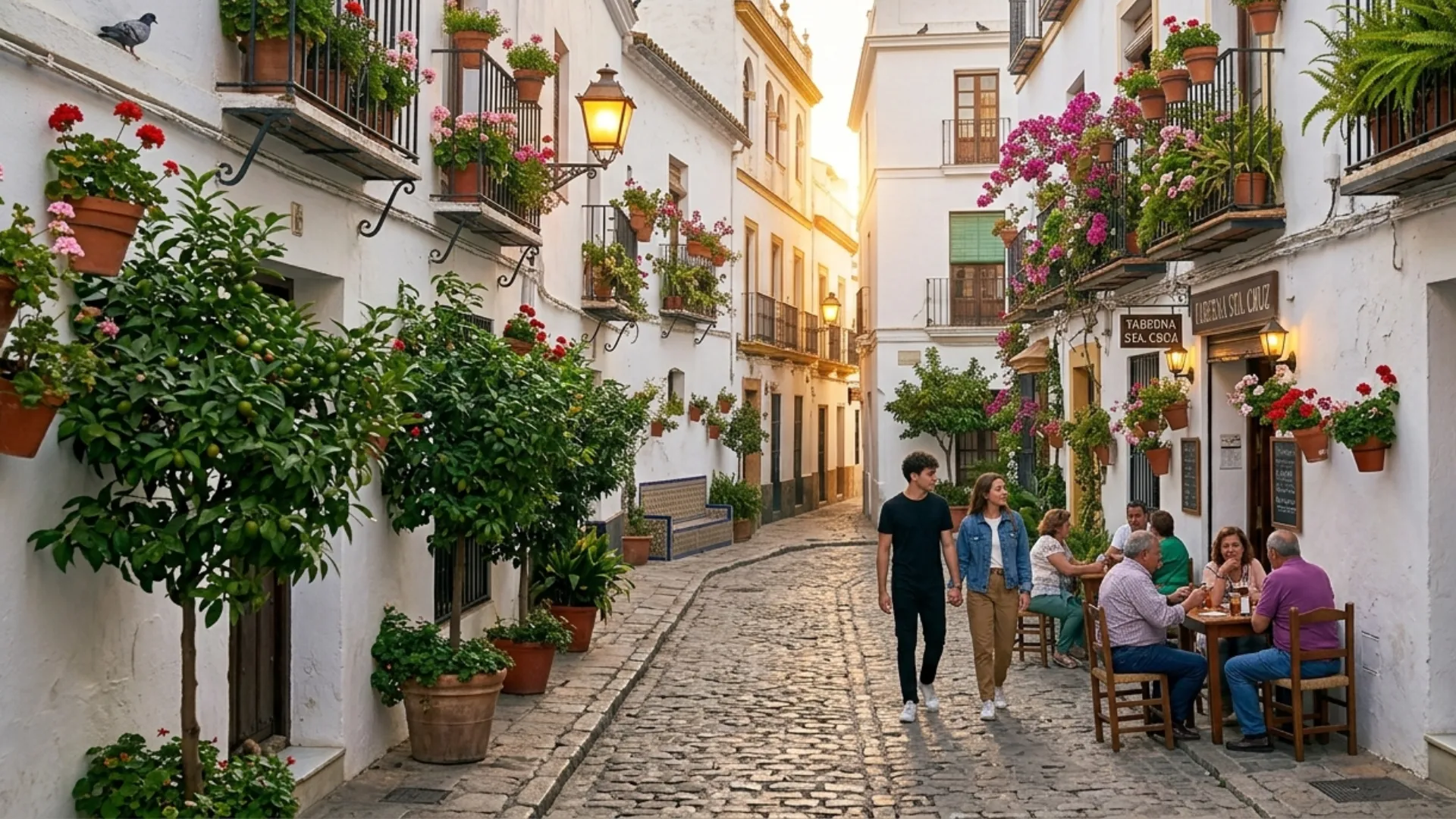
The old Jewish quarter of Seville is a maze of narrow, white-walled lanes, orange trees, and hidden plazas — honestly one of the most atmospheric medieval neighborhoods in all of Europe. My advice? Get lost here on purpose. Every turn seems to reveal a little courtyard garden, a tiled fountain, or a tiny bar pouring cold fino sherry alongside slivers of jamón. Leave the map in your pocket and just wander; it’s the whole point.
Flamenco: See It Live
Flamenco was born in Andalusia, and Seville is its beating heart — so seeing a live show here is non-negotiable. There’s a whole spectrum to choose from: intimate tablaos (small flamenco clubs) with professional performers, spontaneous bursts of song in neighborhood bars, or full theatrical productions in grand historic venues. For my money, the intimate shows hit hardest. You’re close enough to feel the floor shake under the dancer’s feet and hear the raw catch in the singer’s breath. It’s emotional, electric, and unforgettable.
The Triana Neighborhood
Cross the Guadalquivir River and you’ll land in Triana — Seville’s ceramic-making, working-class soul. This neighborhood has a fierce identity all its own, with excellent local restaurants, traditional tile workshops you can still visit, and arguably the best view of the Seville skyline from the riverbank. It’s where locals actually eat and where the tourist crowds thin out dramatically. Come hungry and stay for the sunset.
Plaza de España
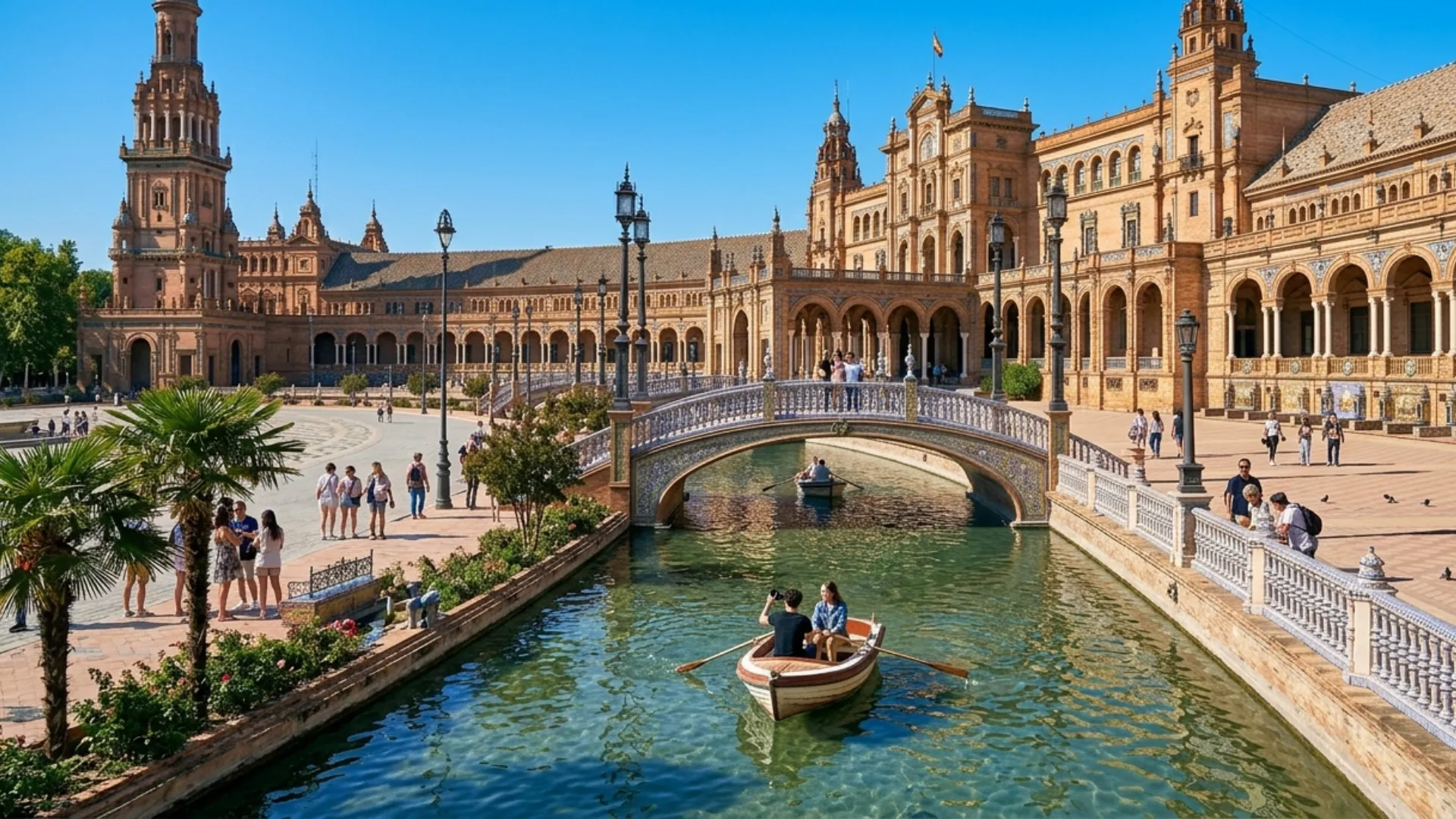
Built for a 1929 World’s Fair, the Plaza de España is a sweeping semicircular complex decorated with individual tiled alcoves — one for every province of Spain. It’s dramatic, ridiculously photogenic, and a longtime favorite of film crews; you might recognize it from Lawrence of Arabia or Star Wars: Episode II. Rent a little rowboat on the canal for the prettiest view, or come at sunrise if you want it almost to yourself before the crowds arrive. The surrounding Maria Luisa Park is a lovely, shady spot to recover afterward.
Bonus: Las Setas (Metropol Parasol)
If you fancy something completely different from all that history, head to Las Setas — officially the Metropol Parasol, but everyone calls it “the Mushrooms.” This giant wooden structure is the world’s largest wooden building, and you can walk along its undulating rooftop walkways for a brilliant modern panorama of the city. It’s especially magical at sunset, when the whole skyline glows golden. A fun, unexpected contrast to Seville’s ancient core.
Eating and Drinking in Seville
Seville is one of Spain’s truly great food cities, and the tapas culture here is the real deal. Many bars still hand you a small free tapa with every drink — a generous old tradition that’s sadly died out across most of Spain but lives on here. Don’t leave without trying salmorejo (a thick, cold tomato soup topped with egg and jamón), espinacas con garbanzos (spinach with chickpeas, a Moorish-influenced classic), and fresh seafood straight from the nearby Atlantic coast. Wash it all down with a cold beer or a glass of local sherry, and you’ll understand why Sevillanos take their evenings so seriously.
When to Visit Seville
Timing matters more here than in most cities. Spring (March to May) and autumn (September to November) are ideal — warm and sunny without being punishing. July and August, on the other hand, are genuinely extreme; temperatures regularly hit 40°C (104°F), and the city basically goes into siesta mode to survive.
If you visit in summer, plan your sightseeing for early morning and late evening. Two extraordinary events are worth knowing about: the famous Semana Santa (Easter Week) processions and the dazzling April Fair (Feria de Abril). Both are unforgettable — just book your accommodation many months ahead, because the whole city fills up.
Final Thoughts
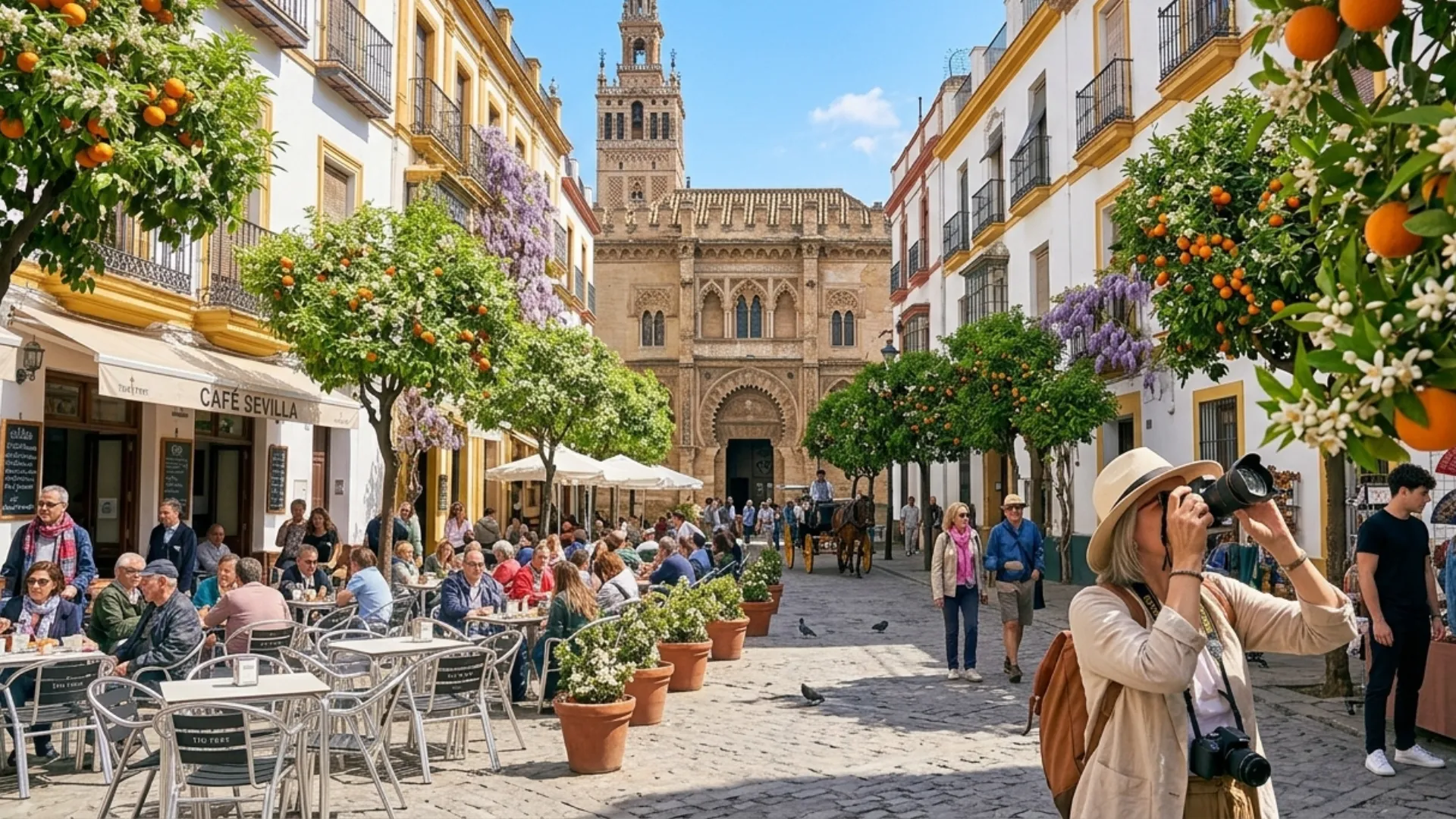
Seville is one of Europe’s most underrated big cities, at least for travelers who haven’t discovered it yet — and once you go, you’ll wonder what took you so long. For expertly guided tours of the Alcázar, Cathedral, and Giralda, take a look at Crown Tours’ Seville page, or browse the full range of European destinations over at crowntours.com. Go for the monuments, stay for the flamenco, the tapas, and those warm Andalusian evenings — Seville has a way of stealing your heart.



























Sign in to leave a comment.