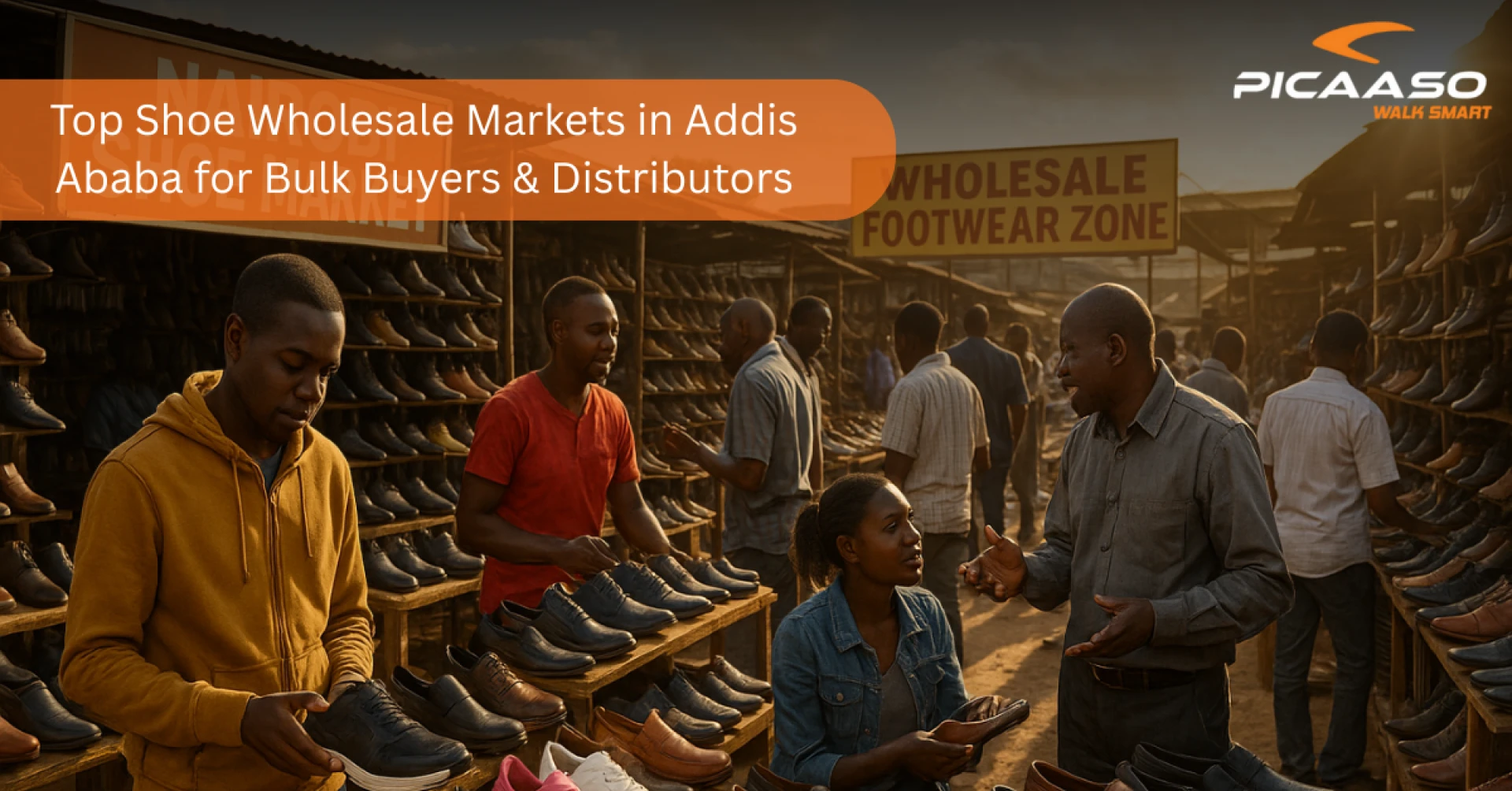

Finding the right shoe wholesale market in Addis Ababa can transform your footwear distribution business. When I first started sourcing leather shoes for my retail chain three years ago, I struggled to navigate Ethiopia's complex wholesale landscape. After countless visits to various markets and building relationships with over 30 suppliers, I discovered that Addis Ababa hosts some of Africa's most competitive footwear wholesale hubs.
Ethiopia's footwear industry has experienced remarkable growth, with the market reaching $278.90 million in 2024 and projected to hit $372.90 million by 2033. This guide shares firsthand insights into the top shoe wholesale markets where bulk buyers and distributors can source quality footwear at competitive prices.
Why Addis Ababa Dominates Ethiopia's Footwear Wholesale Trade
Ethiopia stands as Africa's largest livestock producer, with approximately 65 million cattle providing an abundant supply of high-quality leather—the foundation of the country's thriving shoe wholesale market. I've personally witnessed how this resource advantage translates into competitive pricing and diverse product offerings.
The Ethiopian government's commitment to the leather sector is substantial, aiming to create 300,000 jobs in the leather value chain by 2030. This policy support, combined with industrial park development and tax incentives, has attracted both domestic and foreign investors to the wholesale shoe market in Addis Ababa.
In my experience working with Ethiopian manufacturers, production costs remain highly competitive compared to Asian markets. The average unit value for Ethiopian footwear exports stands at just $12.62 per pair, significantly lower than the global average of $22.04. This pricing advantage makes Addis Ababa's shoe wholesale market particularly attractive for bulk buyers seeking margins.
Merkato: Africa's Largest Wholesale Shoe Market
Overview and Location
Merkato deserves first mention as the undisputed champion of shoe wholesale markets in Addis Ababa. Located in the Addis Ketema district, this massive open-air marketplace covers several square miles and employs approximately 13,000 people across 7,100 business entities. When I first visited Merkato in 2022, the sheer scale overwhelmed me—it took three full days just to map the shoe vendors.
What Makes Merkato Special for Shoe Buyers
The shoe wholesale market section of Merkato concentrates primarily in the southern quadrant, where hundreds of shops deal exclusively in footwear, leather materials, soles, and shoe accessories. I've found that wholesale pricing here can be 30-40% lower than retail locations in other parts of the city.
During peak seasons (September-January), the market swarms with activity. I typically arrive before 8 AM to secure the best deals before crowds arrive. The specialized shoe section, locally known as the footwear district, features both finished products and raw materials, making it ideal for manufacturers and distributors alike.
Product Range and Pricing
From my sourcing experience, Merkato's shoe wholesale market offers:
Men's Leather Shoes: 500-2,500 Ethiopian Birr per pair wholesale (approximately $9-45 USD)
Women's Fashion Footwear: 400-3,000 Birr per pair ($7-54 USD)
Children's Shoes: 300-1,500 Birr per pair ($5-27 USD)
Safety Boots and Industrial Footwear: 1,200-4,000 Birr per pair ($22-72 USD)
The key to successful bulk purchasing in Merkato lies in building relationships. I've personally negotiated deals where unit costs dropped by 25% after committing to minimum orders of 500 pairs.
Specialized Wholesale Shoe Districts in Addis Ababa
Amede Gebeya (Shoe Market)
Within Merkato's broader structure, Amede Gebeya functions as the specialized wholesale shoe market hub. This concentrated area houses approximately 60 retailers specializing in locally manufactured leather shoes. When I need premium Ethiopian leather footwear, this is my first stop.
The advantage of Amede Gebeya for wholesale buyers includes direct access to manufacturers. Many shop owners maintain their own production facilities or have exclusive relationships with nearby factories. I've arranged factory visits through contacts here, which allowed me to customize designs for bulk orders.
Bole Road Commercial District
For higher-end wholesale opportunities, the Bole Road area presents a more organized shoe wholesale market experience. While prices run 15-20% higher than Merkato, the quality consistency and modern showrooms make verification easier for international buyers.
Several wholesale distributors along Bole Road specialize in branded Ethiopian footwear from manufacturers like Anbessa Shoe Share Company and Atlantic Shoe. I recommend this location for buyers prioritizing documentation and export-ready products.
Key Wholesale Shoe Suppliers and Manufacturers
Anbessa Shoe Share Company
Ethiopia's premier footwear manufacturer operates both retail and wholesale channels. When I visited their manufacturing facility, I was impressed by their capacity to produce 2,000 pairs daily with plans to double output. Their specialties include safety shoes with steel toe caps rated for 250 tons of pressure—perfect for industrial wholesale orders.
For bulk buyers, Anbessa offers competitive pricing on minimum orders of 200 pairs. Their wholesale division handles export documentation, making international distribution smoother than dealing with smaller market vendors.
Tikur Abay Shoe Factory
As Ethiopia's oldest footwear manufacturer (established 88 years ago), Tikur Abay brings heritage craftsmanship to the shoe wholesale market. Their wholesale program focuses on men's dress shoes and casual leather footwear. I've sourced their products for mid-range retail clients who appreciate traditional Ethiopian leather quality.
Kangaroo Shoe Factory
Founded 27 years ago by entrepreneur Yirga Haile, Kangaroo now employs over 320 people and generates annual revenue exceeding 51 million Birr. Their wholesale offerings span multiple categories, from formal wear to athletic-inspired designs. The minimum wholesale order is 100 pairs per style.
Picaaso Footwear
This India-based brand has firmly established a footprint in Ethiopia through local agents. Known for contemporary designs, they serve as one of the most trusted wholesale footwear exporters catering to the African market. Their range includes slippers, sandals, wedges, and durable leather shoes made for regional climates.
With custom branding, flexible MOQs, and rapid order fulfillment, they’re ideal for buyers seeking private-label opportunities.
Navigating the Shoe Wholesale Market: Practical Tips
Best Times to Visit
Based on three years of regular sourcing trips, I've identified optimal visiting periods:
- September-October: New season inventory arrives; wider selection available
- March-April: Pre-Easter rush; competitive pricing to move inventory
- Early Morning Hours (7-9 AM): Best selection before bulk buyers deplete popular styles
Avoid visiting during lunch hours (12-2 PM) when many wholesalers close temporarily. Friday afternoons also see reduced operations due to religious observances.
Quality Verification
Quality varies significantly across the shoe wholesale market. I always inspect:
- Leather quality: Check for consistent thickness, minimal blemishes, and proper finishing
- Sole attachment: Test the bond between sole and upper—it should resist moderate pulling
- Stitching integrity: Examine seam quality, particularly in stress areas like toe boxes
- Sizing consistency: Ethiopian sizes don't always match international standards; measure samples
Request samples before committing to large orders. Most reputable wholesalers provide 2-3 sample pairs for quality verification on orders over 200 pairs.
Understanding Ethiopia's Footwear Industry Dynamics
The Ethiopian footwear sector has grown from just two factories in 1991 to 21 major manufacturers today, employing approximately 14,000 people nationally. This expansion directly benefits the shoe wholesale market ecosystem in Addis Ababa by increasing supply diversity and competitive pricing.
Recent market data reveals that Ethiopia produces approximately 76 million pairs of leather footwear annually, ranking second in Africa after Nigeria. The domestic market consumes most of this production, but export opportunities continue expanding, particularly to the United States, China, and neighboring East African countries.
The "Made in Ethiopia" campaign has significantly boosted demand for locally produced footwear. When I first started sourcing in 2022, domestic brands comprised about 60% of market share. That figure now exceeds 75% as quality improvements and patriotic purchasing trends converge.
Conclusion:
Addis Ababa’s shoe wholesale markets offer remarkable opportunities for entrepreneurs and distributors aiming to scale in Africa’s booming footwear industry. Merkato remains unbeatable for volume and price, Amede Gebeya excels in craftsmanship, and Bole Road leads in export-ready offerings.
My own success in Ethiopia’s wholesale shoe business is built on three pillars: long-term supplier relationships, strict quality verification, and strategic negotiation. The synergy between local Ethiopian producers and international shoe suppliers makes this market one of the most promising in the continent.
For serious buyers, spend at least 3–5 days exploring these hubs, secure a local translator, and start with small sample orders before scaling. With consistent sourcing and reliable partnerships, Addis Ababa can become your gateway to Africa’s thriving footwear trade.

























Sign in to leave a comment.