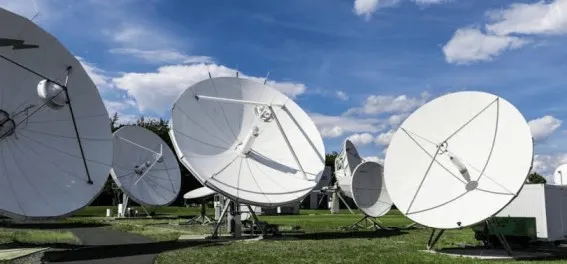

High-tech signal intelligence antennas are used to obtain the signal intelligence.The signal intelligence is being obtained using high-tech signal intelligence antennas.
At its heart, the signal intelligence antenna's most important job is to receive communications over a broad range of frequencies, while remaining unobtrusive. This is the only requirement on which all design features of these antennas are based, and this is what makes them different from the antenna used on a broadcast tower or a phone mast. The wrong antenna doesn't just fail to perform as effectively as it should for the defence, security, and intelligence forces that depend on it, it simply notifies them about the wrong things. It is a simple description of what these antennas do, the options that are available when specifying an antenna, and what to consider when looking for an antenna manufacturer.
What does SIGINT want from an antenna?What does SIGINT seek from an antenna?
The most basic definition of signal intelligence is the acquisition of information via radio signals. The antenna is the first link in that chain and if it doesn't 'hear' the signal in a clean manner, the rest of the chain will not receive it either. The problem is that often, the signals of interest do not lie in one convenient band. They may occur anywhere from HF through UHF, which means that the antenna must cover all these frequencies and not just a small portion.
This has a definite effect on the design direction, which is towards low noise, wideband and consistent response throughout the frequency range. A 50 Ohm inherently wideband antenna allows the receiver to have a clearer signal to work with, and is of particular importance at the edges of detection where the low-power emitter is prone to falling out of sight. It is always a trade-off between size, bandwidth and gain — increase one, and decrease the others; a good SIGINT antenna is not a large antenna, or a narrow antenna or a high gain antenna, it's a well-balanced antenna.
The first real choice is between directional and omnidirectional.The first actual choice to make is between directional and omnidirectional
The question isn't frequency or polarization, it's what you're looking to achieve with the coverage.
Omnidirectional Antenna—An antenna that is sensitive to signals from all directions. You want to watch the whole horizon when you're monitoring the spectrum, general surveillance, or if you don't know where the signal is from yet. Here, the typical choice is either a wideband discone or a conical monopole; and they can cover quite a wide range of frequencies, even into the multi-gigahertz.
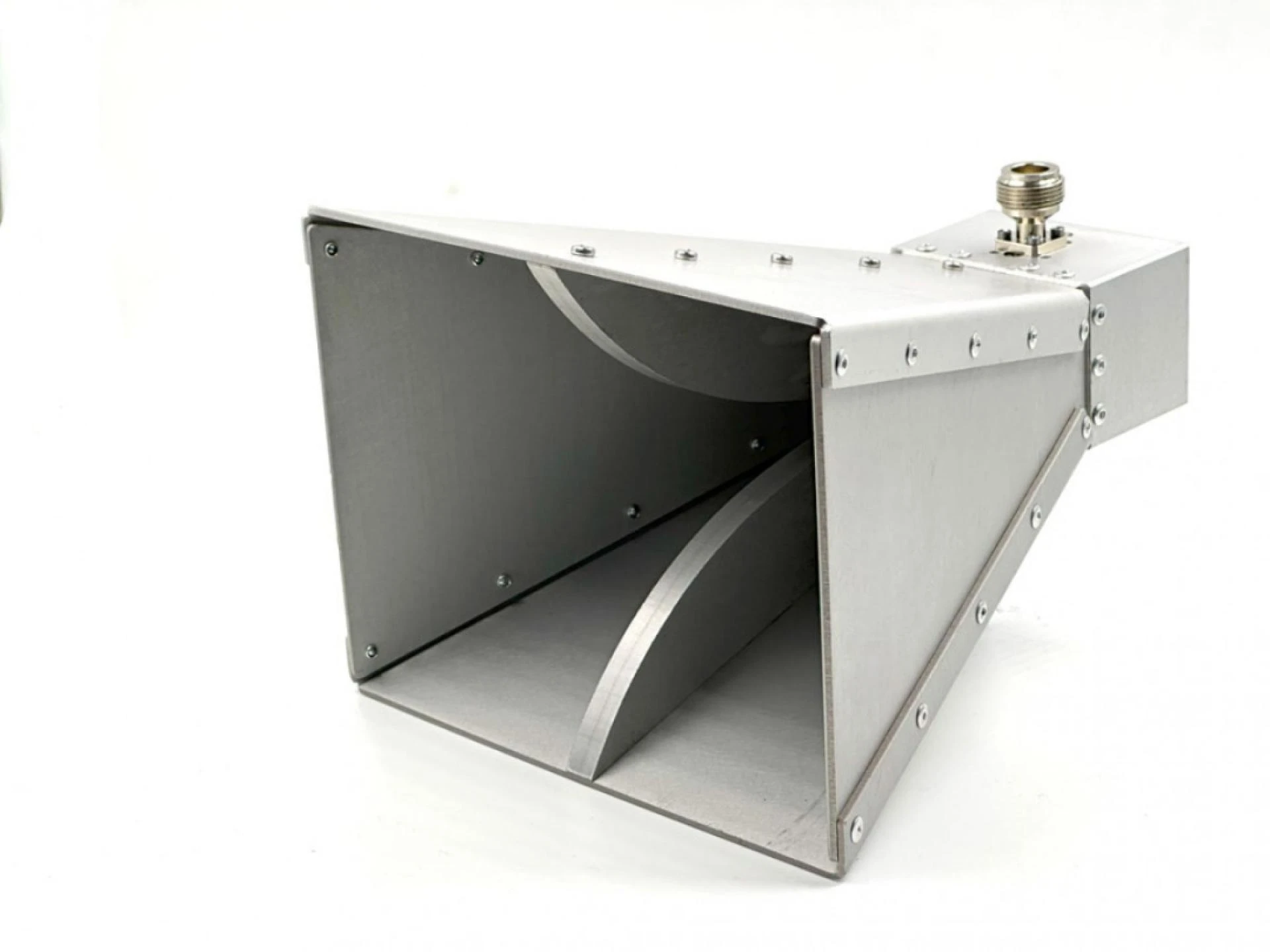
A directional antenna does the opposite: only amplifies one direction, gives up its ability to work out the direction of an emitter and the ability to cover the whole space. They are the workhorses of this use throughout the HF, VHF and UHF bands and are the periodic antenna of choice for this purpose. In practice, a competent site will have both omnidirectional and directional, in order to detect if something is there, and to know where.
Polarization is more serious than people realize.Polarization is more serious than people believe
Radio signals are polarized, that is, the direction of the electric field, and an antenna that is not aligned with it will receive little or no signal, sometimes nothing at all. But not all of the time in SIGINT, as you may not have a degree of control or even an idea of the polarization of what you are trying to intercept.
Which is why there are so many types of antennas in this category. In certain applications, both vertical and horizontal polarization are required simultaneously, thus dual-polarized log periodic designs are of interest. Others require circular polarization, which is accomplished with spiral, helical, quadrifilar helix antennas, and either right or left hand polarization. One of the things that makes a system that reliably "hears" what it is looking for, different from a system that drops targets without anyone knowing why, is having the polarization capability to match the polarization of the signal.
Where does SIGINT and electronic warfare meet?
Signal intelligence and electronic warfare overlap in some respects and the antennae equipment is similar. The essence of SIGINT is to listen, to search, detect and identify the emitter to develop an accurate picture of the electromagnetic environment. An electronic warfare antenna is an extension of that environment which includes jamming, so the same manufacturer that makes SIGINT arrays often makes EW and RCIED (electronic countermeasure – radio intermittent jammer) antennas along with the SIGINT arrays.
The interesting thing for a buyer is that these functions are typically given as a unit. If the programme must be able to intercept HF-to-UHF communications, then it must also have a response capability, and if the response capability is also from the same manufacturer, then frequency coverage, connector standard and mechanical interfaces are consistent throughout the system.
The selection of the manufacturer, supplier and exporter must be made.A manufacturer supplier and exporter should be selected.
Often a SIGINT antenna is not something you can pick off the shelf and the manufacturer is as important as the product. The first question that needs to be answered is whether they build and design their own range, as a signal intelligence antenna manufacturer who controls the design can adjust frequency coverage, polarization, form factor, etc., to a given mission—rather than forcing you into a fixed catalogue part.
Certification and standards provide you with a sense of what the equipment is actually composed of and whether or not a severe defence client can acquire it. A signal intelligence antenna exporter already used to the international defence deliveries will become familiar with the documentation and compliance, which is not trivial for the equipment in this category. Having a supplier that provides complete datasheets, pattern data and clear technical support before you buy is one that you can be sure to specify, not find out about a coverage gap after you install. These systems are sensitive and often getting hands on the original manufacturer is a safer bet than one step removed from the engineering, a reseller.
Frequently asked questions?
What frequency range does a signal intelligence antenna need to cover? It depends on the mission, but SIGINT work typically spans HF through UHF, and some omnidirectional designs reach well into the gigahertz range in a single unit. The wide span is why these antennas are built for broadband performance rather than a single band.
What's the difference between a directional and omnidirectional SIGINT antenna? Omnidirectional antennas listen in all directions, which suits detection and spectrum monitoring. Directional antennas, like log periodics, concentrate sensitivity along a bearing for higher gain and direction finding. Many sites use both together.
How is a signal intelligence antenna different from an electronic warfare antenna? SIGINT antennas are optimised for listening — detecting and identifying signals. Electronic warfare antennas extend to acting on signals, including jamming. The hardware overlaps, and manufacturers often supply both.
Can these antennas be customised for a specific requirement? Yes. A manufacturer that designs its own range can adjust frequency coverage, polarization, gain, and form factor to a mission, which is common for SIGINT programmes with non-standard needs.
Why buy directly from the manufacturer? Direct sourcing keeps you close to the engineering, makes customisation and technical support straightforward, and matters for procurement and export compliance on sensitive defence equipment.
The bottom line
A signal intelligence antenna is "somebody's ear" that is listening where other antennas are not listening — a wide band with low noise, in the direction and polarization of the signals that matter. The specification is just a few interconnected choices: range of frequencies required, directional or omnidirectional, and which polarizations must be captured. Match the antenna to the mission; work with a manufacturer that will provide complete technical data and be able to modify the design to meet unusual requirements; and the antenna becomes a dependable front end for the entire intelligence system, rather than its weakest link.

























Sign in to leave a comment.