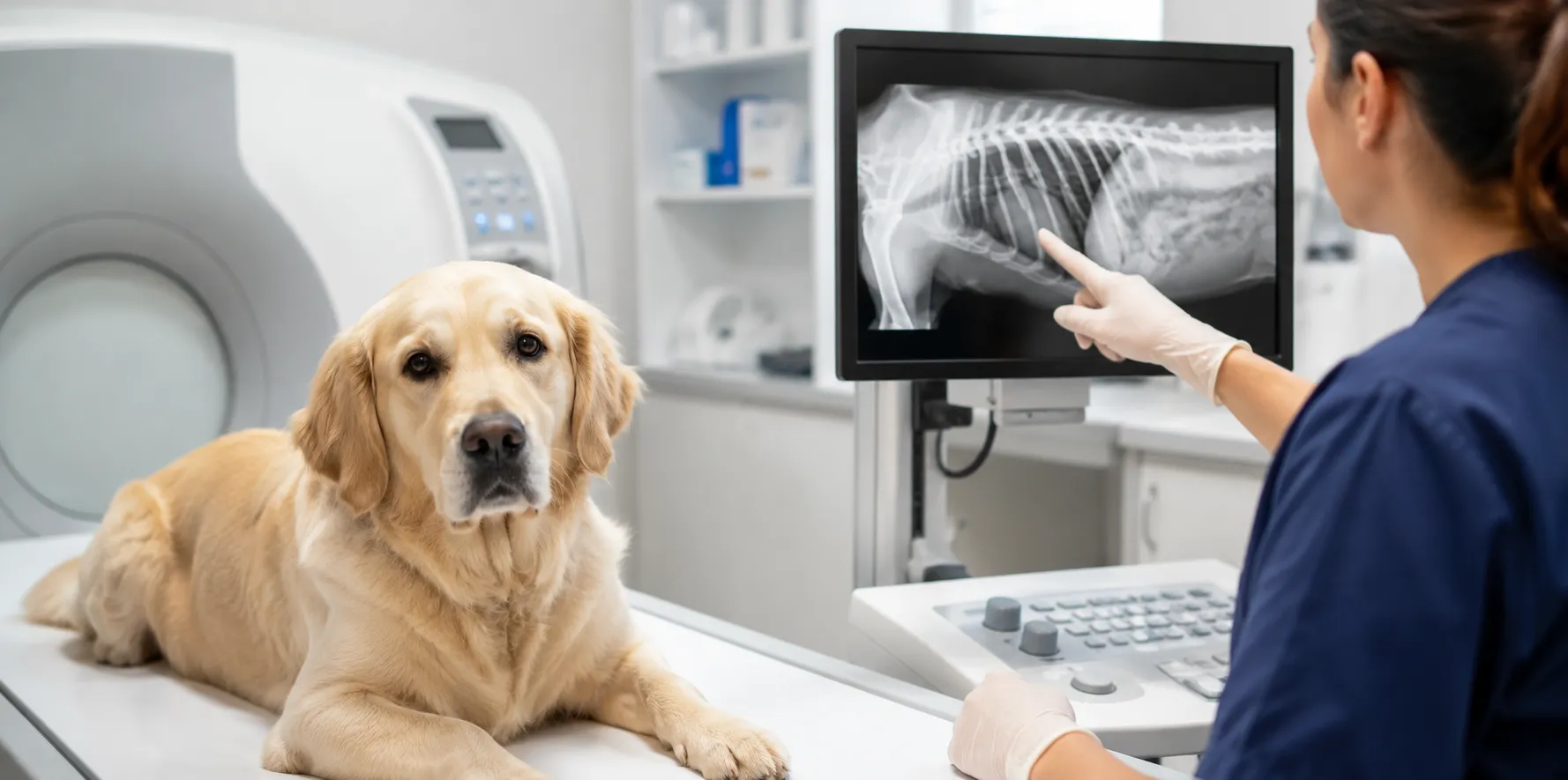

Unfortunately, our pets cannot communicate to us what exact part of their body hurts or how they feel. Although there are a number of symptoms that can point to certain conditions and that can be seen during an examination, some diseases cannot be diagnosed only on the basis of physical examination. At such times, pet diagnostic imaging will help the veterinarian understand better the state of your pet’s body.
There are different types of diagnostic imaging including X-rays and ultrasound. Using these tools will help in examining bones, joints, internal organs, and soft tissue in your pet without resorting to invasive exploratory procedures.
What Is Pet Diagnostic Imaging?
Pet diagnostic imaging is the name given to diagnostic tools employed by veterinarians to examine structures within your pet’s body. According to the signs observed and the suspected problem, the veterinarian may decide to use x-rays, ultrasound, or other imaging techniques.
X-rays are widely used to diagnose problems with bones and joints, the chest, and some abdominal organs. Ultrasound involves the use of sound waves to make pictures of organs and soft tissue and is especially helpful in diagnosing abdominal conditions.
The best imaging technique will depend on your pet’s symptoms and physical examination.
1. Persistent Limping or Difficulty Walking
Stiffness following rigorous exercise does not necessarily mean a serious situation is at hand. Nevertheless, limping, hesitancy to walk, difficulty standing up, or any sudden change in gait requires evaluation.
An X-ray can be used to detect any bone fractures, problems within joints, or other issues with the musculoskeletal system. Animal diagnostic imaging helps veterinarians analyze parts that cannot be observed externally.
In case of an accident or when your animal suddenly cannot walk, you might consider seeking emergency vet service.
2. Unexplained Vomiting or Digestive Problems
There can be numerous causes of vomiting, ranging from mild irritation of the stomach to something more serious. Vomiting along with discomfort in the abdomen, lack of appetite, or strange bowel movements will need further examination.
Diagnosis of your pet’s condition may involve taking diagnostic images to examine your pet’s stomach, intestines, liver, kidneys, bladder, and other abdominal organs. It may also help in locating any foreign bodies in your pet’s body.
When your dog vomits consistently or along with weakness or pain, you should visit a Veterinary Clinic immediately.
3. Breathing Difficulties or Persistent Coughing
Breathing abnormalities should never be overlooked. Fast breathing, coughing, abnormal respiratory sounds, or struggling for a breath are some symptoms that can be indicative of diseases related to the lungs, heart, or even other structures around them.
Radiography of the chest area is one of the ways in which a lot of information regarding the lungs and heart can be obtained. Breathing abnormalities should always warrant an emergency consultation.
4. Abdominal Swelling or Pain
A bloated, painful, or unusually hard abdomen can be a symptom of some underlying illness. Your pet may also exhibit restlessness, avoidance of being handled, abnormal posturing, or lack of interest in eating.
Imaging tests like ultrasounds and X-rays can assist veterinarians in identifying the cause behind abdominal problems. Imaging tests for pets allow veterinarians to visualize vital information about your pet.
A sudden enlargement of the abdomen together with stress is an emergency situation.
5. Unexplained Weight Loss or Appetite Changes
Weight loss regardless of the cause but whether it is sudden or gradual should see a visit to the veterinarian. Also, abnormal appetites might point to an existing underlying problem.
The veterinarian will first carry out tests to examine the blood and other lab tests. Further tests in case more information is required can include taking images of the internal body parts through imaging.
6. Your Pet Has Experienced Trauma
Falls, motor vehicle incidents, wild animal attacks, and even other types of injuries can result in internal damage that is hard to detect.
X-ray and ultrasonography can prove useful in examining trauma. According to the circumstances, imaging will show whether there are any broken bones, injuries to the chest, or anything happening in the abdominal cavity.
In the case of major trauma, the best way to proceed is to reach out to a Veterinary Clinic or emergency veterinary assistance.
7. Ongoing Pain Without a Clear Cause
Pets tend to hide pain. The symptoms of pain include being less active, vocalizing, being more hidden, restless, refusing to jump up, being hypersensitive to touch, and alterations in regular behavior.
When there is no indication found after performing a physical exam on what might be causing the pain, pet diagnostics through imaging can provide more answers. The veterinary can use imaging to look inside bones, joints, and other areas within the body.
Why Early Diagnostic Imaging Matters
Early diagnosis can be very critical in veterinary treatment. Through imaging, the veterinarian gets information that would have been impossible to get just by observing and performing the physical examination on the animal.
Not all symptoms require that your pet undergoes an x-ray or ultrasound imaging. Your veterinarian will help you understand if you need diagnostic imaging for your pet and what kind of imaging can provide the most helpful information.
Conclusion
Limping, continuous vomiting, difficulty breathing, bloating, unexpected weight loss, trauma, and continuous pain are just some examples of things to watch out for when it comes to bringing your pet to the veterinary clinic. Sometimes, pet imaging can help determine the root cause of the problem.
If you observe any of these unusual behaviors from your pets, it is advised to consult the Veterinary Clinic of your choice for their professional evaluation. If the symptoms include breathing difficulties, serious trauma, and weakness, consider seeking immediate veterinary services.




























Sign in to leave a comment.