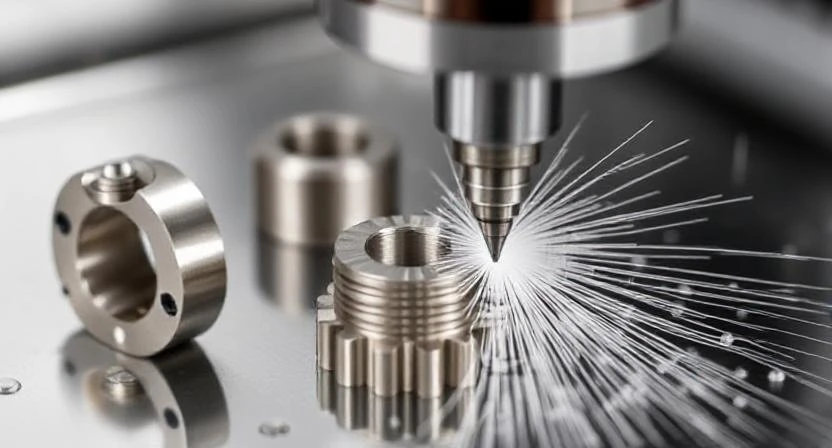
In an era where durability and performance are paramount, Selective Laser Melting (SLM) has emerged as a leading additive manufacturing technology for producing robust, long-lasting metal parts. Unlike conventional manufacturing methods, SLM for durable parts builds components layer by layer using a precision laser to fuse metal powders, resulting in fully dense, high-strength structures with exceptional wear resistance. Industries such as aerospace, automotive, oil & gas, and defense are increasingly adopting SLM to create parts that withstand extreme conditions while maintaining lightweight and complex geometries.
Why SLM is Ideal for Durable Parts
1. Unmatched Material Strength and Density
SLM produces parts with near-theoretical density, meaning they have minimal porosity—a critical factor for durability. The laser’s high energy ensures complete fusion of metal particles, leading to superior mechanical properties such as:
- High tensile and fatigue strength
- Excellent corrosion and heat resistance
- Improved wear resistance compared to cast or machined parts
Materials like titanium (Ti-6Al-4V), stainless steel (316L), and nickel-based superalloys (Inconel) are commonly used, making SLM ideal for demanding applications.
2. Complex Geometries for Enhanced Performance
Traditional manufacturing often limits design due to machining constraints, but SLM enables:
- Internal cooling channels in turbine blades for better thermal management
- Lightweight lattice structures that maintain strength while reducing weight
- Integrated components that eliminate weak points from welding or fastening
These design freedoms allow engineers to optimize parts for longevity, reducing failure rates in critical applications.
3. Reduced Material Waste and Cost Efficiency
Since SLM is an additive process, it significantly cuts material waste compared to subtractive methods like CNC machining. Key benefits include:
- Reuse of unsintered powder (up to 95% recyclability)
- Lower tooling costs since no molds or dies are needed
- Faster production of high-value, durable parts without extensive machining
This makes SLM economically viable for both prototyping and end-use part production.
4. Applications in Extreme Environments
SLM-produced parts excel in industries where failure is not an option:
- Aerospace: Engine components, landing gear, and satellite parts
- Oil & Gas: Corrosion-resistant valves and drill bits
- Medical: Long-lasting orthopedic implants and surgical tools
- Defense: Armor components and high-stress mechanical parts
These sectors benefit from SLM’s ability to create parts that endure harsh conditions without degradation.
Conclusion
Selective Laser Melting is transforming how industries approach durability in metal parts. By combining high material integrity, design flexibility, and cost efficiency, SLM is setting a new standard for long-lasting, high-performance components. As advancements in speed, material science, and post-processing continue, SLM will become even more integral to manufacturing resilient parts for the future. Companies investing in this technology today will lead the way in producing stronger, lighter, and more durable solutions.


























Sign in to leave a comment.