
Introduction
When it comes to running a successful engineering firm, delivering technical excellence is only one side of the equation. To truly thrive, your business must also maintain strong financial discipline and clarity. That is where Accounting Solutions for the Engineering Firms play a pivotal role. Precision in financial systems empowers engineering businesses to enhance profitability, manage cash flow effectively, comply with regulatory standards, and make strategic decisions that support long-term growth.
Engineering companies are unique in their operations. Unlike typical businesses, they work project-to-project and deal with complex billing, fluctuating costs, evolving tax regulations, and multi-layered reporting requirements. General accounting methods often fall short in addressing these specific challenges, and without specialized financial support, engineering firms can lose valuable time, money, and competitive advantage.
This comprehensive article will explore the importance of Accounting Solutions for the Engineering Firms, the specific challenges these businesses face, the benefits of tailored accounting systems, the essential services these solutions include, and how modern engineering practices can leverage these smart systems to drive success.
Understanding the Unique Financial Landscape of Engineering Firms
Engineering firms operate within a financial environment that differs substantially from many other industries. Projects can span months or years, involve multi-phase work, and use a combination of time-and-materials, fixed-fee, and cost-plus billing structures. The approach your firm takes to manage its finances must match this complexity.
Accurate financial management is not simply about keeping the books balanced. It is about understanding revenue recognition, monitoring project budgets in real time, forecasting cash flow, and maintaining strict compliance with applicable tax and accounting standards. These needs make Accounting Solutions for the Engineering Firms not just beneficial but essential.
For example, when project costs are not tracked precisely, profitability can suffer significantly. Engineering firms must account for materials, labour, subcontractors, equipment depreciation, and overheads on each individual project. Without a detailed cost analysis, firms can inadvertently underprice their services or fail to capitalize on potential savings. Furthermore, time tracking and billing accuracy directly impact cash flow and revenue recognition across contract types, ensuring that revenue is reported accurately according to accounting standards.
As discussed across business and finance features on the Writeupcafe, entrepreneurs are increasingly prioritizing jurisdictions that offer regulatory clarity and banking credibility.
The Core Challenges That Engineering Firms Face
Engineering firms face a range of financial challenges that general accounting services often fail to handle comprehensively:
Complex Revenue Streams
Engineering businesses often execute contracts that involve multiple deliverables, phases, and billing schedules. This complexity makes revenue recognition far more challenging compared to traditional product-based businesses. Inaccurate recognition can distort financial reports and lead to compliance issues with accounting principles.
Project-Based Cost Allocation
Proper allocation of project costs is essential for measuring profitability and managing resources. When a firm fails to monitor these costs accurately, it loses visibility into where money is being spent and where inefficiencies lie.
Regulatory Compliance
Engineering firms must comply with various tax and financial reporting requirements. These can include VAT, payroll taxes, industry-specific compliance standards, and contractor rules. Missteps in compliance can result in costly fines or missed tax relief opportunities.
Managing Cash Flow
Cash flow volatility is a frequent challenge for engineering firms. Large contracts with long payment cycles can strain the company’s liquidity if not managed wisely. Effective Accounting Solutions for the Engineering Firms always focus on forecasting future cash flows to ensure operations remain stable and sustainable.
Resource Management
Engineering businesses must carefully allocate resources across multiple ongoing projects. This includes labour, equipment, and indirect costs that need to be monitored in real time to avoid budget overruns.
Reliance on Manual Systems
Many smaller firms still use manual bookkeeping, spreadsheets, or generic accounting software, ill-equipped to cope with the unique demands of engineering finances. These outdated systems are prone to errors and fail to provide the real-time insights necessary for strategic decision-making.
Because of these complexities, a sophisticated and tailored approach to engineering accounting is required. Smart Accounting Solutions for the Engineering Firms help address these challenges with efficiency, accuracy, and agility.
Why Tailored Accounting Support Matters
Standard accounting services may help maintain your books and file simple tax returns, but they do not provide the deep financial insights needed to drive a growing engineering business. Accounting Solutions for the Engineering Firms that are customized to this sector bring deep industry expertise, technology leverage, and strategic planning capabilities that general accountants cannot match.
Understanding these industry-specific needs enables accounting professionals to offer far more than compliance support. They can help managers interpret financial data, manage project budgets, minimise tax liabilities, and optimise operational performance.
A tailored solution integrates knowledge of engineering project cycle structures, cost accounting principles, billing models, and compliance requirements into every aspect of financial reporting. These solutions allow firms to respond to issues proactively rather than reactively.
This specialized support also ensures that engineering firms maximise their tax efficiency. Many engineers fail to claim relevant reliefs, credits, and allowances simply because they are unaware of their eligibility. A well-designed accounting solution identifies opportunities like R&D tax credits and capital allowances on equipment and ensures that all eligible claims are maximised.
By optimising these areas, specialized accounting support has a direct positive impact on financial health and profitability, enhancing long-term sustainability in a competitive market.
Essential Elements of Smart Accounting Solutions for Engineering Firms
To be effective, Accounting Solutions for the Engineering Firms must include a comprehensive suite of features that address your core financial requirements:
Real-Time Financial Reporting
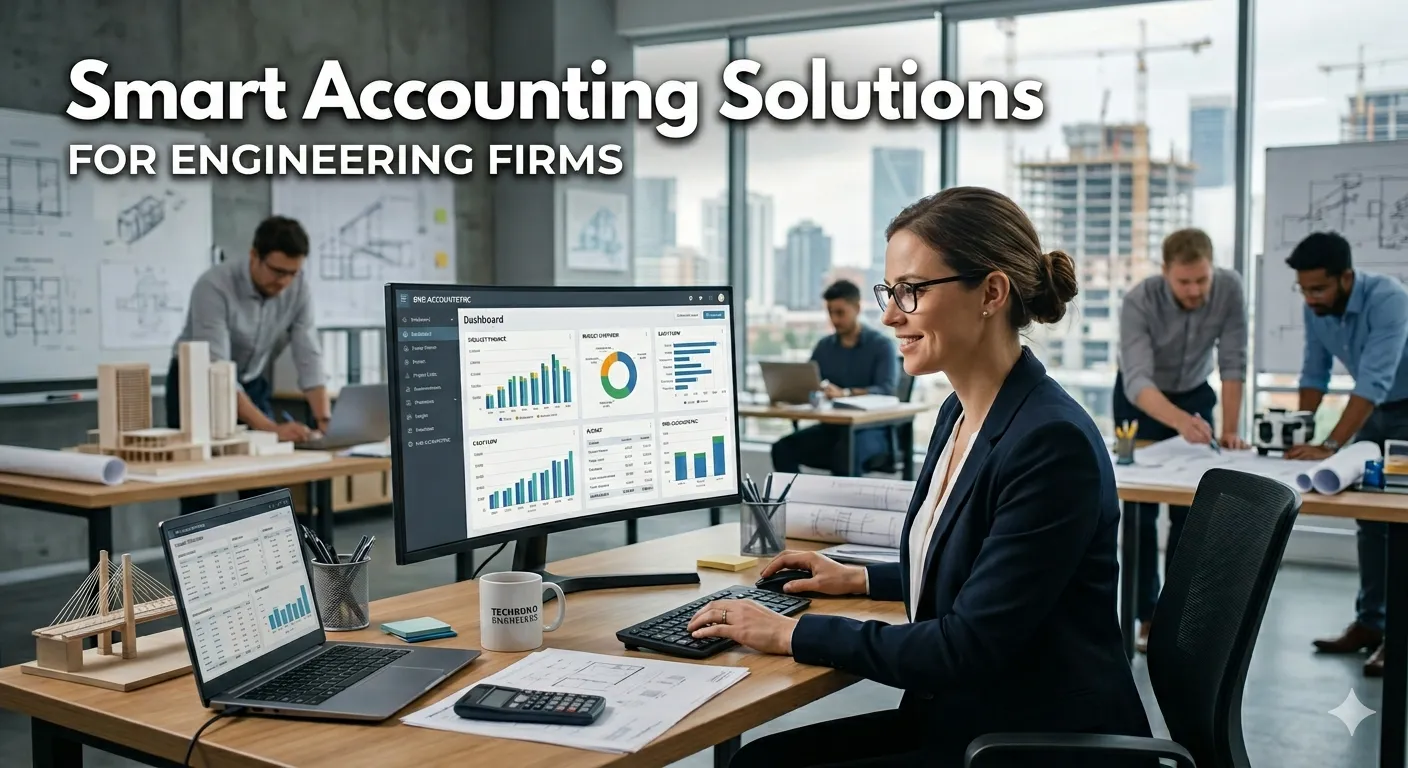
Timely reporting lets business leaders assess performance at any point. Real-time dashboards offer visibility into project profitability, cash flow, expenditure patterns, and revenue recognition status. These insights help stakeholders make informed decisions without waiting for outdated reports.
Project Cost Tracking
Modern accounting solutions categorise expenses by project and phase. This method reveals precise labour and material costs, vendor fees, and overhead, enabling accurate cost allocation and profitability analysis.
Automated Billing and Invoicing
Billing processes within engineering firms often involve complex rate structures and milestone-based invoicing. Automated systems reduce errors, ensure timely invoicing, and improve collections. Advanced automation can also integrate labour tracking, expense entries, and invoice creation in a seamless workflow.
Cash Flow Forecasting
Predicting future cash flows, accounting for payment schedules, and modelling different revenue scenarios are crucial. Forecasting tools help firms maintain liquidity, anticipate shortfalls, and plan investments or financing options confidently.
Regulatory Compliance and Tax Management
Cloud-based accounting tools simplify tax compliance and reporting. With integrated tax calculation and submission workflows, engineering firms can ensure accurate VAT returns, contractor compliance, payroll processing, and filings without unnecessary stress.
Strategic Financial Planning
Beyond keeping the books, smart accounting systems offer forecast modelling, scenario analysis, and planning tools that support business growth. These features help engineering firms prepare budgets, explore expansion opportunities, and make informed investment choices.
Integration With ERP and Project Management Software
Seamless integration between accounting systems and project management software ensures that financial data stays consistent across the board. This coordination increases data accuracy, reduces duplication, and improves operational efficiency.
The Value of Cloud Technology in Engineering Accounting
Cloud-based Accounting Solutions for the Engineering Firms have become increasingly important in the modern business environment. These platforms not only centralise financial data in one accessible location but also allow real-time collaboration across teams, secure remote access, and automated backups that protect sensitive financial information.
Cloud systems also enable firms to integrate advanced tools such as AI-driven analytics, automated reconciliation, and expense categorisation. These modern systems reduce the time spent on manual data entry and ensure that financial professionals can focus on higher-value activities like strategic analysis and planning.
In addition, cloud accounting systems support multi-user access, meaning that project managers, accountants, and business leaders can all work with the same real-time data. This level of transparency fuels better communication and more effective business decision-making.
Strategic Benefits of Smart Accounting Solutions
Improved Decision Making
Access to accurate financial data in real time empowers leaders to make informed decisions that enhance performance, improve profitability, and allocate resources more effectively.
Increased Financial Efficiency
By automating routine tasks, streamlining workflows, and eliminating manual errors, Accounting Solutions for the Engineering Firms free up time and resources that can be redirected into core business activities.
Minimised Risk and Enhanced Compliance
Proper accounting systems reduce the risk of compliance failures, financial inaccuracies, and costly penalties. They ensure engineering firms adhere to regulatory requirements consistently and remain ready for audits or inquiries.
Enhanced Tax Efficiency
Optimising tax reliefs, credits, and allowances directly affects profitability. With industry-focused accounting solutions, firms can secure more refunds, reduce liabilities, and gain confidence in their tax strategy.
Competitive Edge
Engineering firms that maintain excellent financial management often outpace competitors. They can price contracts more effectively, negotiate favourable terms with vendors, and invest in growth opportunities with confidence.
Choosing the Right Accounting Partner
Selecting the right partner for Accounting Solutions for the Engineering Firms can significantly shape a firm’s financial landscape. When evaluating potential accounting partners, engineering firms should consider:
- Industry expertise and demonstrated experience with engineering clients
- Capability to offer tailored financial solutions beyond basic bookkeeping
- Technology adoption and integration skills with modern accounting platforms
- Proficiency in forecasting, compliance, and financial planning
- Transparent communication, personalised service, and responsiveness
A trusted accounting partner becomes a strategic ally, freeing up valuable leadership time so firms can focus on what they do best: delivering engineering excellence.
Conclusion
In today’s competitive business environment, engineering firms cannot afford to ignore the power of intelligent financial management. Smart Accounting Solutions for the Engineering Firms ensure that financial systems are tailored to the sector’s unique needs, including complex project accounting, vendor management, revenue recognition, and tax compliance.
By implementing robust and modern accounting systems, engineering firms gain improved visibility into project performance, deeper insights into profitability, enhanced cash flow forecasting, and greater strategic flexibility. When accounting becomes more than a compliance activity and evolves into a tool for business intelligence and planning, engineering firms gain a real competitive advantage.
With the right accounting strategy in place, firms can reduce financial risk, capture more tax benefits, and build a foundation that supports innovation and long-term success. Effective Accounting Solutions for the Engineering Firms are not an optional luxury. They are a critical component that distinguishes thriving engineering businesses from the rest.



























Sign in to leave a comment.