
The global smart greenhouse market reached USD 2.23 billion in 2026. Experts project this industry to grow significantly due to rising food demands and resource scarcity. Modern commercial farming relies heavily on real-time environmental data to stay competitive. Greenhouses must maintain strict control over temperature, light, air humidity, and soil moisture.
For decades, industrial agricultural setups utilized heavy-duty wired sensors to track these parameters. The RS-485 serial communication standard remains the backbone of this sensor network. However, local serial networks isolate data within the greenhouse walls. Today, growers need data accessibility on cloud platforms, mobile phones, and remote central servers. Bridging the gap between industrial serial standards and modern network infrastructure changes how facilities manage crop health.
Understanding the Power of RS-485 Sensors
Greenhouse environments are inherently harsh. High humidity levels, chemical fertilizers, and dense metal frameworks create electrical interference. Standard consumer-grade wireless sensors often fail under these conditions. They lose signal strength or degrade quickly due to moisture exposure.
Industrial RS-485 sensors use differential signaling to combat these environmental challenges. This technical approach employs two wires to transmit a single signal. The receiver measures the voltage difference between the two wires rather than checking a single wire against a ground line. Because electrical noise affects both wires equally, the difference remains constant. This mechanism provides immense resistance to electromagnetic interference.
Furthermore, the RS-485 standard supports massive cable lengths. A single master controller can communicate with up to 32 standard slave devices over distances reaching 1,200 meters. Soil and humidity sensors using the Modbus RTU protocol over RS-485 allow daisy-chain configurations. Growers run one continuous cable across long rows of planting beds instead of homing every wire back to a central hub. This design cuts wiring costs and minimizes deployment complexity.
The physical robustness of these sensors makes them ideal for commercial food production. They withstand daily misting cycles and chemical applications without losing calibration. This longevity lowers long-term capital expenses for greenhouse operators. Reliable hardware forms the foundation of any successful agricultural automation strategy.
The Networking Dilemma in Modern Agriculture
Despite the reliability of RS-485, physical data isolation poses a major operational problem. Traditional setups require a localized Programmable Logic Controller (PLC) or an on-site computer to read the sensor data. If a grower wants to check soil moisture levels from home, they cannot access the local RS-485 loop directly.
Modern agricultural analytics tools need internet connectivity. Cloud-based artificial intelligence platforms process soil data to predict irrigation schedules. Manual data extraction via USB drives or local screens slows down decision-making.
Wireless technologies like Wi-Fi and wired Ethernet networks solve this connectivity issue. Modern facilities already utilize local area networks (LAN) for office operations, security cameras, and logistics tracking. Bringing soil sensors onto the existing network infrastructure eliminates data silos. It creates a centralized ecosystem where climate control systems, irrigation pumps, and historical databases interact instantly.
Data sharing across different business departments also becomes possible. Inventory managers track water usage trends alongside financial software. Compliance officers export environmental logs directly for organic certifications. This level of transparency requires a fully integrated network layout.
Integrating Serial Sensors into the Local Area Network
Moving serial data to a network loop requires specialized conversion hardware. Industrial systems handle this translation using two distinct types of devices depending on the physical layout.
1. The Role of Hardware Converters
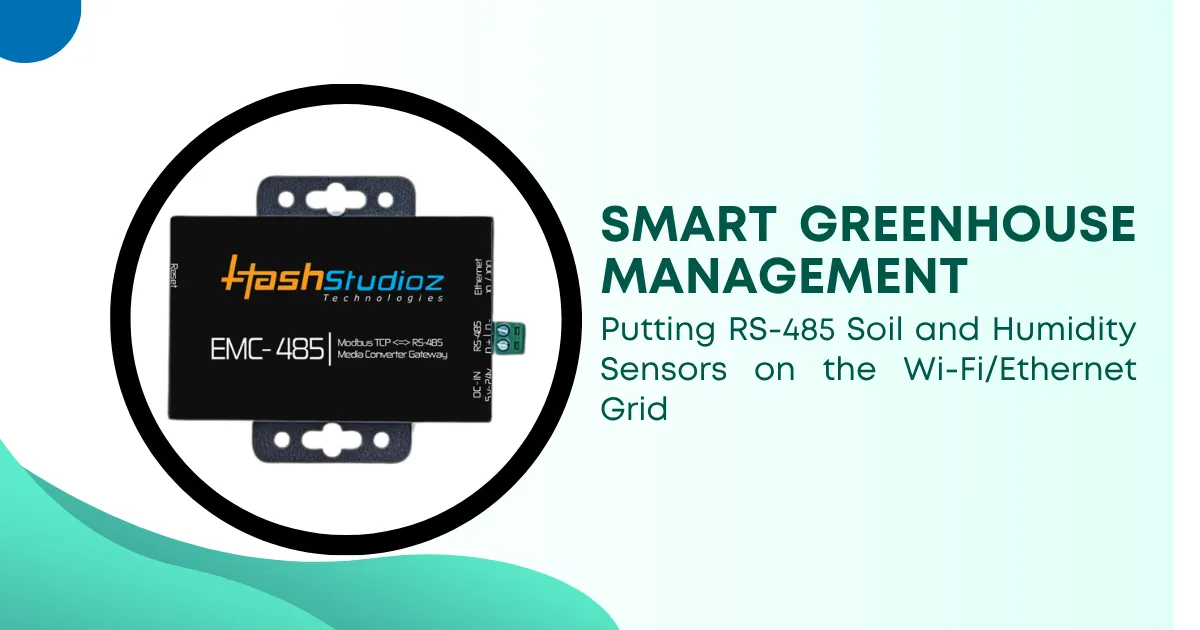
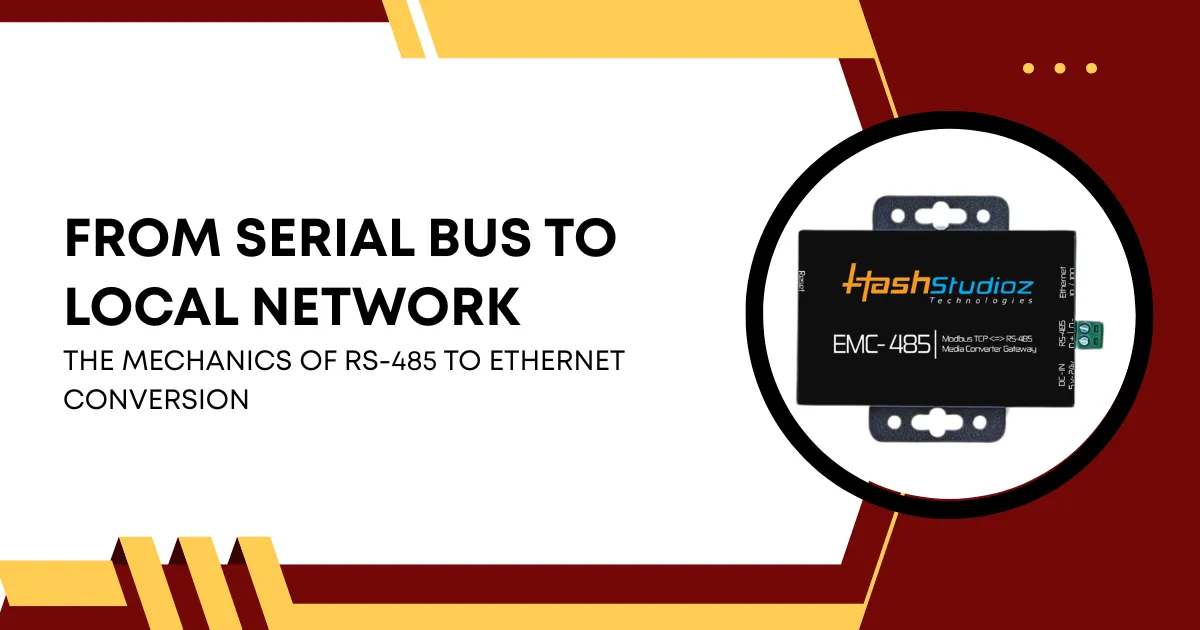
An RS-485 to Ethernet Converter bridges the gap between old-school serial lines and modern network switches. This device contains an RS-485 terminal port on one side and a standard RJ45 Ethernet port on the other. It acts as a transparent gateway. The converter accepts Modbus RTU serial packets from the soil sensors and wraps them inside TCP/IP packets. This process creates a protocol known as Modbus TCP.
Similarly, an RS-485 to Lan Converter allows the network to treat the serial bus as a native network node. These devices feature dedicated microprocessors. They handle speed matching, packet buffering, and security protocols. Once connected, the converter assigns a unique IP address to the sensor chain. Any computer or cloud server on the local area network can request data using that specific IP address.
2. Wi-Fi versus Ethernet Grid Decisions
Growers must choose between wireless Wi-Fi setups and physical Ethernet cables when expanding their sensor grid.
- Ethernet Connections: Physical cables deliver unmatched stability. They resist the thick leaf canopies that block wireless signals. Ethernet cables also support Power over Ethernet (PoE), which supplies electricity to the converter over the network line.
- Wi-Fi Connections: Wireless configurations reduce physical infrastructure needs. They allow quick sensor relocation as crop rotations change. However, high moisture levels in greenhouses attenuate 2.4 GHz and 5 GHz radio frequencies, which can cause intermittent data loss.
Choosing the right transport medium depends on greenhouse geography. Large, sprawling facilities often combine both methods. They use Ethernet for main corridors and Wi-Fi for temporary propagation tables. This hybrid model balances infrastructure costs with network reliability.
Architectural Layout of a Networked Greenhouse
Building an integrated sensor network requires a structured layout. The architecture follows a clear path from the soil to the software dashboard.
1. The Sensor Layer
At the ground level, multi-parameter industrial probes sit directly in the soil or hydroponic substrate. These devices measure volumetric water content, electrical conductivity (EC), temperature, and ambient humidity. The sensors connect in series using a shielded twisted-pair cable.
2. The Conversion Layer
The end of the serial cable plugs into an RS-485 to Ethernet Converter. This hardware component usually sits inside a waterproof NEMA-rated electrical enclosure to protect it from splashing water. The converter links directly to the local network router or a Wi-Fi client bridge.
3. The Management Layer
The local router directs the incoming Modbus TCP traffic. Supervisory Control and Data Acquisition (SCADA) software or IoT platforms pull data continuously from the converter's IP address. The system then displays real-time charts and logs historical trends.
| Component | Function | Connection Type |
| Soil Probes | Measure moisture, EC, and temp | RS-485 Serial (Modbus RTU) |
| Gateway | Translates serial to network packets | RS-485 to Lan Converter |
| Network Switch | Routes data across the facility | Cat6 Ethernet or Wi-Fi |
| Server / Cloud | Stores data and runs automation | TCP/IP Protocol |
Practical Implementation Steps for Growers
Configuring an internet-enabled soil sensor grid involves precise hardware and software adjustments. Following an orderly installation sequence prevents communication failures.
1. Wiring the RS-485 Bus
Connect the sensors using a daisy-chain methodology. Run the positive serial wire (A+) from the first sensor to the second, and continue down the line. Repeat the process for the negative wire (B-) and the ground line. Avoid star topologies where multiple long lines meet at a single spot, as this configuration creates signal reflections. Place a 120-ohm resistor across the A+ and B- lines at the very last sensor to terminate the circuit properly.
2. Setting Up the Converter
Plug the completed serial line into the terminal block of your RS-485 to Ethernet Converter. Connect the device to a computer using an Ethernet cable for initial configuration. Open the manufacturer's web interface via a web browser. Set a static IP address for the converter so the central automation system never loses track of the unit.
3. Matching Communication Profiles
The converter and the sensors must speak at the same exact speed. Match the baud rate, parity bits, and stop bits across all devices. Common settings for industrial soil probes include a 9600 baud rate, 8 data bits, no parity, and 1 stop bit. Configure the operational mode of the converter to "TCP Server" or "Modbus Gateway."
4. Software Integration
Open your greenhouse management software or automation script. Input the static IP address of your RS-485 to Lan Converter along with the targeted port number, which defaults to 502 for Modbus TCP. Define the registry addresses for the sensors. For example, soil moisture might reside in register 0x0001, while humidity sits in 0x0002. Test the connection to ensure accurate live readings appear on your screen.
Real-World Benefits and Data Outcomes
Moving to a networked sensor architecture produces immediate, quantifiable improvements in agricultural output. Research shows that automated climate controls cut greenhouse energy waste by 25% to 35% while simultaneously boosting overall crop yields.
1. Precision Tomato Cultivation
A commercial tomato greenhouse operation in Ohio replaced isolated handheld testing meters with a networked grid. They installed 150 RS-485 soil moisture sensors across three climate zones. Each zone utilized an RS-485 to Ethernet Converter connected to their main facility network.
The centralized software tracked soil moisture dips in real time. The automation platform activated variable-rate drip irrigation pumps the moment moisture levels dropped below 68%. This change stopped water pooling and eliminated root rot diseases. Over a twelve-month period, the facility reduced its water consumption by 22% and saw a 14% increase in premium-grade tomato yields.
2. Labor Efficiency Gains
Manual soil checking consumes vast amounts of labor. In a traditional five-acre greenhouse layout, workers spend hours tracking moisture levels with portable probes. A networked system automates this entire process. Data updates every few seconds across the whole facility simultaneously. Employees shift their focus from basic monitoring to targeted plant care and maintenance tasks.
Solving Common Technical Troubleshooting Issues
Even robust industrial systems face technical glitches occasionally. Knowing where to look speeds up system recovery.
1. Address Conflicts
Every sensor on a single RS-485 serial line must possess a unique Modbus slave ID. If two sensors share ID 1, the converter receives garbled responses. Connect each sensor to a computer individually before field installation to assign distinct identification numbers.
2. Packet Timeout Settings
Serial communication operates at much slower speeds than local area networks. If your automation software sends network requests too rapidly, the RS-485 to Lan Converter cannot process them in time. Increase the response timeout setting in your software to at least 1000 milliseconds to give the serial bus ample time to reply.
3. Voltage Drops
Long wire runs cause voltage drops along the power line. If the final sensor in your chain provides erratic data, check the voltage at the end of the line using a multimeter. Install localized power distribution boxes if the sensor voltage drops below the minimum operational requirement.
Future Trends in Greenhouse Data Grids
The evolution of agricultural connectivity continues to advance rapidly. The hardware foundation established by network converters prepares greenhouses for future technology shifts.
Hardware manufacturers now embed edge computing features directly into high-end converters. Future iterations of the RS-485 to Ethernet Converter will do more than simply pass data packets along. These advanced units will analyze data locally, log trends during network outages, and trigger emergency backup valves if the main computer goes offline.
Furthermore, integration with broader enterprise resource planning (ERP) systems is becoming standard practice. Soil health metrics will link directly with inventory tracking, supply chain software, and yield prediction models. Connecting reliable industrial sensors to standard network grids provides the data foundation necessary for fully automated, sustainable farming operations.
Conclusion
Smart greenhouse management relies entirely on fast, accurate environmental data. The combination of durable RS-485 sensors and modern network converters provides the ultimate solution for industrial agriculture. By using an RS-485 to Ethernet Converter, growers easily bring isolated field data onto their primary digital networks. This configuration eliminates manual scanning and prevents costly resource waste.
Implementing an RS-485 to Lan Converter protects existing infrastructure investments while adding modern internet capabilities. Greenhouses reduce water usage, optimize fertilizer application, and lower overall operational labour requirements. As food production demands rise globally, these networked sensor systems ensure facilities maximize crop yields while preserving vital natural resources.


























Sign in to leave a comment.