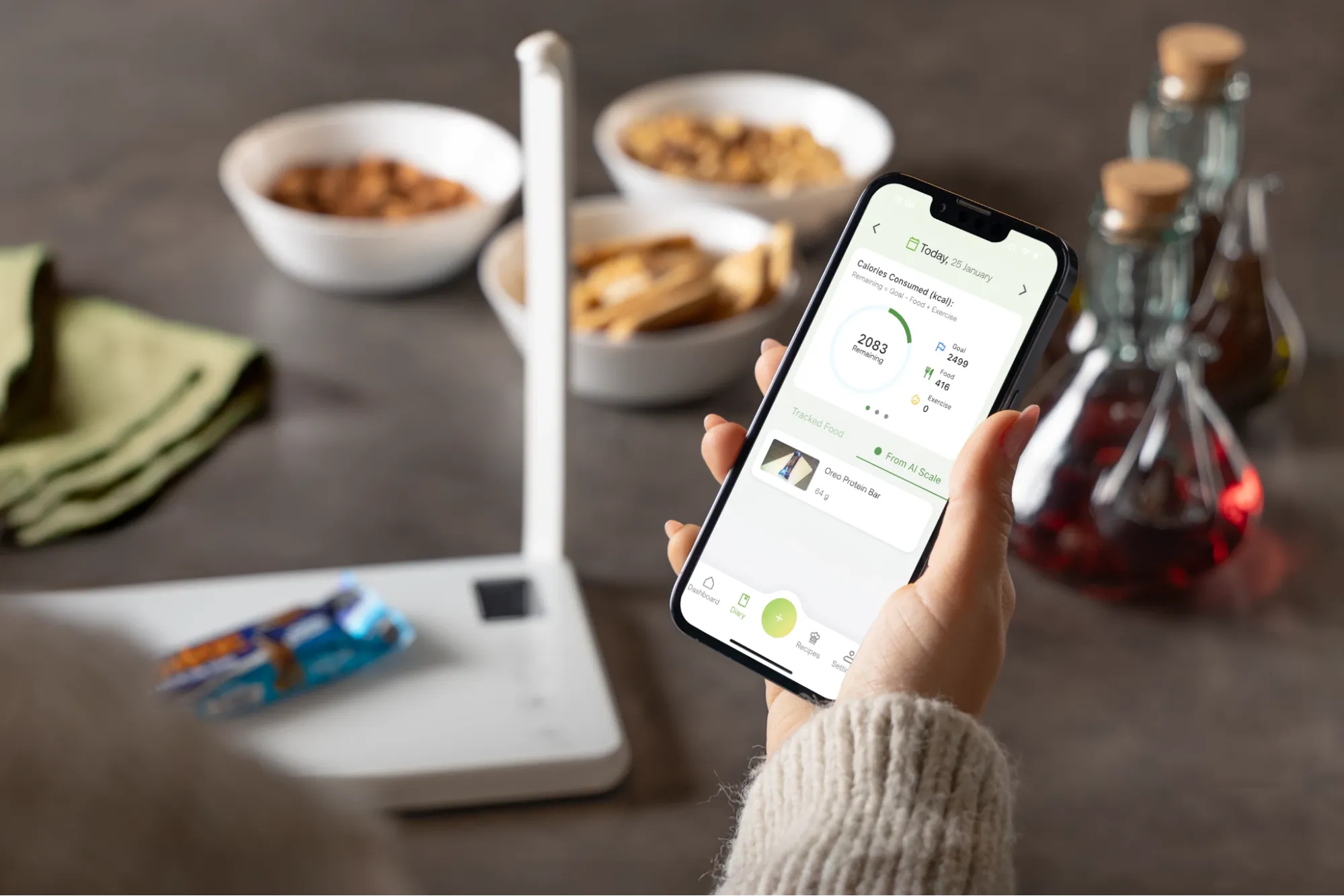

Accurate diet tracking has always been a challenge, not because of a lack of intent, but due to the difficulty of measuring food intake precisely. Traditional methods rely heavily on estimation, which introduces variability and often leads to inconsistent results. A smart nutrition scale addresses this issue by combining precise weight measurement with digital intelligence, creating a more reliable way to understand what we consume.
At its foundation, food tracking depends on the principle of Energy balance: the relationship between calories consumed and calories burned. Maintaining or changing body weight depends on this balance, which makes accurate tracking essential for meaningful outcomes.
Modern devices build on the concept of Mass measurement, using sensors to determine food weight with high precision. They then connect this data to nutritional databases such as those developed by the United States Department of Agriculture, which standardize information about calories, macronutrients, and micronutrients.
With advancements in Machine learning and computer vision, these tools are evolving beyond simple weighing. Research into real-time nutrition systems shows that AI can now identify foods from images, estimate nutritional content, and provide immediate feedback highlighting a shift toward automated, data-driven dietary tracking.
How Smart Nutrition Scales Work
Precision Sensors and Digital Weighing
A smart nutrition scale begins with highly sensitive load cells that convert physical weight into electrical signals. This allows users to measure food quantities accurately, often down to a single gram.
Unlike volume-based tools such as cups or spoons, weight-based measurement eliminates inconsistencies caused by packing, shape, or density. This makes it particularly effective for foods like grains, meats, and mixed dishes.
In practical use, this level of precision reduces the gap between estimated and actual calorie intake, which is one of the most common challenges in diet tracking.
Integration with Nutritional Databases
Once food is weighed, the device or its connected app matches it with entries from established food composition databases. These databases are built using standardized testing and analysis, ensuring that the nutritional values are consistent and scientifically grounded.
This process allows users to instantly see calorie counts, macronutrient distribution, and sometimes additional details such as vitamins and minerals.
For individuals aiming to simplify daily tracking, using a smart kitchen scale integrated with a reliable database provides a structured and repeatable approach to monitoring intake.
AI-Powered Food Recognition and Real-Time Feedback
Recent innovations have introduced AI-driven food recognition into nutrition tracking. Systems using deep learning models such as convolutional neural networks can analyze images and classify food items in real time.
Research into real-time nutrition assistants shows that these systems can identify foods, estimate portion sizes, and generate nutritional profiles with measurable accuracy. For example, a system using advanced neural networks achieved around 86% classification accuracy in identifying food items from images, demonstrating the practical potential of this technology .
This integration of AI transforms a scale from a passive measuring tool into an active assistant, capable of:
- Identifying multiple ingredients in a meal
- Providing instant calorie and nutrient feedback
- Reducing the need for manual data entry
For users adopting a smart nutrition scale, this means faster tracking and fewer interruptions during daily routines.
Benefits of Using a Smart Kitchen Scale
Improved Accuracy in Portion Control
One of the most significant advantages of a smart scale is its ability to eliminate guesswork. Visual estimation often leads to underreporting or overreporting food intake, which affects long-term results.
By measuring food directly, users gain a clearer understanding of portion sizes and nutritional content. This is particularly useful for individuals managing weight or following structured dietary plans.
Faster and More Consistent Tracking
Traditional tracking methods involve multiple steps: measuring, searching, and logging. Smart scales streamline this process by combining these actions into one.
Real-world usage shows that simplifying the tracking process increases consistency. When users can log meals quickly, they are more likely to maintain the habit over time.
This is where tools like a smart nutrition scale function not just as devices, but as behavioral supports reducing friction in daily routines.
Data-Driven Dietary Decisions
Access to real-time nutritional information enables users to make informed choices before consuming food. Instead of adjusting logs after a meal, they can modify portion sizes or ingredients in advance.
This proactive approach aligns with modern nutrition strategies, which emphasize awareness and decision-making rather than reactive correction.
For further reading on how digital nutrition tools support healthier habits, this guide from Harvard T.H. Chan School of Public Health explains how monitoring food intake improves dietary awareness.
Limitations and Practical Considerations
Challenges with Mixed or Complex Meals
While smart scales are highly accurate for single ingredients, complex dishes can still present challenges. Foods with multiple components require either manual input or advanced recognition systems.
Even with AI, identifying every ingredient in a mixed dish can be difficult due to variations in appearance, preparation, and presentation.
Understanding this limitation helps users combine automated tracking with occasional manual adjustments for better accuracy.
Dependence on Databases and Technology
Smart nutrition tools rely on the quality and completeness of their underlying databases. If a food item is missing or incorrectly categorized, the resulting data may not be fully accurate.
Additionally, these devices require setup, calibration, and sometimes app integration. While this adds convenience, it also introduces a level of dependency on technology.
The Future of Smart Nutrition Tracking
Advancements in AI and Computer Vision
The next phase of smart nutrition scales will likely focus on improving food recognition accuracy, especially for complex and regional dishes. Larger datasets and better-trained models will enable more precise identification and nutrient estimation.
Technologies such as deep learning and object detection frameworks are already driving this progress, making real-time analysis more reliable.
Integration with Health Ecosystems
Smart scales are increasingly becoming part of a broader digital health ecosystem. They can connect with fitness trackers, wearable devices, and health apps to provide a more complete picture of user behavior.
This integration allows users to track not only what they eat but also how it relates to physical activity and overall health.
For a broader understanding of global nutrition data systems, you can explore resources from the Food and Agriculture Organization, which play a key role in standardizing food composition data worldwide.
Conclusion
Smart nutrition scales represent a significant evolution in how people track and understand their diets. By combining precise measurement, reliable databases, and emerging AI capabilities, they offer a more accurate and efficient alternative to traditional methods.
While they are not without limitations particularly when dealing with complex meals their advantages in accuracy, speed, and usability make them a valuable tool for modern nutrition tracking.
If you’re looking to simplify your routine and make more informed dietary decisions, explore how Qalzy can support your journey with a smart kitchen scale designed for accuracy and ease. With intelligent features that reduce manual effort and improve consistency, adopting a smarter approach to food tracking can transform the way you manage your health one meal at a time.





























Sign in to leave a comment.