

In the modern world where digital products are ubiquitous, software is no longer just a backend utility, it is the interface of brands, the framework of industries, and the silent assistant in everyday life. Whether it's banking apps, healthcare systems, or entertainment platforms, people expect seamless and secure experiences. Achieving such excellence is not merely a function of brilliant coding, it is the result of rigorous and intelligent software testing. Yet, testing is often misunderstood as a routine checklist rather than a strategic pillar of software development. This blog goes beyond the basics to explore less-discussed aspects of software testing, its evolution, overlooked goals, rare types, and its role in shaping software not just functionally but ethically, economically, and socially.
From Debugging to Engineering Quality
Traditionally, software testing was seen as a debugging aid to “catch bugs.” But in contemporary development environments, especially Agile and DevOps, testing is no longer reactive. It is proactive quality engineering, embedded in every stage of software creation. Rather than simply verifying if code works, testing today ensures systems are robust against edge cases, resilient in failures, intuitive to end-users, and even aligned with regulatory standards like GDPR or HIPAA. It's about shaping experiences, not just preventing crashes. Advance your IT career with a hands-on Software Testing Course in Bangalore, designed to equip you with real-time testing skills and industry-recognized certification.
The Psychology of Testing
A rare but critical angle to consider is that testing is as much a psychological process as a technical one. Testers must think differently from developers. While developers aim to make a system work, testers intentionally think like end-users, attackers, or even lazy operators. This mindset requires creativity, skepticism, and empathy.
Great testers often ask:
- What happens if a user skips a step?
- What if the internet disconnects midway?
- Can the system recover from unusual input?
This mental model of thinking in failure modes is a skill honed by experience and rarely taught in textbooks.
Beyond Functional and Non-Functional Testing
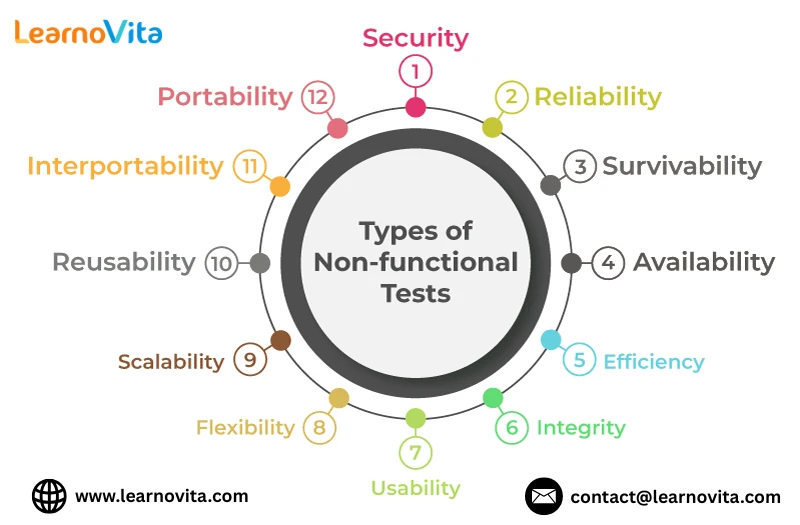
While most discussions around software testing revolve around functional and non-functional types, some lesser-known but equally important types deserve attention:
1. Mutation Testing
Instead of checking if the code works, mutation testing introduces small changes (mutations) to the code to see if the test suite detects them. If your tests pass even with mutated code, it indicates your tests are not strong enough a clever way to test your tests.
2. Chaos Testing
Popularized by Netflix’s “Chaos Monkey,” this involves randomly breaking parts of a system in production to assess how well the system recovers. It's especially vital in distributed systems and microservices, where failure is not just possible but expected.
3. Accessibility Testing
Often overlooked, accessibility testing ensures your application is usable by people with disabilities whether through screen readers, keyboard navigation, or color contrast. This is not only a legal compliance issue in many regions but a commitment to inclusivity.
4. Ethical Testing
A newer concept, ethical testing involves evaluating if a system behaves within moral and cultural boundaries. For example, does an AI suggest biased content? Does a recommender system manipulate user behavior? These are critical questions for modern testers working with AI and personalization engines.
The Role of Data in Testing
In the age of big data and machine learning, test data is no longer just dummy inputs. Realistic, comprehensive, and contextually diverse data is essential to simulate real-world use cases. Synthetic data generation creating artificial datasets that mirror production data without exposing sensitive information is a growing field. Moreover, test data management (TDM) ensures that data used for testing is versioned, secured, and consistent. Improper TDM can lead to false positives, inconsistent results, or even data breaches.
Testing in Production: A Paradigm Shift
Traditionally, testing ended before deployment. Today, with the rise of continuous delivery, teams often test in production environments. Practices like canary releases, A/B testing, and real-time monitoring are forms of post-deployment testing that allow teams to assess software under genuine user load. Though risky, testing in production offers the most accurate insight into real-world performance and user interaction. When done right, it ensures a feedback loop that is instant, granular, and actionable. Master the art of quality assurance with a flexible and career-focused Software Testing Online Course, accessible from anywhere and guided by industry experts.
Cultural Importance of Testing in Agile and DevOps
Testing in modern workflows is no longer confined to QA teams. Developers write unit tests. Business analysts validate user stories through acceptance tests. Even operations teams analyze production logs for anomalies. This culture called “Shift Left Testing” places quality responsibility on everyone, early in the development cycle. Testing becomes collaborative, not just delegated. It encourages communication, rapid iterations, and prevents late-stage disasters.
Metrics That Matter: What Are We Measuring, Really?
Conventional metrics like test case pass percentage or number of bugs found may not reflect true product quality. Instead, consider:
- Defect leakage rate – How many bugs escape into production.
- Test coverage vs. risk coverage – Does your test suite cover business-critical paths?
- Mean time to detect (MTTD) and recover (MTTR) – How quickly issues are found and resolved in production.
- Customer-reported issues – A low number here is often the real sign of test effectiveness.
Test Automation Myths
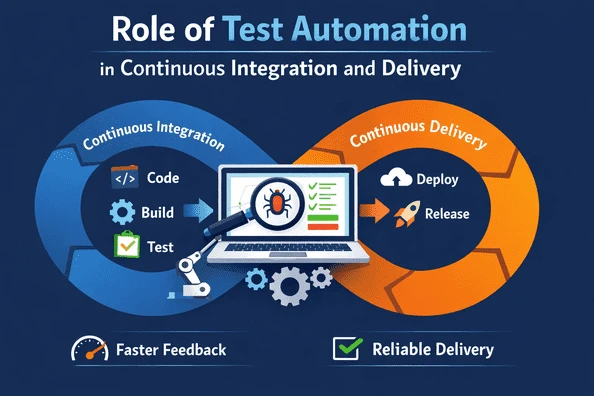
While automation is critical for speed and scalability, it's not a silver bullet. Many teams make the mistake of automating too much, too soon. Not everything should be automated. Exploratory testing, UX testing, and one-off edge cases are still best done manually. Also, test script maintenance is a hidden cost of automation. Changes in the UI or logic require constant updates, making test stability a challenge. Good automation focuses on reusability, modular design, and high ROI areas, such as regression suites or API testing.
Testing and the Future: AI, Quantum, and IoT
As technology advances, so must our testing approaches:
- AI Testing – Testing AI models involves checking not just accuracy but fairness, transparency, and bias. Unlike traditional software, AI doesn’t behave deterministically, making testing more probabilistic and model-driven.
- IoT Testing – Internet of Things devices involve multiple layers hardware, firmware, networks, and cloud each with its own failure points. Testers need to simulate diverse environments, such as low bandwidth or hardware faults.
- Quantum Testing – Though early in its maturity, quantum computing brings a new frontier where outcomes are probabilistic and require an entirely different testing mindset.
Conclusion
Software testing is far more than a backroom quality control step—it’s a strategic enabler of business trust, customer loyalty, and brand integrity. As systems become more intelligent, distributed, and user-centric, testing must evolve from scripted checks to holistic quality assurance that considers usability, ethics, resilience, and context. True software quality is not when bugs are absent but when the product delivers consistent, valuable, and secure experiences no matter the user, device, or scenario. Testing, done right, ensures that vision is met.






























Sign in to leave a comment.