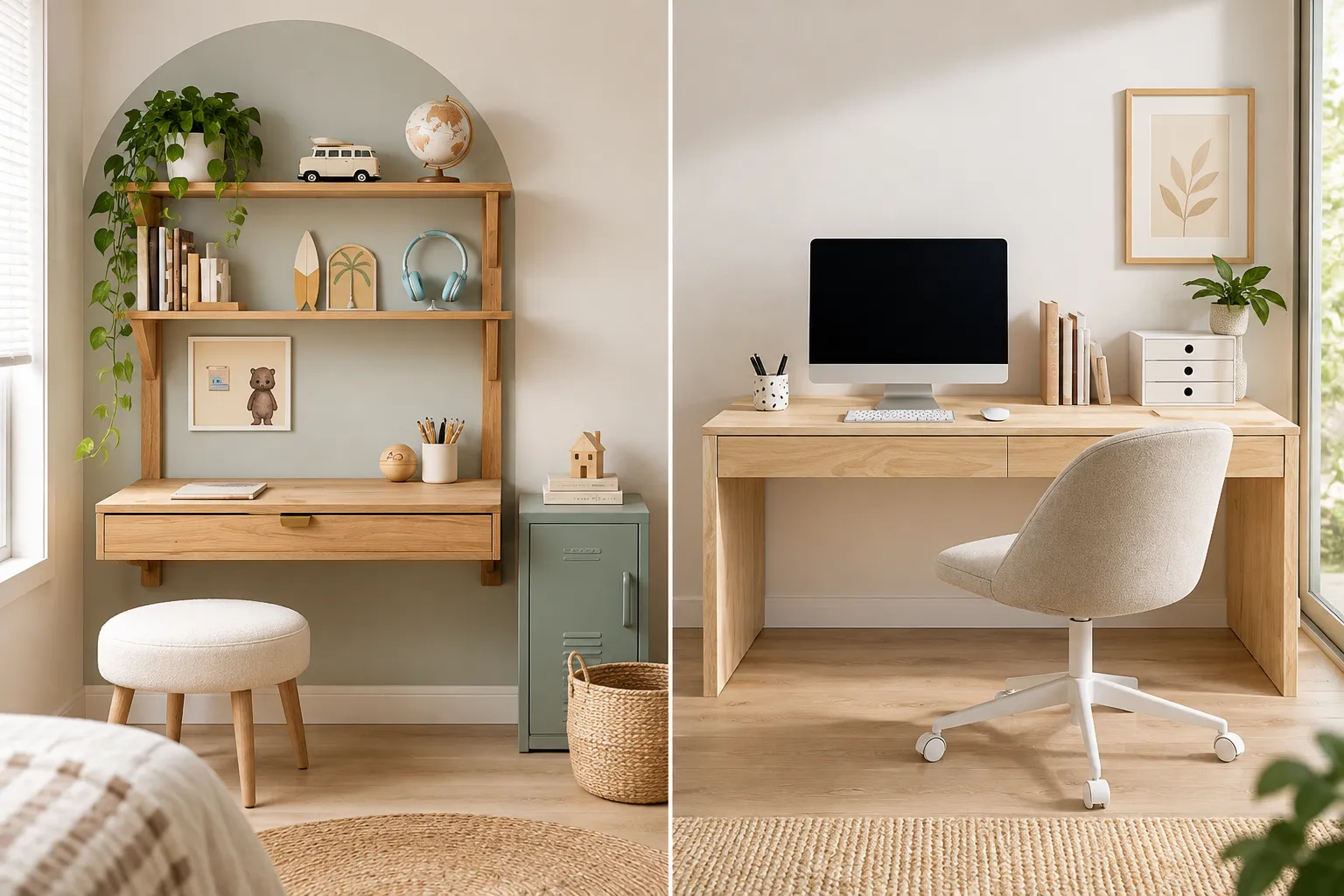
A home desk needs to do more than provide somewhere to put a laptop. It becomes part of your daily routine, whether you are working from home, managing household tasks, studying, writing or simply having a quiet place to focus.
That makes the material you choose surprisingly important.
Solid timber has remained a popular choice for furniture because it combines practicality with a natural appearance that can make a room feel warmer and more inviting. Unlike mass-produced furniture that can look dated as trends change, a well-made timber desk can become a lasting part of your home.
So, what makes solid timber such a good choice for a home desk?
1. Solid timber is built for everyday use
A desk can experience plenty of wear. Laptops, monitors, books, stationery, coffee cups and other everyday items all spend time on its surface.
Quality hardwoods are valued for their strength and durability, making them well suited to furniture that is expected to handle regular use. For example, Tasmanian Oak is known for its strength and durability, while Spotted Gum is recognised for its resilience and hard-wearing qualities.
When you invest in a solid timber desk, you are choosing a material that is designed to be used rather than simply looked at.
2. Every piece has its own character
One of the most appealing things about natural timber is that no two pieces look exactly the same.
Grain patterns, subtle variations in colour, knots and natural markings give timber its character. Instead of having a completely uniform surface, you get something with visual depth and individuality.
This can make a significant difference in a home office. A timber desk can feel like a piece of furniture that belongs in the room rather than another functional object squeezed into a corner.
Blonde Oak, for instance, can feature variations in grain and occasional knots, while Tasmanian Blackwood is known for its distinctive grain and rich tonal variation.
3. It brings warmth to a home office
Home offices can easily become overly clinical. White walls, screens, cables and office equipment can make a workspace feel more like a workplace than part of your home.
Natural timber helps soften that look.
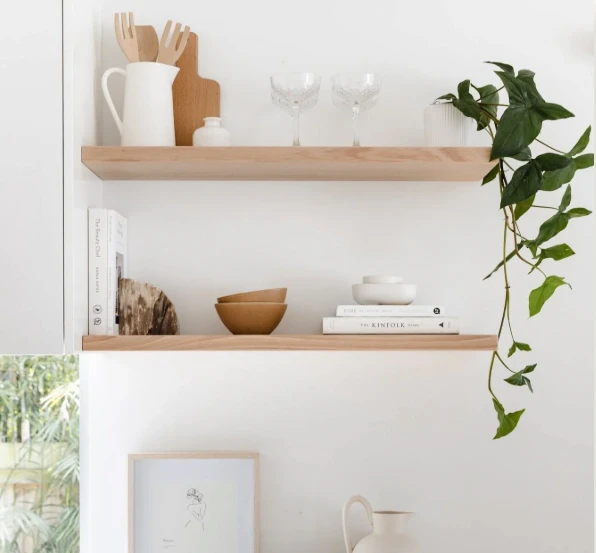
The warm tones and organic texture of timber can work beautifully alongside neutral walls, soft furnishings, plants and other natural materials. It can also complement both contemporary and more traditional interiors.
This is particularly useful if your workspace is located in a living room, bedroom or open-plan area where you want the desk to blend with the rest of your home.
4. Timber works with many interior styles
A common concern when buying a statement piece of furniture is whether it will still suit the room after a few years.
Timber is remarkably versatile.
A pale timber desk can complement a light, minimalist interior, while richer timber tones can create a more traditional or sophisticated appearance. Some timber varieties have subtle grain patterns, while others have stronger natural markings that become a feature in their own right.
The Timber Line's range of desks demonstrates how timber furniture can work across different home office settings.
The benefit is that you do not necessarily need to redesign the entire room around your desk. Instead, the desk can sit naturally within the existing space.
5. It can make a small workspace feel more inviting
Not everyone has a dedicated home office.
For many Australians, a workspace may be tucked into a bedroom, hallway, living area or unused corner. In these situations, the desk needs to look good because it is visible for much of the day.
A solid timber desk can make that arrangement feel intentional.
Rather than trying to hide the workspace, you can make it part of the home's interior. Pairing a timber desk with a comfortable chair, a small lamp and a few carefully chosen accessories can create a practical work area without making the room feel dominated by office furniture.
6. There is a timber option for different looks
"Timber" does not mean one particular colour or appearance.
Different species have their own characteristics. Tasmanian Oak offers pale to light pink and reddish-brown tones. Tasmanian Blackwood has warmer, deeper colours, while Spotted Gum can range from lighter browns through to deeper chocolate tones. Blackbutt is known for its lighter, warm appearance and relatively subtle grain.
Understanding the available timbers can therefore help you choose a desk that works with your existing flooring, furniture, walls and overall colour palette.
7. A good desk can become a long-term piece of furniture
Furniture trends come and go, but natural materials tend to have a lasting appeal.
A solid timber desk does not need to follow a particular interior trend. Its appearance comes primarily from the material itself, which means it can continue to work as your style changes.
You might initially use the desk for working from home, then later use it as a study desk, creative workspace or general-purpose workstation.
That flexibility makes a quality desk more than a short-term purchase.
8. Timber adds a natural connection to the room
There is something different about working at a desk with a natural surface beneath your hands.
The visible grain and texture create a connection with the material that is difficult to replicate with highly uniform manufactured surfaces.
For people who spend many hours working indoors, bringing natural materials into the home can also help create a more comfortable and relaxed atmosphere.
It is a small detail, but the surroundings of your workspace can influence how enjoyable it is to spend time there.
9. Solid timber can suit a considered, sustainable approach
Choosing furniture that is intended to last can be a more considered approach than constantly replacing inexpensive pieces.
The Timber Line states that its timber is locally sourced, with several Australian hardwood options available. Tasmanian Oak is also described as being responsibly sourced from well-managed forests.
When choosing a timber desk, it is worth looking beyond appearance and asking where the material comes from, how the furniture is made and whether the piece is designed for long-term use.
10. It can make your workspace feel like your own
Perhaps the biggest advantage of a solid timber desk is less tangible.
Your workspace should feel comfortable enough that you actually enjoy using it.
A well-designed timber desk can become the anchor of the room. Add a monitor, a few books, a desk lamp, some greenery and storage that suits your needs, and the result can feel personal rather than generic.
That matters when your home is also your workplace.
What Should You Consider Before Buying a Solid Timber Desk?
Solid timber is a great option, but the right desk still depends on how you plan to use it.
Think about:
Desk size
Measure the available area before choosing a desk. Consider not only the width but also the depth and the space needed for your chair.
Your equipment
A laptop requires considerably less surface area than a large monitor setup. If you use multiple screens, speakers, notebooks or other equipment, make sure the desktop gives you enough room.
Timber type
Look at the colour, grain and characteristics of different timber species. Consider how the timber will work alongside your existing furniture and flooring.
Workspace location
A desk in a dedicated office gives you more flexibility. A desk in a bedroom or living area needs to work visually with the rest of the room.
Your long-term needs
Think beyond your current setup. A desk that works for a laptop today may need to accommodate a monitor, books or other equipment later.
Frequently Asked Questions
Is solid timber good for a home office desk?
Yes. Solid timber is strong, durable and visually versatile, making it well suited to desks that receive regular daily use. Different timber species also offer different colours and grain characteristics.
Are solid timber desks durable?
Quality solid timber can be highly durable when properly made and cared for. Hardwood species such as Tasmanian Oak, Spotted Gum and Blackbutt are valued for their strength and suitability for furniture.
Do wooden desks suit modern homes?
Absolutely. Natural timber can work particularly well in modern interiors because it adds warmth and texture to otherwise clean, minimalist spaces. The key is choosing a timber colour and design that complements the room.
Is a timber desk suitable for a small room?
Yes. The important factors are the desk's dimensions and design. A carefully sized desk can fit comfortably into a bedroom, living area or compact home office without overwhelming the space.
Does every piece of natural timber look the same?
No. Natural variations in grain, colour, knots and markings are part of what gives timber furniture its character. The appearance can vary between species and individual pieces.
Which timber is best for a desk?
There is no single timber that is best for every home. The right choice depends on the appearance you want, the level of use, your existing interior and your personal preferences. Looking at different timber species before making a decision can help you find the right balance of appearance and practicality.
How do I choose the right size home desk?
Start by measuring your available space. Then consider your chair, monitor or laptop setup, storage requirements and how much clear workspace you prefer. Leave enough room around the desk for comfortable movement.
Final Thoughts
A home desk is something you may use almost every day, so choosing one based purely on price or appearance can be a mistake.
Solid timber offers a combination of strength, natural character, warmth and versatility that makes it a particularly appealing choice for a home workspace. It can work in a dedicated office just as easily as it can in a bedroom corner or open-plan living area.
Most importantly, a well-made timber desk does not have to look like conventional office furniture. It can be a genuine piece of your home's interior while still giving you a practical place to work, study and create.
If you are looking for a desk that feels considered rather than disposable, solid timber is well worth considering.
























Sign in to leave a comment.