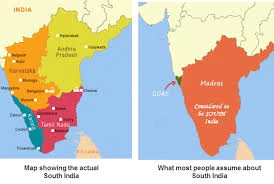

South Indian states formed a linguistic unity in independent India and preserved the traditional culture and artwork despite of having many foreign invasions before its independence in modern age. South Indian states form the peninsular part of India, also known as Dakshin Bharat.
History of South Indian States
Excavations have shows Neolithic cultures and artifacts dating back to 8000 BCE have been found in southern part of India. The region has been a part of the trade route used by Romans, Greeks, Arabs, Jews, and Chinese during 3rd and 4th century. This was also a part of Silk route that developed trade relations with the East and West. Southern India has been ruled by several dynasties during the ancient and medieval era from 6th century BCE to 14th century CE. Dynasties like Cheras, Zamorins, Pandyas, Cholas, Satavahanas, Travancore royal family, Kingdom of Cochin, Mushikas, Pallavas, Kadambas, Western Gangas, Rashtrakutas, Chalukyas, Hoysalas, and Kakatiyas developed monumental sculptures and architectures in this region that are an integral part of the cultural and historical heritage of the country now. The architectural marvel at Hampi, built during 14th century CE by Vijayanagara Empire is an example here.





















Sign in to leave a comment.