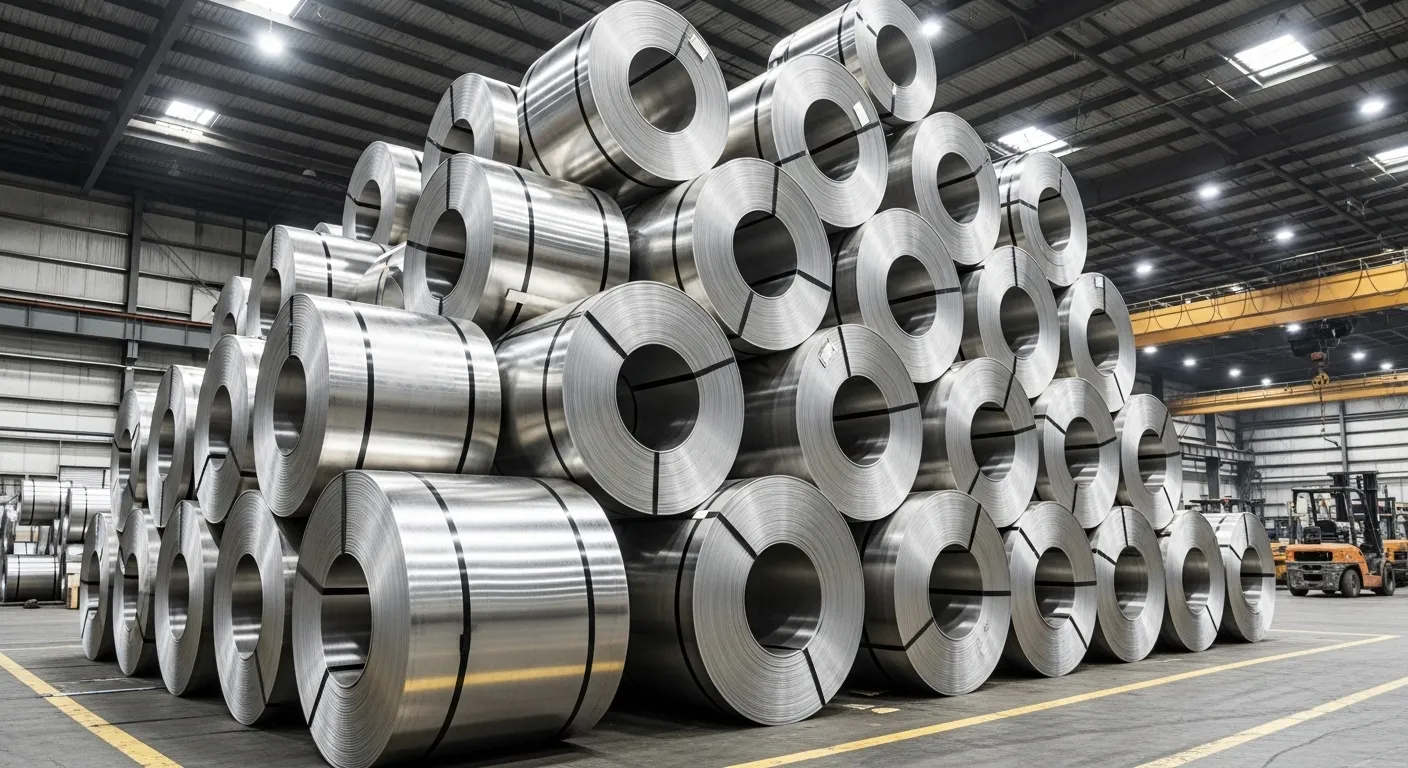

What Is a Stainless Steel Coil?
Stainless steel coil is a flat-rolled steel product manufactured in continuous strip form with chromium-based corrosion resistance. Industrial sectors use stainless steel coils for fabrication, structural components, food processing equipment, automotive parts, and architectural applications.
The production process includes hot rolling, cold rolling, annealing, pickling, and surface finishing. Stainless steel coils contain a minimum chromium content of 10.5%, which forms a passive oxide layer that resists corrosion.
Equip Way Engineering Services Private Limited (EES) supplies engineering and industrial products with 15 years of commercial import and export experience across industrial sectors.
Stainless Steel Coil Grades and Composition
Stainless steel coil grades define corrosion resistance, mechanical strength, and thermal performance.
Common Stainless Steel Grades
| Grade | Chromium Content | Nickel Content | Primary Application |
|---|---|---|---|
| 304 | 18% | 8% | Food processing equipment |
| 316 | 16% | 10% | Marine environments |
| 430 | 16% | 0% | Decorative panels |
| 201 | 16% | 3.5% | Kitchenware production |
| 410 | 11.5% | 0% | Industrial fasteners |
Austenitic stainless steels, examples including 304 and 316 grades, dominate industrial manufacturing because of corrosion resistance and weldability. Ferritic stainless steels, examples including 430 grade coils, support decorative and automotive applications.
Chemical Elements in Stainless Steel Coils
Chromium, nickel, molybdenum, and manganese influence stainless steel coil performance.
Key alloying elements include:
- Chromium for corrosion resistance
- Nickel for ductility and toughness
- Molybdenum for chloride resistance
- Carbon for hardness control
- Manganese for tensile strength
Grade 316 stainless steel includes molybdenum content between 2% and 3%, which increases resistance to chloride-induced corrosion in marine environments.
Stainless Steel Coil Manufacturing Process
The stainless steel coil manufacturing process includes melting, rolling, annealing, and surface finishing.
Production Stages
- Melting raw materials in electric arc furnaces
- Casting slabs through continuous casting systems
- Hot rolling slabs into steel strips
- Cold rolling strips for thickness precision
- Annealing coils for grain refinement
- Pickling surfaces for oxide removal
- Finishing coils with surface treatments
Hot rolled stainless steel coils support structural fabrication and industrial equipment production. Cold rolled coils provide tighter dimensional tolerance and smoother surface finishes.
Thickness and Width Ranges
| Coil Type | Thickness Range | Width Range |
|---|---|---|
| Hot Rolled Coil | 2.0 mm to 16 mm | 600 mm to 2000 mm |
| Cold Rolled Coil | 0.3 mm to 6 mm | 600 mm to 1500 mm |
Industrial manufacturers select coil dimensions according to forming requirements, load conditions, and fabrication methods.
Surface Finishes of Stainless Steel Coils
Surface finishes determine appearance, roughness, and application suitability.
Standard Stainless Steel Finishes
| Finish Type | Surface Characteristic | Application Example |
|---|---|---|
| 2B Finish | Smooth reflective surface | Pharmaceutical equipment |
| BA Finish | Bright annealed finish | Decorative panels |
| No. 4 Finish | Brushed texture | Kitchen appliances |
| HL Finish | Hairline pattern | Elevator panels |
| No. 1 Finish | Rough hot rolled surface | Industrial tanks |
Architectural projects use brushed and hairline finishes for visual consistency. Industrial sectors use 2B and No.1 finishes for corrosion resistance and fabrication performance.
Corrosion Resistance Properties
Stainless steel coils resist oxidation, chemical exposure, and moisture-related degradation.
The passive chromium oxide layer protects the metal surface from rust formation. Corrosion resistance varies according to alloy composition and environmental exposure.
Corrosion Resistance by Grade
| Grade | Corrosion Environment |
|---|---|
| 304 | Indoor industrial atmosphere |
| 316 | Marine and chloride exposure |
| 430 | Low-moisture environments |
| Duplex Grades | High-pressure chemical systems |
Marine industries use 316 stainless steel coils because chloride ions accelerate corrosion in lower alloy grades.
Environmental Resistance Examples
Stainless steel coils operate in environments such as:
- Chemical processing plants
- Offshore platforms
- Food manufacturing facilities
- Pharmaceutical production units
- Water treatment systems
Food-grade stainless steel surfaces maintain hygiene standards because smooth finishes reduce bacterial accumulation.
Mechanical Properties of Stainless Steel Coils
Stainless steel coils provide high tensile strength, impact resistance, and thermal stability.
Mechanical performance varies according to grade classification and processing method.
Mechanical Performance Data
| Property | 304 Grade | 316 Grade |
|---|---|---|
| Tensile Strength | 515 MPa | 515 MPa |
| Yield Strength | 205 MPa | 205 MPa |
| Elongation | 40% | 40% |
| Density | 8.0 g/cm³ | 8.0 g/cm³ |
Cold rolling increases tensile strength through work hardening. Annealing restores ductility after deformation processes.
Industrial Applications of Stainless Steel Coils
Stainless steel coils support manufacturing, construction, transportation, and energy industries.
Major Industrial Uses
- Food processing machinery
- Heat exchangers
- Automotive exhaust systems
- Roofing and cladding panels
- Pharmaceutical storage tanks
- Industrial piping systems
Automotive manufacturers use ferritic stainless steel coils for exhaust systems because high-temperature oxidation resistance supports thermal cycling conditions.
Construction Sector Applications
Construction companies use stainless steel coils in:
- Curtain wall systems
- Structural reinforcement panels
- Escalator cladding
- Elevator interiors
- Roofing assemblies
Architectural stainless steel surfaces maintain appearance under ultraviolet exposure and atmospheric pollutants.
Stainless Steel Coil Standards and Certifications
International standards define chemical composition, dimensional tolerance, and testing procedures.
Common Industry Standards
| Standard | Organization | Coverage |
|---|---|---|
| ASTM A240 | ASTM International | Stainless plate and sheet |
| EN 10088 | European Standard | Stainless steel classification |
| JIS G4305 | Japanese Industrial Standards | Cold rolled stainless steel |
| ISO 9445 | International Organization for Standardization | Surface finish tolerance |
Material certifications confirm tensile strength, chemical composition, and heat treatment conditions.
Heat Resistance and Thermal Performance
Stainless steel coils maintain structural integrity under elevated temperatures.
Austenitic grades resist scaling and oxidation at temperatures above 800°C. Heat-resistant stainless steels support furnace components, exhaust systems, and industrial boilers.
Thermal Applications
Examples of thermal processing equipment include:
- Heat exchangers
- Industrial ovens
- Steam pipelines
- Combustion chambers
- Power generation systems
Grade 310 stainless steel operates in high-temperature environments because chromium and nickel content improve oxidation resistance.
Stainless Steel Coil Fabrication Methods
Fabrication processes include cutting, bending, welding, and deep drawing operations.
Manufacturers process stainless steel coils using CNC machines, laser cutting systems, and automated welding equipment.
Common Fabrication Techniques
- Laser cutting
- Plasma cutting
- TIG welding
- Roll forming
- Deep drawing
TIG welding supports precision joining in food processing and pharmaceutical equipment manufacturing.
Welding Characteristics
| Grade | Weldability |
|---|---|
| 304 | Excellent |
| 316 | Excellent |
| 430 | Moderate |
| 410 | Limited |
Low-carbon variants such as 304L and 316L reduce carbide precipitation during welding operations.
Advantages of Stainless Steel Coils
Stainless steel coils combine corrosion resistance, mechanical strength, and long service life.
Key Performance Benefits
- High corrosion resistance
- High tensile strength
- Hygienic surface quality
- Recyclable material composition
- Low maintenance requirements
The global stainless steel recycling rate exceeds 80% in industrial manufacturing sectors, according to metal industry production data.
Why Stainless Steel Coils Dominate Industrial Manufacturing
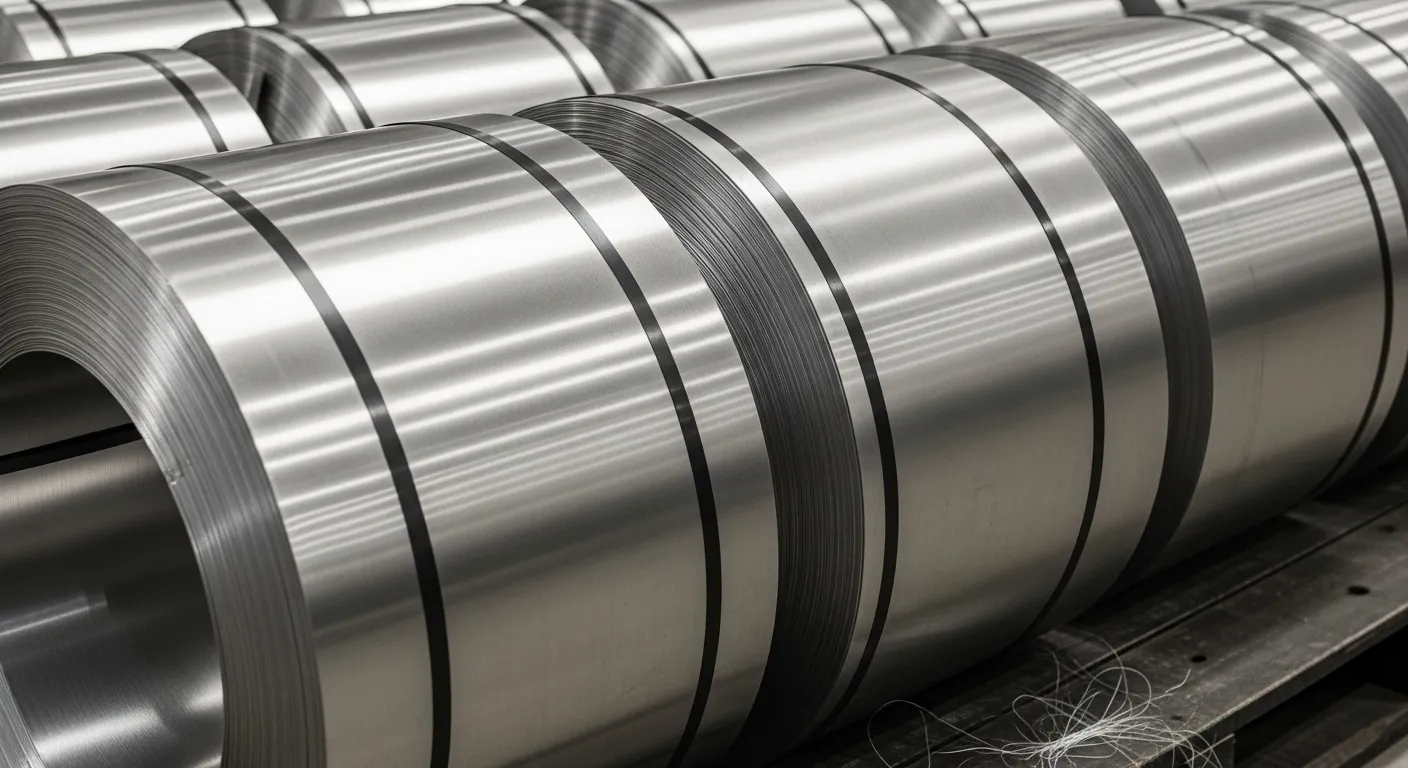
Stainless steel coils support precision manufacturing, structural durability, and chemical resistance across industrial sectors.
Industrial buyers prioritize stainless steel materials because they maintain dimensional stability, corrosion protection, and surface quality under mechanical and environmental stress.
Equipway Engineering supplies industrial-grade engineering materials and equipment solutions for fabrication, infrastructure, and manufacturing operations.
FAQ Section
What is stainless steel coil used for?
Stainless steel coil is used for industrial fabrication, food processing equipment, construction panels, automotive components, and chemical processing systems. Manufacturing industries process coils into sheets, tubes, and formed structures.
How does stainless steel resist corrosion?
Stainless steel resists corrosion through a chromium oxide passive layer that forms on the metal surface. The protective layer blocks oxidation and moisture penetration.
Why is 316 stainless steel used in marine environments?
316 stainless steel contains molybdenum, which improves resistance to chloride-induced corrosion in seawater conditions. Marine equipment and offshore systems frequently use this grade.
What is the difference between hot rolled and cold rolled stainless steel coil?
Hot rolled stainless steel coil has higher thickness and rougher surfaces, while cold rolled coil provides tighter dimensional tolerance and smoother finishes. Cold rolled products support precision fabrication.
How are stainless steel coils manufactured?
Stainless steel coils are manufactured through melting, rolling, annealing, pickling, and finishing processes. Continuous production systems convert steel slabs into coiled strip material.
Why do food processing industries use stainless steel coils?
Food processing industries use stainless steel coils because smooth surfaces resist bacterial accumulation and chemical contamination. Austenitic grades also tolerate cleaning agents and high-temperature sanitation procedures.


























Sign in to leave a comment.