Stone Finish Interlocking Tiles: A Practical Flooring Guide


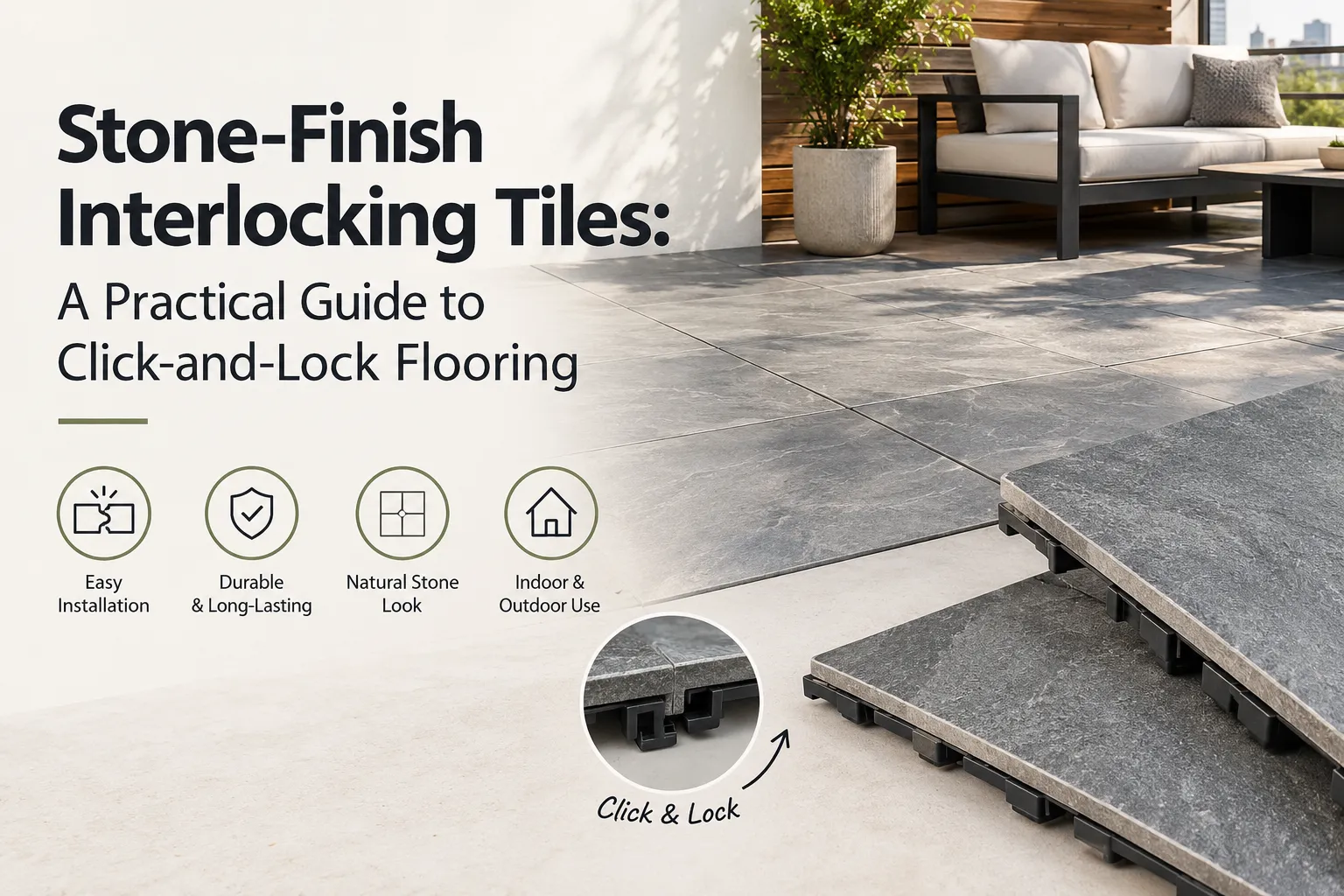
Natural stone has an appeal that few materials match. It is also heavy, costly to lay and slow to install. Stone finish interlocking tiles are an alternative: they reproduce the texture and character of stone, but fit together with a simple click-and-lock system instead of cement and grout.
This guide explains how these tiles work, where they suit and what to check before you buy.
What are interlocking tiles?
Interlocking tiles, also called click and lock tiles, have a locking mechanism that fits each tile securely into the next. Installation needs no adhesive, grout or nails. The format has several advantages:
- Minimal mess: no cement and no drying time.
- Reusable: tiles can be lifted and relocated.
- Everyday durability: engineered for daily wear and foot traffic.
What makes the stone finish special?
Click-N-Lock® Stone tiles from Welspun Flooring are built on an SPC (Stone Polymer Composite) core, which gives the tile its durability. A décor film carries the stone design, and a protective wear layer guards against scratches and stains. An integrated IXPE backing adds underfoot cushioning and helps reduce footstep noise.
The collection draws on textures inspired by terracotta, sandstone and graphite Kadappa. These suit warm, earthy interiors as well as sleek, modern ones. If you like Kadappa and travertine looks, the Eden stone collection is a good place to start.
Features that matter in daily life
According to the product page, Click-N-Lock® tiles offer:
- Quick, dust-free and noise-free installation, with the option to lay over existing tiles
- Glue-free and grout-free locking with Wel-lock™ technology
- Waterproof and scratch-resistant surfaces, with Scratch Guard™ and Stain Protect™ layers
- Anti-skid surfaces, useful for homes with children and older family members
- FloorScore® certification for indoor air quality
Check the current specifications and warranty terms with the brand before specifying for a project.
Where can you use them?
Stone finish interlocking tiles suit:
- Living rooms and dining areas
- Bedrooms
- Kitchens
- Hallways and corridors
- Retail stores, salons and showrooms
- Rental homes, because the tiles can be removed and reinstalled
How to install them
- Prepare the subfloor: make sure it is clean, level and dry.
- Acclimatise the tiles: leave them in the room for at least 24 hours.
- Start from a corner: begin at the left-hand corner, tongue side facing the wall.
- Click and lock: align the tongue and groove, then press down.
- Cut edge tiles: use a tile cutter or sharp utility knife.
- Finish: add skirting or edge trims.
Welspun also publishes installation guidelines for a step-by-step reference.
Care and maintenance
Sweep regularly with a soft-bristle broom and mop with a neutral pH, non-abrasive cleaner. Clean spills promptly. Avoid acidic cleaners, wax, abrasive products and vacuum cleaners with a rotating beater bar.
Final thoughts
Stone finish interlocking tiles give you the look of natural stone without the heavy installation. They are quick to lay, easy to maintain and can be reused. If you are renovating or building, they are worth comparing with traditional stone and tile.






Sign in to leave a comment.