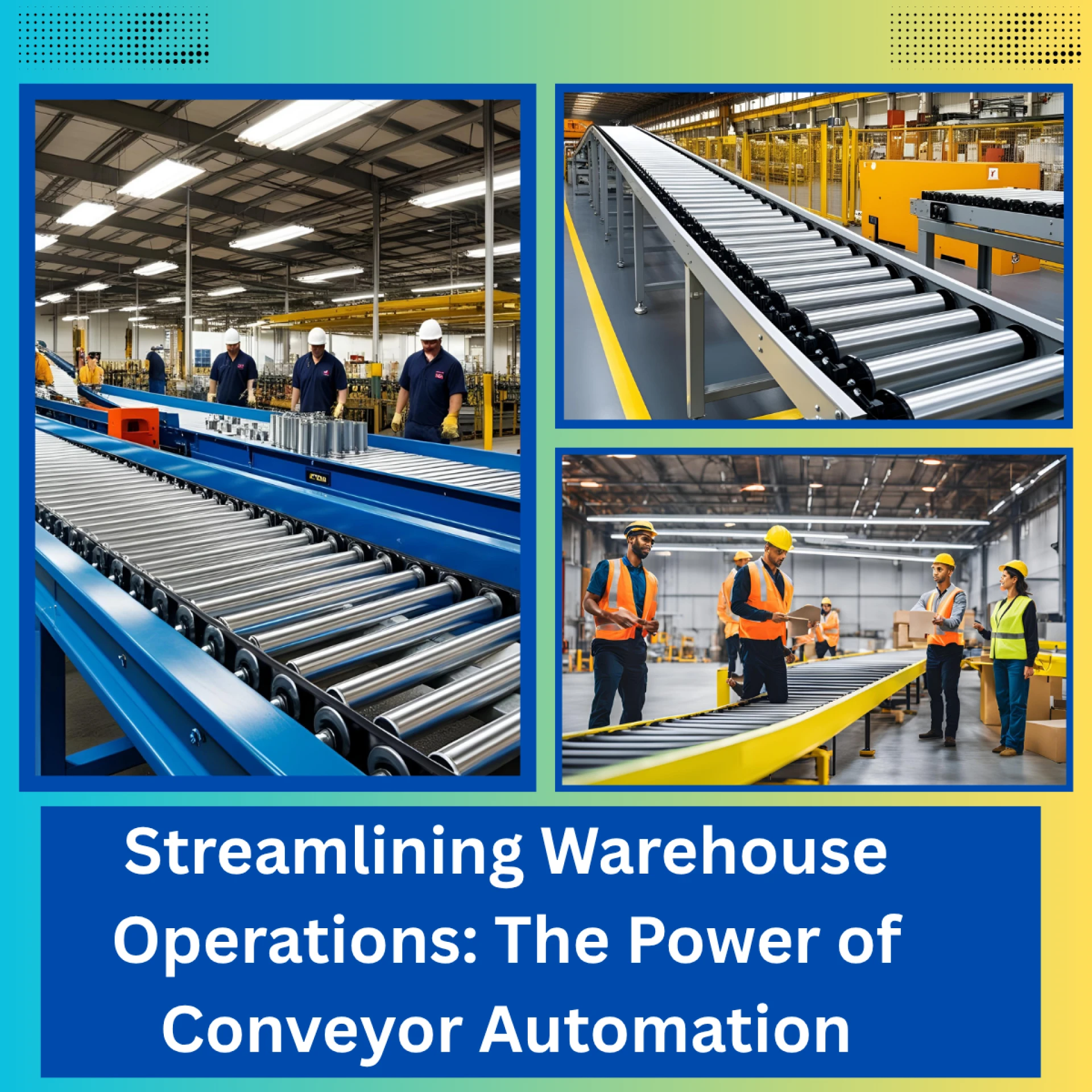

As global trade and e-commerce continue to surge, warehouses have become more than just storage hubs—they’re now dynamic fulfillment engines that demand speed, precision, and efficiency. Companies that fail to adapt risk falling behind in a world where rapid delivery and order accuracy are business essentials.
To keep up, warehouses are turning to automation. One technology leading the charge is the conveyor system—quietly transforming how materials flow through modern facilities.
Conveyors eliminate bottlenecks, reduce labor dependence, and drive consistent performance. Whether your warehouse is handling retail goods, industrial parts, or high-volume e-commerce orders, implementing the right conveyor setup can create a measurable impact.
This article explores how conveyor automation can help warehouse operations run leaner, faster, and smarter—highlighting key advantages, applications, and supporting tools like baggage tubs, truck loading conveyors, and integrated material handling solutions.
Rethinking Movement: Why Conveyor Systems Matter
In most warehouses, a significant portion of operational time is spent simply moving items—between docks, storage racks, picking zones, and shipping stations. Every unnecessary step costs money, time, and energy.
Conveyor systems address this by enabling continuous and controlled flow of products across various zones. Instead of relying on manual cart-pushing or forklift runs, items move autonomously along belts or rollers—guided by logic and sensors.
These systems don't just move products—they orchestrate workflows.
Key Benefits of Conveyor Automation in Warehousing
1. Time Savings at Every Step
Speed is one of the most obvious benefits. Conveyors keep items in motion 24/7, enabling faster receiving, picking, packing, and dispatch. No breaks, no delays—just consistent, steady throughput.
This allows warehouses to handle more volume without needing to scale up labor in parallel.
2. Consistency and Predictability
With conveyors, there’s no guesswork about where an item is or when it will arrive. Timed movement across the system supports predictable lead times and makes planning more efficient.
This predictability becomes especially valuable in operations with tight shipping windows.
3. Reduced Physical Strain on Workers
Manual transport tasks can lead to fatigue, injuries, and lower productivity. Conveyor systems allow employees to focus on monitoring, inspection, or quality control instead of pushing heavy carts or walking several kilometers a day.
Not only does this boost output—it also creates a safer, more ergonomic workplace.
4. Error Reduction
When integrated with scanning and sorting technologies, conveyors help eliminate routing errors. Barcodes can be automatically verified as items move through the line, ensuring that the right product reaches the right station.
The result? Fewer returns, fewer complaints, and happier customers.
Conveyor System Types and Where They Fit
Warehouses are rarely one-size-fits-all—and neither are conveyor systems. Different applications call for different configurations:
Belt Conveyors
Ideal for moving lightweight or irregularly shaped items over long, straight distances.
Roller Conveyors
Used for handling boxes, crates, and totes—especially effective in high-volume sortation and packing areas.
Overhead Conveyors
Free up floor space by moving items above ground level. Common in garment, parts, or light assembly operations.
Incline/Decline Conveyors
Used to move goods between levels or to/from mezzanine floors.
Flexible Conveyors
Portable and expandable—perfect for temporary lines or docks with variable needs.
Each type can be tailored with curves, merges, sensors, diverters, and drive systems depending on the layout and functionality required.
Where Conveyor Automation Delivers the Most Value
Receiving
Conveyors at receiving docks accelerate unloading and putaway. Items can be scanned and sorted as they enter the facility, automatically directed toward storage zones or cross-docking areas.
This reduces congestion, speeds up inventory visibility, and improves dock utilization.
Picking
Order picking is a high-impact area for productivity. Conveyor systems allow for zone-based picking, where employees stay in one area while goods are delivered to them or passed down the line.
This reduces walking time and increases pick rates dramatically.
Packing and Sortation
After picking, conveyors route items to packing stations. Integrated scales, scanners, and printers can automate labeling and weighing.
Once packed, packages can be sorted by destination, shipping method, or delivery priority using diverters and gates.
Shipping
Conveyors deliver outbound packages directly to loading zones—streamlining the final step of fulfillment. A truck loading conveyor extends into delivery vehicles, allowing seamless transition from warehouse to trailer with minimal handling.
This not only speeds up shipping—it reduces loading-related injuries and labor costs.
Supporting Tools That Elevate Conveyor Efficiency
To get the most from conveyor automation, warehouses often add supporting tools and technologies that make the system smarter and more flexible:
- Barcode Scanners: Enable automatic item tracking and verification in real time.
- Photo Eyes and Sensors: Detect item presence and spacing to prevent jams or collisions.
- Diverters and Sorters: Direct items to correct destinations based on scanned data.
- Weighing Systems: Ensure correct shipping labels and avoid billing issues.
- Integration with WMS/ERP: Allows dynamic routing and real-time inventory updates.
When these tools work together, the result is a fluid, end-to-end system with minimal delays and high throughput.
A Closer Look: Using Baggage Tubs for Versatile Transport
In some warehouse environments—especially those handling irregular, fragile, or small items—standard conveyor movement isn’t enough. That’s where baggage tubs come into play.
Originally used in airports for luggage handling, these durable plastic containers are now common in warehouses to group and transport loose goods securely. When items don’t conform to standard dimensions, baggage tubs keep them safe, organized, and easy to scan as they travel along the line.
Their use improves efficiency in returns processing, e-commerce fulfillment, and even reverse logistics operations.
Going Beyond Conveyors: Integrated Material Handling
While conveyor systems alone can drive major gains, they shine brightest when part of a larger ecosystem. Today’s best-performing facilities adopt full-scale material handling solutions that include:
- Automated Storage and Retrieval Systems (AS/RS)
- Robotic picking and packing arms
- Forklift guidance systems
- Voice-directed workstations
- Smart racking and shelving systems
Together, these tools create a harmonized workflow that reduces friction at every touchpoint—whether you’re storing, moving, assembling, or shipping products.
By investing in material handling as a whole rather than just pieces, warehouses future-proof their operations against volume spikes, labor shortages, and supply chain disruptions.
A Real-World Impact: Before and After Automation
Let’s consider a warehouse that processes 8,000 orders per day. Before conveyor automation:
- It required 35 workers on the floor daily.
- Items were transported manually between zones.
- Loading alone took nearly 3 hours per truck.
After installing modular conveyor lines and a truck loading conveyor at each dock:
- Headcount was reduced to 25 with better role allocation.
- Average order processing time dropped by 30%.
- Loading time per truck fell to 45 minutes.
- Errors and misroutes reduced by 20%.
The ROI was achieved in under 18 months—and the facility now has the capacity to scale up without expanding its footprint.
Challenges and Considerations
1. Initial Cost
Conveyors require investment—but they offer long-term savings in labor, errors, and time. Starting with modular or scalable systems helps manage costs.
2. Space Constraints
In compact environments, vertical and overhead conveyors can create efficiencies without increasing your floorplan.
3. Maintenance
Preventive maintenance is essential to avoid downtime. Partnering with a system integrator who offers support plans can ensure smooth operation.
What’s Next? The Future of Conveyor Systems
Tomorrow’s conveyor systems are intelligent, adaptable, and sustainable. Innovations on the horizon include:
- Machine learning algorithms to optimize flow and detect inefficiencies
- Energy-efficient motors to lower operational costs
- Digital twins for real-time simulation and monitoring
- Collaborative robots (cobots) working alongside conveyors to handle sorting or packing tasks
- Cloud integration for seamless control across multiple sites
The shift isn’t just toward automation—it’s toward smarter automation that thinks, learns, and adjusts in real time.
Final Takeaway
In today’s logistics landscape, speed and accuracy aren’t just competitive advantages—they’re business essentials. Conveyor systems have evolved from basic transport tools into intelligent systems that streamline operations from start to finish.
By reducing reliance on manual labor, improving workflow speed, and supporting consistent output, conveyors can redefine what your warehouse is capable of.
Whether you’re integrating smart sensors, using baggage tubs to move delicate items, automating dock operations with a truck loading conveyor, or investing in scalable material handling solutions, conveyor automation is a proven path to higher performance.
Ready to modernize your warehouse?
Explore how Mexeltec can help design and deliver custom conveyor systems tailored to your facility. From planning to installation, our experts can guide you through every step of the journey.


























Sign in to leave a comment.