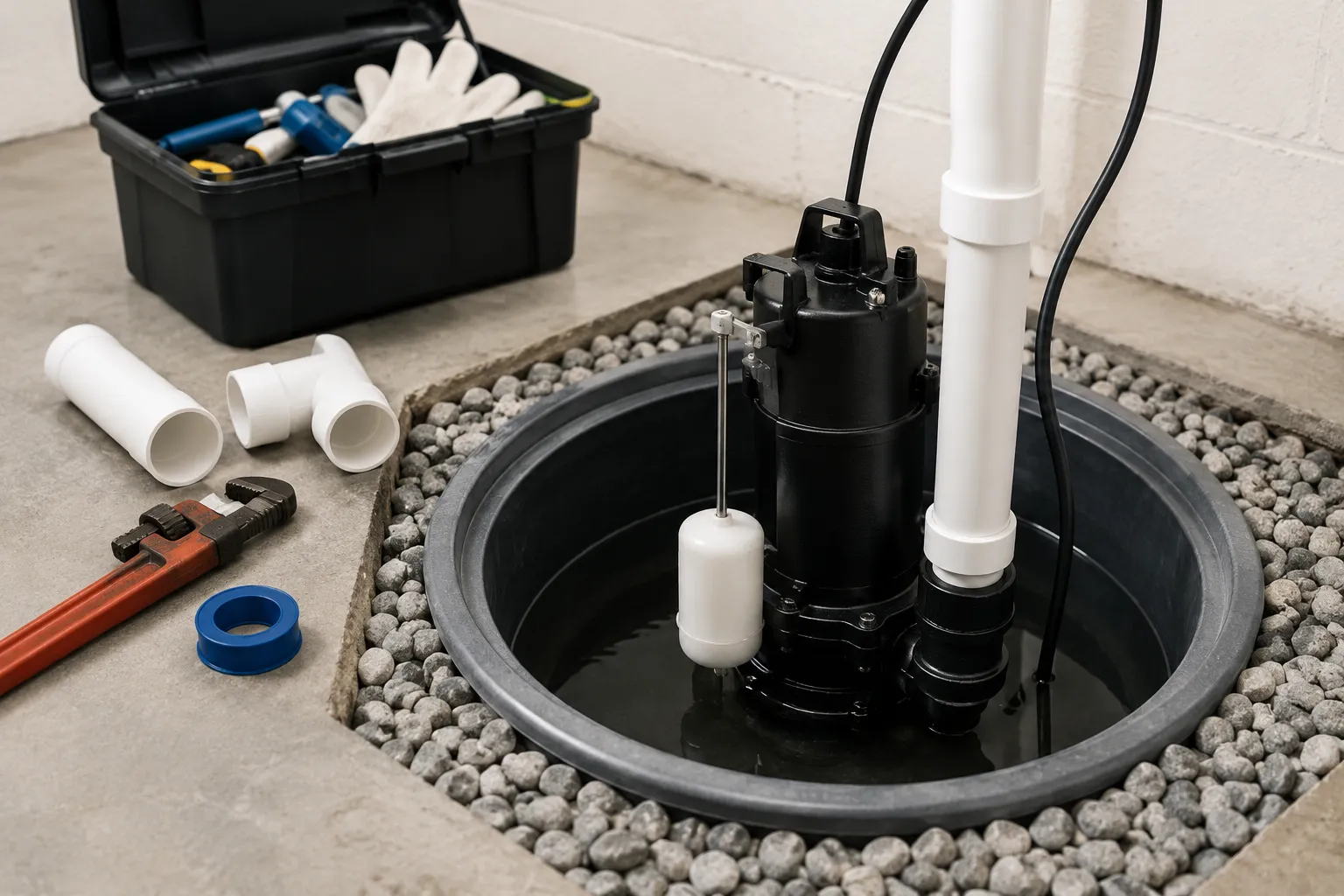

A sump pump is one of the most effective tools for protecting your home from basement flooding and water damage. Whether you experience heavy rainfall, melting snow, or high groundwater levels, a properly installed and well-maintained sump pump can help keep your basement dry throughout the year.
However, installing a sump pump is only the first step. Regular maintenance is equally important to ensure the system performs reliably when you need it most. A neglected sump pump can fail without warning, leading to expensive repairs and unnecessary stress.
This complete guide covers everything homeowners need to know about sump pump installation and maintenance, helping you maximize the lifespan and performance of your system.
What Is a Sump Pump?
A sump pump is a water removal system installed in the lowest part of a basement or crawl space. It sits inside a sump basin where groundwater naturally collects.
As the water level rises, a float switch activates the pump, which pushes water through a discharge pipe and safely away from the home's foundation.
This automatic process prevents water from accumulating inside the basement and helps reduce the risk of flooding.
Why Is a Sump Pump Important?
Without proper drainage, water can quickly create serious problems inside your home.
A sump pump helps:
- Prevent basement flooding
- Protect your foundation
- Reduce mold and mildew growth
- Improve indoor air quality
- Protect valuable belongings
- Lower long-term repair costs
- Increase property value
For homes located in flood-prone areas, a sump pump is often considered an essential part of the drainage system.
Types of Sump Pumps
Choosing the right type of sump pump is the first step toward reliable performance.
Submersible Sump Pump
A submersible pump operates underwater inside the sump basin.
Benefits include:
- Quiet operation
- Higher pumping capacity
- Longer lifespan
- Better protection from debris
These pumps are ideal for homes with frequent water accumulation.
Pedestal Sump Pump
A pedestal pump keeps its motor above the basin while the pump remains below.
Advantages include:
- Easier maintenance
- Lower purchase cost
- Longer motor accessibility
These pumps are often suitable for smaller basements with moderate drainage needs.
Battery Backup Sump Pump
Storms frequently cause power outages, making battery backup systems an excellent addition.
They continue removing water even when electricity is unavailable.
Understanding the Installation Process
Professional installation follows several important steps to ensure reliable operation.
Step 1: Basement Inspection
The installer first evaluates:
- Basement layout
- Drainage conditions
- Water entry points
- Foundation condition
- Existing moisture problems
This helps determine the best installation location.
Step 2: Choosing the Installation Site
The sump basin is placed at the lowest point where water naturally collects.
Proper placement improves drainage efficiency.
Step 3: Cutting the Basement Floor
If no sump pit exists, a section of concrete is removed.
The installer carefully excavates a hole large enough for the basin.
Step 4: Installing the Basin
The basin is placed into the prepared pit.
Gravel surrounds the basin to improve groundwater flow while supporting the structure.
Step 5: Installing the Pump
The sump pump is positioned inside the basin.
The installer verifies that:
- The pump sits level.
- The float switch moves freely.
- Electrical connections are secure.
Step 6: Connecting the Discharge Pipe
The discharge pipe directs water away from the home's foundation.
Proper drainage helps prevent water from returning to the basement.
Step 7: Installing the Check Valve
A check valve prevents discharged water from flowing back into the basin.
This reduces unnecessary pump cycling and extends equipment life.
Step 8: Testing the System
Before completing the installation, the system is tested by filling the basin with water.
The installer confirms:
- Automatic activation
- Proper drainage
- Leak-free plumbing
- Smooth operation
Why Proper Installation Matters
Even the highest-quality sump pump cannot perform properly if installed incorrectly.
Professional installation helps ensure:
- Correct pump sizing
- Efficient drainage
- Safe electrical connections
- Longer equipment lifespan
- Reliable flood protection
A properly installed system significantly reduces the likelihood of future water damage.
Routine Sump Pump Maintenance
Regular maintenance keeps your system operating efficiently year after year.
Test the Pump Regularly
Every few months, pour several buckets of water into the sump basin.
The pump should:
- Turn on automatically
- Remove the water quickly
- Shut off once the basin is empty
If any part of this process fails, further inspection is needed.
Clean the Sump Basin
Over time, dirt, gravel, and debris collect inside the basin.
Cleaning the basin helps:
- Prevent clogs
- Improve pump performance
- Extend equipment life
Always disconnect power before cleaning.
Inspect the Float Switch
The float switch controls automatic operation.
Ensure it moves freely without becoming stuck against the basin wall.
A faulty float switch can prevent the pump from operating during heavy rainfall.
Check the Discharge Pipe
Inspect the discharge line for:
- Cracks
- Leaks
- Blockages
- Ice buildup during winter
Water should always flow freely away from the home's foundation.
Examine Electrical Connections
Inspect power cords and outlets for signs of wear or damage.
Using a properly grounded outlet helps improve safety.
Test the Backup Battery
If your system includes battery backup, verify its operation several times each year.
Replace aging batteries according to the manufacturer's recommendations.
Common Warning Signs Your Pump Needs Attention
Routine inspections help identify problems early.
Watch for:
- Strange noises
- Constant running
- Excessive vibration
- Rust or corrosion
- Basement flooding
- Slow water removal
- Motor overheating
- Frequent cycling
Ignoring these warning signs may result in complete pump failure.
How Long Does a Sump Pump Last?
Most residential sump pumps last between 7 and 10 years.
Several factors affect lifespan, including:
- Usage frequency
- Pump quality
- Maintenance
- Water conditions
- Installation quality
Regular maintenance often helps maximize equipment life.
Tips to Extend Your Pump's Lifespan
Homeowners can improve long-term performance by following a few simple practices.
These include:
- Keep the sump basin clean.
- Test the pump regularly.
- Replace worn components promptly.
- Inspect the discharge pipe seasonally.
- Install a battery backup.
- Schedule professional inspections when needed.
Preventive maintenance is much less expensive than repairing water damage.
Should You Repair or Replace?
Minor issues may only require repairs.
Replacement is often the better option when:
- The pump is over ten years old.
- Repairs become frequent.
- Flooding has already occurred.
- The motor has failed.
- Multiple components are worn.
Installing a modern, energy-efficient sump pump provides greater reliability.
Why Professional Maintenance Is Beneficial
Although homeowners can perform basic maintenance, professional inspections provide additional confidence.
Experienced technicians can:
- Identify hidden problems
- Test pump performance
- Inspect plumbing connections
- Verify drainage efficiency
- Recommend necessary upgrades
Many homeowners choose Sump Pump Installation Services Nova Scotia for expert installation, ongoing maintenance, and dependable protection against basement flooding.
Final Thoughts
A sump pump is one of the most important systems for protecting your home from water damage. Proper installation ensures the pump operates efficiently, while regular maintenance keeps it ready to perform during heavy rain and changing weather conditions.
By understanding how your sump pump works, following a simple maintenance routine, and addressing small issues before they become major problems, you can significantly extend the life of your system. Whether you're installing a new sump pump or maintaining an existing one, taking a proactive approach helps safeguard your basement, foundation, and valuable belongings for years to come.

vidIQ























Sign in to leave a comment.