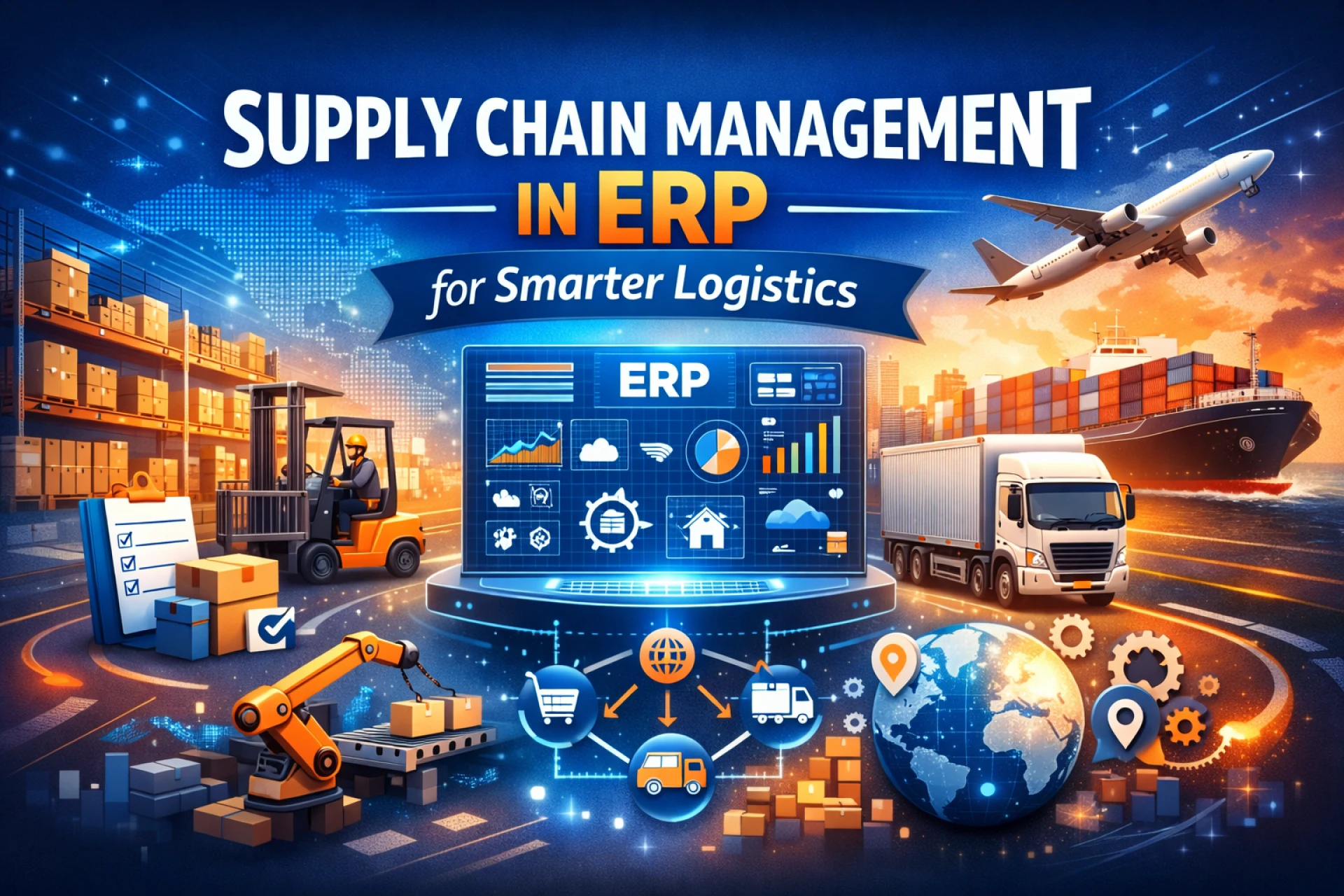

In today’s competitive business environment, logistics is no longer just about transporting goods from one place to another. It has evolved into a strategic function that directly impacts profitability, customer satisfaction, and operational efficiency. This is where supply chain management in ERP plays a transformative role.
Companies across manufacturing, distribution, retail, and e-commerce sectors are adopting ERP systems to streamline procurement, production, warehousing, and transportation. By integrating every supply chain activity into a single platform, businesses gain real-time visibility, data-driven decision-making power, and better control over logistics operations.
In this detailed guide, we’ll explore how supply chain management in ERP enables smarter logistics, improves efficiency, reduces costs, and enhances overall business performance.
What is Supply Chain Management in ERP?
Supply chain management in ERP refers to the integration of supply chain processes—such as procurement, inventory management, production planning, warehousing, and distribution—into an Enterprise Resource Planning (ERP) system.
Instead of managing supply chain activities through disconnected software tools or spreadsheets, ERP provides a centralized system where all departments work with synchronized data. This ensures:
- Real-time inventory tracking
- Automated procurement processes
- Accurate demand forecasting
- Efficient warehouse management
- Seamless transportation planning
In simple terms, ERP transforms supply chain management from a reactive process into a proactive, strategic system.
Why Smarter Logistics Matters Today
Logistics challenges are growing due to:
- Increasing customer expectations
- Global supply chain disruptions
- Rising transportation costs
- Inventory mismanagement
- Complex multi-location operations
Without digital integration, businesses often struggle with delayed shipments, stockouts, excess inventory, and poor coordination between departments.
By implementing supply chain management in ERP, companies can move toward smarter logistics—where data drives decisions and processes are optimized in real time.
Key Components of Supply Chain Management in ERP
Let’s understand the core modules that make ERP powerful for logistics.
1. Procurement Management
ERP automates purchase requisitions, vendor selection, and purchase orders.
Benefits include:
- Automated supplier communication
- Reduced manual errors
- Better price negotiation through historical data
- Faster approval workflows
This ensures raw materials are available on time without overstocking.
2. Inventory Management
Inventory is the backbone of logistics. ERP provides:
- Real-time stock tracking
- Batch and serial number tracking
- Automatic stock alerts
- Multi-warehouse management
With supply chain management in ERP, businesses maintain optimal inventory levels and avoid both shortages and overstock situations.
3. Demand Forecasting
Accurate forecasting helps prevent supply chain disruptions.
ERP systems analyze:
- Historical sales data
- Market trends
- Seasonal demand patterns
This improves production planning and ensures smarter logistics planning.
4. Warehouse Management
Modern ERP solutions include Warehouse Management System (WMS) features such as:
- Bin tracking
- Barcode scanning integration
- Optimized picking routes
- Reduced order fulfillment time
This results in faster and more accurate order processing.
5. Transportation Management
Transportation costs significantly impact profit margins.
ERP helps in:
- Route optimization
- Shipment tracking
- Carrier management
- Freight cost analysis
With centralized data, logistics teams can make cost-efficient shipping decisions.
How Supply Chain Management in ERP Enables Smarter Logistics
Now let’s explore the direct impact.
Real-Time Visibility
One of the biggest advantages of supply chain management in ERP is complete visibility across the supply chain.
Managers can instantly see:
- Current inventory levels
- Pending orders
- Shipment status
- Production schedules
This reduces delays and improves decision-making speed.
Data-Driven Decision Making
ERP systems generate detailed reports and dashboards that help businesses:
- Identify bottlenecks
- Analyze supplier performance
- Monitor logistics costs
- Predict future demand
Instead of guessing, companies rely on analytics.
Reduced Operational Costs
Cost reduction happens through:
- Inventory optimization
- Lower storage costs
- Reduced manual labor
- Minimized shipping errors
- Better route planning
Over time, these savings significantly improve profitability.
Improved Customer Satisfaction
Today’s customers expect fast and accurate deliveries.
With supply chain management in ERP, businesses can:
- Track shipments in real time
- Provide accurate delivery estimates
- Reduce order processing time
- Minimize order errors
This builds trust and customer loyalty.
Benefits of Supply Chain Management in ERP for Different Industries
Manufacturing Industry
Manufacturers benefit through:
- Production planning alignment
- Raw material availability tracking
- Work-in-progress monitoring
- Demand-driven manufacturing
ERP ensures seamless coordination between procurement, production, and logistics.
Retail Industry
Retailers gain:
- Automated replenishment
- Multi-store inventory visibility
- Reduced stockouts
- Faster distribution
Smarter logistics improves customer experience both online and offline.
E-Commerce Businesses
E-commerce companies rely heavily on logistics speed.
ERP supports:
- Order management automation
- Real-time stock updates
- Multi-channel integration
- Returns management
This makes supply chain management in ERP essential for digital businesses.
Challenges Without ERP-Based Supply Chain Management
Businesses that don’t use ERP often face:
- Disconnected systems
- Manual data entry errors
- Poor inventory visibility
- Slow decision-making
- Increased operational costs
As supply chains become more complex, manual systems can no longer keep up.
Future of Supply Chain Management in ERP
The future is driven by advanced technologies like:
- Artificial Intelligence (AI)
- Machine Learning
- IoT integration
- Predictive analytics
- Cloud-based ERP systems
These technologies make supply chain management in ERP more intelligent, scalable, and accessible.
Cloud ERP solutions especially allow businesses to manage logistics from anywhere with real-time synchronization.
Steps to Implement Supply Chain Management in ERP
If you’re planning to adopt ERP for logistics, follow these steps:
- Analyze existing supply chain gaps
- Define clear business goals
- Choose the right ERP vendor
- Train employees
- Monitor performance continuously
Proper planning ensures smooth implementation and maximum ROI.
Best Practices for Smarter Logistics with ERP
To maximize benefits:
- Keep data clean and updated
- Automate wherever possible
- Use real-time dashboards
- Integrate suppliers digitally
- Continuously monitor KPIs
Consistent optimization is the key to long-term success.
Why Businesses Must Invest Now
Supply chains are becoming global and complex. Delays, disruptions, and inefficiencies directly impact profits.
Investing in supply chain management in ERP is no longer optional—it’s essential for:
- Sustainable growth
- Competitive advantage
- Operational excellence
- Customer retention
Companies that embrace digital transformation today will lead tomorrow.
Conclusion
Smarter logistics is the backbone of modern business success. From procurement to final delivery, every step of the supply chain must be efficient, transparent, and well-coordinated.
Supply chain management in ERP empowers businesses with real-time visibility, automation, cost control, and improved customer service. It eliminates manual errors, reduces operational expenses, and enhances decision-making through data analytics.
As industries continue evolving, ERP-driven supply chain systems will become the standard for businesses aiming to scale efficiently. Investing in the right ERP solution today ensures stronger logistics performance and long-term profitability.
Frequently Asked Questions (FAQs)
1. What is supply chain management in ERP?
Supply chain management in ERP integrates procurement, inventory, warehousing, production, and logistics processes into one centralized system for better efficiency and visibility.
2. How does ERP improve logistics operations?
ERP improves logistics by providing real-time tracking, automated workflows, route optimization, and data-driven insights.
3. Is supply chain management in ERP suitable for small businesses?
Yes, modern cloud-based ERP solutions are scalable and affordable, making them suitable for small and medium-sized businesses.
4. What industries benefit the most from ERP supply chain management?
Manufacturing, retail, e-commerce, distribution, and wholesale industries benefit significantly.
5. How does ERP reduce supply chain costs?
ERP reduces costs through inventory optimization, reduced manual errors, better demand forecasting, and efficient transportation planning.
6. Can ERP integrate with warehouse management systems?
Yes, most ERP systems include built-in WMS modules or can integrate seamlessly with third-party warehouse systems.
7. What are the main modules in ERP supply chain management?
Procurement, inventory management, production planning, warehouse management, and transportation management.
8. How long does ERP implementation take?
Implementation time depends on company size and complexity, typically ranging from a few months to a year.



























Sign in to leave a comment.