

Timing determines everything in sales. The right question asked at the wrong moment falls flat. The perfect solution offered too early feels pushy. Follow-up that happens after the customer has moved on is just wasted effort. Your sales team knows this intuitively – they've watched promising opportunities fade because they couldn't be in the right place at the right time.
The challenge is that "the right time" varies constantly across dozens or hundreds of active opportunities. Some customers need space to process information. Others want rapid-fire engagement. Decision windows open and close without warning. Competitive situations accelerate timelines that seemed stable yesterday.
Virtual sales assistant AI solves the timing problem by ensuring your team engages when customers are actually ready – not when your schedule permits.
The Timing Trap in Modern Sales
Traditional sales approaches create systematic timing problems.
The Response Gap — Lead response lags while prospects are still in research mode. After-hours misses leave prospects who engage on evenings and weekends without a response. Global customer challenges mean someone is always awake and interested – but not your team. Multi-threaded conversations have customers progressing through evaluation stages while your team waits for scheduled meetings.
The Patience Paradox — Over-eagerness pushing for next steps before customers are ready creates pressure and resistance. Under-engagement lets momentum fade and competitors insert themselves. Stage mismatch treats early-stage buyers like late-stage buyers. Individual variation means one size never fits all.
The Visibility Problem — Customers research and compare solutions without your team knowing. Decision-makers enter or leave processes without clear signals. Alternatives enter conversations before your team knows there's competition. Timeline and priority change without explicit communication.
The result isn't just lost deals – it's deals that could have been won if timing had aligned better.
How AI Solves the Timing Challenge
24/7 Availability
Customer interest doesn't follow business hours, and neither should your response: immediate response engaging leads instantly regardless of when they reach out, global coverage without competitor advantages from different time zones, after-hours capture ensuring interest that surfaces on weekends and evenings doesn't go stale, and always-on engagement letting customers progress through early stages whenever inspiration strikes.
Behavior-Based Timing
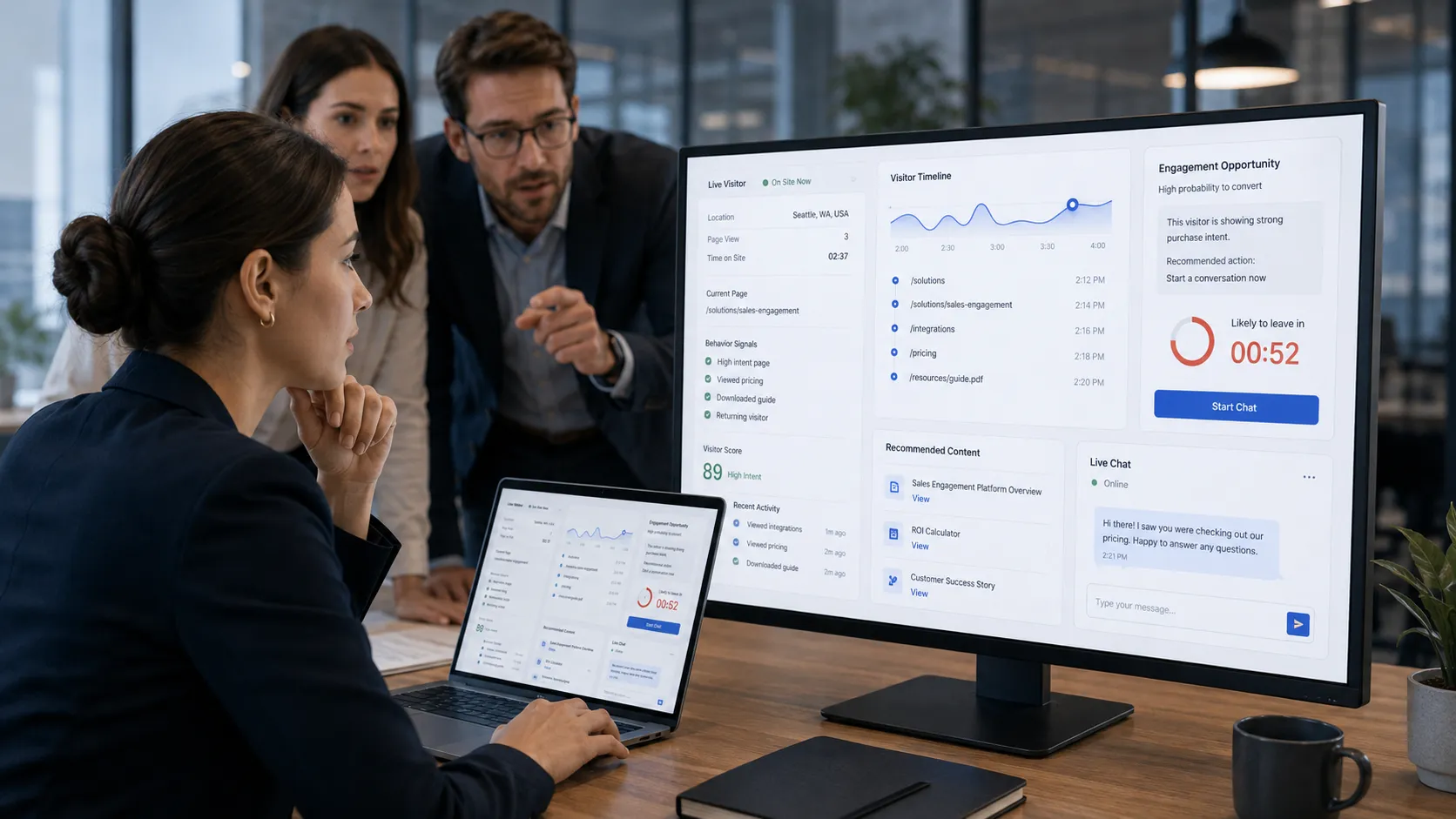
Instead of arbitrary schedules, AI powered sales assistant engagement triggers on customer behavior: content consumption so follow-up happens based on what prospects are actually reading and watching, website activity tracking pages visited and return visits indicating buying stage and urgency, email engagement measuring opens and clicks signaling interest and intent, and competitive research triggering relevant differentiation when prospects compare alternatives.
Stage-Appropriate Support
Different buying stages require different types of engagement: educational content and exploratory questions without pressure in early stages, specific solutions to identified challenges with competitive context during evaluation, clear proposal terms and risk mitigation at the decision stage, and onboarding support and success planning during implementation.
Real-World Impact: Better Timing, Better Results
Lead Engagement Metrics
- 90%+ of leads engaged within 5 minutes versus hours or days with traditional approaches
- 30–40% of conversions happening outside traditional business hours
- Geographic expansion without adding headcount in every time zone
- Better early filtering meaning human reps spend time on viable prospects
Pipeline Velocity Improvements
- Deals moving 25–50% faster because timing aligns with customer readiness
- Fewer deals going silent because follow-up happens when customers are actually engaged
- Earlier awareness of alternatives enabling better positioning and defense
- Customer timeline changes surfacing instantly instead of during scheduled reviews
Customer Experience Enhancements
- Progress happening on customer timelines, not sales schedules
- Answers and resources available whenever questions arise
- No pressure tactics – support that matches actual buying behavior
- Every touchpoint feeling connected and informed regardless of when it happens
Implementing Right-Time Customer Support
Technology Infrastructure — Behavior tracking across channels to identify engagement signals. Automated engagement triggering appropriate responses based on customer behavior and stage. Seamless AI-to-human transition when conversations require strategic judgment. All timing insights flowing into deal records for visibility and forecasting.
Process Design — Clear criteria for what constitutes each buying stage. Defined types of support appropriate at each stage. Escalation protocols for when human reps should intervene. Continuous learning about what timing actually works for different customer segments.
Team Alignment — Clear role definition for what AI handles versus human reps. Expectation setting on how right-time engagement changes rep workflows. Success metrics indicating the approach is working. Change management helping teams embrace AI as enhancement rather than threat.
Measuring Timing Effectiveness
Response Time Metrics — How quickly do qualified prospects receive meaningful engagement? What percentage of conversions happen outside traditional business hours? How often does engagement trigger on customer activity versus arbitrary schedules?
Engagement Quality Metrics — Does engagement match customer buying stage? How do customers respond to right-time touchpoints versus scheduled outreach? Are interactions more productive when they're behavior-triggered?
Business Outcome Metrics — Are similar deals closing faster with right-time engagement? Is better timing improving conversion at each pipeline stage? Is earlier competitive awareness translating to higher win rates?
The Human Element in Right-Time Support
Here's what virtual sales assistant AI doesn't replace: strategic judgment about resource allocation, pricing, and deal terms; relationship building where trust develops through human connection; complex problem-solving that needs creative thinking rather than template responses; and emotional intelligence in understanding nuance and what's not being said.
What AI does is ensure human engagement happens at the moments when it will have maximum impact. The strategic, relationship-focused work that defines great selling gets better support and better timing.
The technology handles availability and monitoring so your team can focus their energy where it matters most.
Choosing AI Sales Assistant for Right-Time Support
24/7 Capability — Can it engage customers outside traditional business hours? Does it handle global time zones without requiring human shifts? Will it capture and qualify interest whenever it surfaces?
Behavior Intelligence — Can it track customer behavior across channels and touchpoints? Does it recognize buying stage based on activity patterns? Will it trigger appropriate engagement based on what customers are actually doing?
Human Integration — Does it know when to escalate conversations to human reps? Can it maintain context and continuity during handoffs? Will it enhance human productivity instead of replacing human judgment?
Learning and Adaptation — Does it get smarter about timing based on what works for your customers? Can it adapt to different buying cycles and customer segments?
The Future of Right-Time Sales Engagement
The organizations leading their markets with AI virtual sales assistant technology are fundamentally changing how sales happens: from schedule-driven to opportunity-driven engagement when customers are ready, from reactive to proactive with customer behavior triggering responses, from limited availability to always-on presence eliminating geographic and time zone disadvantages, and from guesswork to precision with data-driven timing replacing intuition.
The gap between organizations embracing these capabilities and those sticking with business-hours engagement widens every quarter. This isn't about working longer hours – it's about working smarter and being present when customers actually need you.
Supporting Customers When It Matters Most
Your customers want engagement that respects their timeline and process. Your team wants to focus their energy on opportunities that are actually ready to progress. Your organization needs to capture interest whenever it surfaces and wherever customers are in their journey.
AI virtual sales assistant technology makes right-time engagement possible – not by replacing your team, but by ensuring they engage when timing aligns with customer readiness.
Ready to support customers at the right time?
Your competitors are already engaging prospects the moment interest surfaces, regardless of time zone or schedule. The timing gap widens every opportunity you miss.
Connect with our team to discover how an AI virtual sales assistant can help your organization stop missing timing windows and start supporting customers when they're actually ready to buy.



























Sign in to leave a comment.