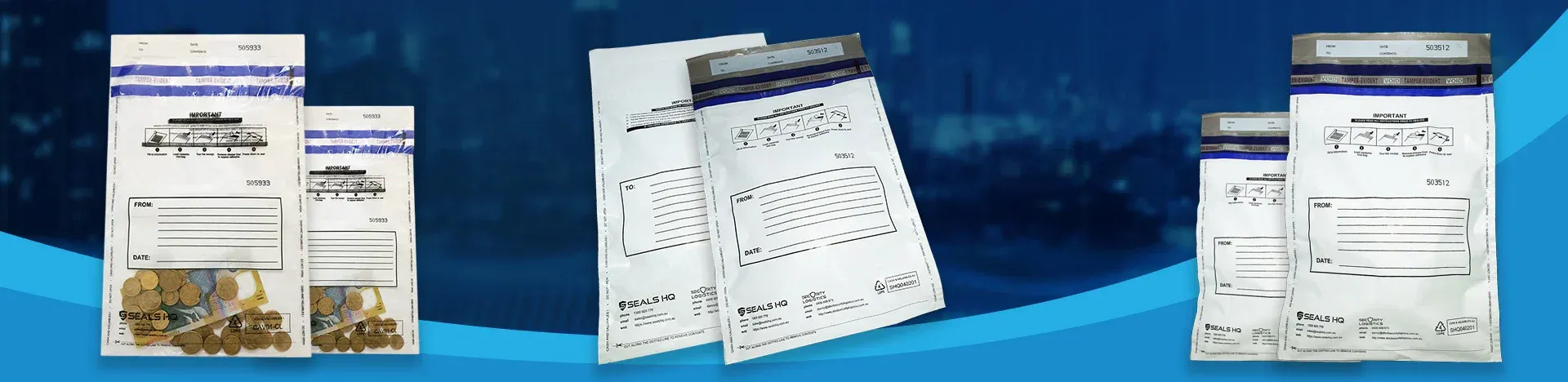

Security has become an increasingly important consideration for businesses that transport, store, collect, or distribute sensitive items. From pharmaceuticals and cash to documents, evidence, samples, and high-value goods, organizations need practical ways to protect contents while maintaining a clear chain of custody. Packaging plays an important role in that process because it can provide an immediate indication if something has been opened or interfered with.
For businesses handling sensitive items, tamper evident bags offer a straightforward security solution. These bags are designed with closures or security features that make unauthorized access visible, helping organizations identify potential interference between the point of dispatch and the point of delivery. Unlike ordinary packaging, their purpose is not simply to contain an item but also to provide evidence when the package has been compromised.
What Are Tamper-Evident Bags?
Tamper-evident bags are security bags designed to show visible evidence if someone attempts to open or interfere with the package. Depending on the design, they may incorporate features such as security seals, tear strips, adhesive closures, serial numbering, or other mechanisms that cannot be removed and replaced without leaving an indication of access.
This distinction is important. A secure package does not necessarily have to prevent every attempt at access. Instead, tamper evidence allows the recipient or responsible staff member to recognize that the package may no longer be in its original condition.
The Therapeutic Goods Administration (TGA) explains that tamper-evident packaging is intended to provide visible or audible evidence that tampering may have occurred when a protective feature is breached or missing. Its Australian code of practice also outlines considerations for the design, selection, and validation of tamper-evident packaging for therapeutic goods.
Why Tamper Evidence Matters?
Security becomes more complicated when goods pass through multiple hands.
A package might be prepared by one employee, collected by a courier, transported through a distribution network, received by another employee, and eventually delivered to a customer or patient. During that journey, organizations need confidence that the contents have not been accessed or interfered with.
Tamper-evident packaging creates an additional layer of accountability.
If the security feature is broken, missing, or visibly altered, the recipient can identify the issue before accepting or using the contents. This can be especially valuable when the package contains items where integrity is critical.
Applications Across Different Industries
Tamper-evident bags are not limited to one type of business. Their applications can extend across multiple industries where secure handling and traceability are important.
Common applications include:
- Pharmacies and healthcare facilities
- Medical laboratories
- Banks and financial institutions
- Retail businesses
- Courier and logistics companies
- Government organizations
- Legal and professional services
- Security companies
- Hospitality businesses
- Evidence and records management
The specific bag design should depend on what is being transported, how it is handled, and the level of security required.
The Growing Importance of Pharmacy Security
Pharmacies are a particularly relevant example because they regularly handle medicines, prescriptions, sensitive documents, and other controlled items.
A pharmacy may need to move prepared orders between different locations, send items with a courier, store products temporarily, or transfer materials between departments. In these situations, a tamper-evident bag can provide an additional visual security check.
The TGA states that tamper-evident packaging for relevant therapeutic goods should be designed so that it remains intact during reasonable handling, including manufacturing, distribution, and retail display. It also specifies that appropriate tamper-evident features should provide visible evidence if the packaging has been breached.
This demonstrates why packaging selection should consider more than basic durability.
Serial Numbers Add Another Layer of Accountability
Some security bags feature unique serial numbers or identification codes. These identifiers can help businesses record which bag was assigned to a particular shipment, transaction, employee, or location.
For example, a pharmacy could record the serial number of a security bag when an order is prepared. When the package reaches its destination, staff can compare the recorded number with the bag they receive.
This creates a simple documentation trail.
Serial numbering can be especially useful for businesses that handle high volumes of secure packages because it can make individual items easier to identify and track.
Write-On Panels Improve Record Keeping
Another useful feature is a dedicated write-on panel.
Businesses may use these areas to record information such as:
- Date
- Time
- Sender
- Recipient
- Reference number
- Department
- Delivery details
- Internal tracking information
Having this information directly on the bag can make handling more efficient and reduce the need to attach additional paperwork.
For organizations with established chain-of-custody procedures, this type of identification can complement their existing documentation systems.
Security and Convenience Can Work Together
Security packaging does not have to make everyday operations unnecessarily complicated.
In busy environments, employees need packaging that can be sealed quickly, identified easily, and checked without specialized equipment. If a security system is too complicated, staff may be less likely to use it consistently.
The most effective approach is often one that fits naturally into existing workflows.
For example, a pharmacy employee preparing a delivery should be able to place the contents inside the bag, seal it, record the relevant identification information, and hand it to the next authorized person without adding unnecessary steps.
Choosing the Right Security Bag
Businesses should consider several factors before selecting a tamper-evident bag.
Bag size: The bag should accommodate the contents without excessive empty space.
Material: The material should be appropriate for the environment and type of items being transported.
Closure: The security closure should provide clear evidence if someone attempts to open it.
Identification: Serial numbers, barcodes, or write-on panels can improve tracking.
Opacity: Sensitive contents may require an opaque bag to provide privacy.
Handling requirements: Consider whether the bags will be transported manually, by courier, or through a larger logistics operation.
Volume: Businesses with regular shipments may need a consistent supply and standardized bag formats.
Choosing based solely on price can overlook important operational requirements. A slightly more suitable bag may provide greater value if it improves security, tracking, and workflow efficiency.
Tamper-Evident Packaging and Australian Compliance
Businesses operating in Australia should also understand that packaging requirements can vary depending on the product and industry.
The TGA provides specific guidance for tamper-evident packaging of certain therapeutic goods. Its code states that packaging should include appropriate tamper-evident features and relevant statements explaining that damage or absence of the feature may indicate possible tampering.
This means businesses should assess their specific regulatory obligations rather than assuming that every security bag automatically satisfies every packaging requirement.
For regulated goods, packaging should be selected based on the applicable standards and the nature of the product being handled.
Security Packaging as Part of a Larger Chain of Custody
A tamper-evident bag is only one part of an effective security process.
Organizations should also consider who is authorized to handle the package, how items are recorded, where they are stored, how deliveries are verified, and what happens if a security feature appears damaged.
When these processes work together, packaging becomes part of a broader chain-of-custody system rather than an isolated security measure.
This approach is particularly valuable for organizations where accountability and product integrity are essential.
Making the Right Choice for Pharmacy Operations
Businesses researching the best tamper bags for pharmacies should consider the specific needs of their workflow, including security features, bag size, identification options, privacy, transportation requirements, and the type of products being handled. A suitable bag should provide clear evidence of interference while remaining practical for employees to use consistently.
For pharmacies, healthcare facilities, and other organizations handling sensitive items, the right security packaging can make everyday processes more controlled and transparent.
A Practical Step Toward Better Security
As supply chains become more complex and businesses handle increasing volumes of sensitive goods, simple security measures can make a meaningful difference. Tamper-evident bags provide organizations with a practical way to identify potential interference while supporting accountability throughout transportation and handling.
The key is to choose packaging that matches the actual risks and workflow of the business. Features such as tamper-evident closures, serial numbers, write-on panels, durable materials, and opaque construction can all contribute to a more effective security system.
Ultimately, tamper-evident packaging works best when it is combined with clear handling procedures and responsible staff practices. When security, traceability, and convenience are considered together, businesses can create a stronger process for protecting sensitive items from dispatch to final delivery.




























Sign in to leave a comment.