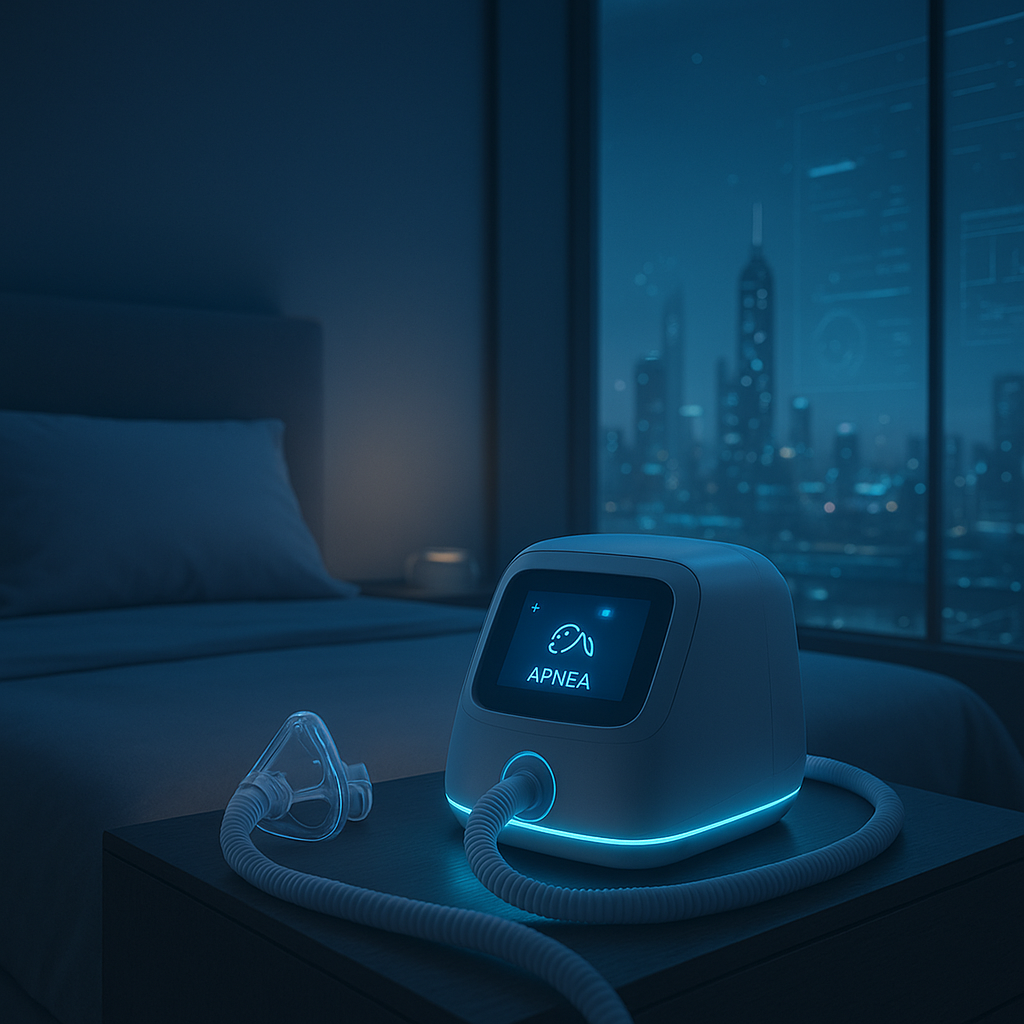

Awakening to a Silent Epidemic: The Growing Challenge of Sleep Apnea
In the quiet hours of the night, millions of individuals unknowingly struggle with a condition that disrupts the very essence of restorative sleep: sleep apnea. Characterized by repeated interruptions in breathing during sleep, obstructive sleep apnea (OSA) affects an estimated 22 million Americans, with many cases remaining undiagnosed. Beyond fatigue and daytime drowsiness, sleep apnea significantly increases risks of cardiovascular disease, stroke, diabetes, and cognitive decline. As the global population ages and obesity rates persist, the prevalence of sleep apnea continues to rise, challenging healthcare systems and patients alike.
Historically, treatment options have been limited and often cumbersome. The Continuous Positive Airway Pressure (CPAP) machine, introduced in the early 1980s, became the gold standard despite low adherence rates due to discomfort and inconvenience. However, the landscape is shifting dramatically in 2026. Technological innovations are transforming how sleep apnea is diagnosed, treated, and managed, offering new hope to patients worldwide.
Consider the case of Maria, a 45-year-old teacher whose severe OSA once left her exhausted and struggling to focus. After years of unsuccessfully using traditional CPAP devices, she recently transitioned to a novel implantable neurostimulation therapy, which monitors and adjusts her airway muscle activity in real time. Maria now wakes refreshed and more alert, a testament to the power of technology reshaping this field. This article explores these advancements in depth, analyzing current trends, breakthroughs, and future prospects for sleep apnea treatment.
The Evolution of Sleep Apnea Treatment: From CPAP to Cutting-Edge Solutions
The journey to modern sleep apnea therapy is marked by incremental innovations that reflect expanding scientific understanding and technological capabilities. The CPAP machine, a mechanical device delivering constant airflow to keep airways open, revolutionized treatment when it became commercially available in the early 1980s. Despite its efficacy in reducing apnea events, CPAP’s widespread use has been hindered by patient discomfort, noise, and equipment maintenance challenges. According to a 2025 NIH report, adherence rates hover around 50%, underscoring the need for alternative therapies.
Starting in the 2000s, oral appliances designed to reposition the jaw and tongue gained acceptance, particularly for mild to moderate cases. However, their effectiveness is highly variable, and they require custom fitting by dental specialists. Surgical options, such as uvulopalatopharyngoplasty, have been reserved for severe cases or patients intolerant of other therapies but carry inherent risks and variable success rates.
More recently, implantable devices that stimulate the hypoglossal nerve to control airway muscles have emerged as a viable option. Approved by the FDA in the late 2010s, these neurostimulation therapies represent a significant leap forward, providing targeted treatment with fewer lifestyle disruptions. They exemplify how integrating bioengineering and sleep medicine can offer personalized approaches to a complex disorder.
These historical perspectives provide context for the current wave of innovation that is reshaping how clinicians and patients approach sleep apnea management. For a foundational understanding of how sleep apnea affects breathing, readers may find the detailed breakdown in How Sleep Apnea Disrupts Breathing Without You Realizing It invaluable.
“Sleep apnea’s treatment history reflects a gradual transition from one-size-fits-all solutions toward precision medicine empowered by technology,” notes Dr. Helen Ramirez, a pulmonologist specializing in sleep disorders.
Data-Driven Advances: Quantifying the Impact of New Technologies
By 2026, data from clinical trials and real-world applications have illuminated the profound benefits of integrating technology into sleep apnea care. According to a 2025 meta-analysis published in the Journal of Sleep Medicine, neurostimulation devices reduce apnea-hypopnea index (AHI) scores by an average of 68%, surpassing CPAP’s 60-65% reduction in controlled settings. Moreover, patient adherence improved significantly, with over 80% of users reporting consistent nightly use after one year.
Wearable technology has also entered the fray, transforming diagnosis and ongoing monitoring. Devices equipped with advanced sensors now track breathing patterns, oxygen saturation, heart rate variability, and sleep stages with medical-grade accuracy. These data empower clinicians to tailor treatment regimens dynamically and provide patients with actionable insights. For example, smart oral appliances can adjust mandibular positioning based on real-time feedback, enhancing comfort and efficacy.
Recent large-scale studies underscore the economic and health benefits of these innovations:
- Reduction in cardiovascular events: Patients using implantable neurostimulators showed a 30% lower incidence of hypertension and arrhythmias over three years.
- Improved quality of life: Surveys report a 50% decrease in daytime sleepiness scores among users of next-generation CPAP machines featuring AI-driven pressure modulation.
- Healthcare cost savings: Early diagnosis using AI-assisted home sleep testing reduced hospitalizations related to untreated sleep apnea complications by 22%.
This data-driven transformation extends beyond treatment efficacy, shifting paradigms toward preventive care and personalized medicine. The integration of AI algorithms and big data analytics continues to refine patient stratification and optimize therapy choices.
“Harnessing continuous data streams from wearable and implantable devices offers unprecedented insights into patient physiology, enabling adaptive therapies that evolve with the patient’s needs,” explains Dr. Mark Chen, biomedical engineer at SomnoTech Innovations.
Breakthroughs and Trends Defining 2026
The current year marks a milestone for sleep apnea technology. Several key developments have converged to reshape the treatment landscape:
- Pharmacological Innovations: After decades without drug options, 2026 heralds the arrival of the first FDA-approved sleep apnea pill. Clinical trials, such as those reported by Gizmodo and KTVU, highlight compounds that modulate upper airway muscle tone and ventilatory drive, offering an adjunct or alternative to mechanical devices. Early adopters report improved sleep quality and reduced apnea episodes, though long-term studies continue.
- Artificial Intelligence and Remote Monitoring: AI-powered platforms now seamlessly analyze polysomnography data and wearable inputs, providing real-time treatment adjustments. Telemedicine has expanded access, enabling continuous patient support and reducing clinic visits.
- Next-Generation CPAP Machines: Responding to longstanding adherence challenges, new devices feature ultra-quiet motors, personalized pressure algorithms, and sleek wearable designs. According to USA Today, these advancements have helped reinvigorate CPAP as a cornerstone treatment option.
- Implantable Neurostimulation Enhancements: Devices now incorporate machine learning to optimize nerve stimulation patterns, enhancing efficacy while minimizing battery consumption.
Emerging therapies are also exploring gene therapy and regenerative medicine targeting anatomical contributors to airway collapse, though these remain in early research phases. Together, these innovations illustrate a multi-pronged approach to tackling sleep apnea with technology at the helm.
To understand how these advancements fit into broader health technology trends, the article How Technology Is Reshaping Urban Life offers relevant insights on health tech integration in daily environments.
Voices from the Field: Expert Perspectives and Industry Impact
Industry leaders, clinicians, and patient advocates recognize the transformative potential of technology in sleep apnea care. Dr. Anjali Patel, Chief Medical Officer at RespiraTech, emphasizes, “The paradigm is shifting from reactive, episodic interventions to proactive, patient-centered management empowered by data and connectivity.” RespiraTech’s recent launch of a cloud-based platform that integrates device data with electronic health records exemplifies this trend.
Sleep specialists acknowledge the need for multidisciplinary collaboration as new tools emerge. Integrating pulmonology, neurology, dentistry, and bioengineering expertise is critical for optimizing outcomes and navigating regulatory landscapes.
From the industry perspective, companies are investing heavily in R&D, with global sleep apnea device market revenues projected to exceed $8 billion by 2027, according to market research firms. Startups focused on novel drug therapies and AI-driven diagnostics are attracting venture capital, signaling robust confidence in continued innovation.
Patient advocacy groups highlight the importance of education and equitable access. “Technology can only fulfill its promise if barriers such as cost, awareness, and healthcare disparities are addressed,” warns Sleep Well Foundation director Maria Gonzalez.
- Key challenges identified by experts include:
- Ensuring interoperability among diverse devices and platforms
- Addressing privacy and data security concerns inherent in digital health
- Improving insurance coverage and reimbursement models for new therapies
- Enhancing patient engagement and support systems to sustain adherence
Collectively, these perspectives underscore that while technology is reshaping treatment, systemic factors remain critical to success.
Looking Ahead: What to Watch in Sleep Apnea Treatment’s Future
As 2026 progresses, several trends promise to further revolutionize sleep apnea care. Personalized medicine, driven by genomics and phenotyping, is expected to refine patient selection for specific therapies, increasing efficacy and minimizing side effects.
Biotechnological advances may soon enable minimally invasive procedures that remodel airway anatomy without extensive surgery. Additionally, the maturation of digital therapeutics—software-based interventions delivering cognitive behavioral therapy and lifestyle coaching—will complement device and drug treatments.
Global health initiatives are prioritizing early detection, leveraging smartphone apps and affordable home testing kits to bridge gaps in underserved populations. These efforts aim to reduce the substantial public health burden posed by undiagnosed sleep apnea.
For clinicians and patients alike, staying informed about emerging technologies and integrating them judiciously will be paramount. The evolving landscape calls for updated clinical guidelines, interdisciplinary training, and patient-centric approaches.
“The future of sleep apnea treatment lies at the intersection of technology, biology, and human behavior,” asserts Dr. Ramirez. “Success will depend on our ability to harness these elements holistically.”
Readers interested in exploring innovative treatment options can also refer to Ventura Sleep Apnea Treatment: Regain Restful Sleep and Health for practical insights into emerging therapies and patient experiences.
- Key future developments to monitor include:
- FDA approvals of novel pharmacotherapies expanding treatment choices
- Integration of AI with wearable and implantable devices for closed-loop therapy
- Advances in regenerative and gene therapies targeting airway tissues
- Expansion of telemedicine and remote patient monitoring infrastructures
- Policy reforms to enhance access and affordability of advanced treatments
In conclusion, technology is profoundly reshaping sleep apnea treatment in 2026. From pharmacological breakthroughs to AI-driven personalized care, these innovations are improving patient outcomes and quality of life. However, realizing their full potential requires addressing systemic challenges and fostering collaboration among stakeholders. As the field continues to evolve, patients like Maria stand to gain the restorative sleep and health they deserve.
For further reading on sleep apnea treatment evolution and related healthcare technology trends, explore additional articles at WriteUpCafe.





























Sign in to leave a comment.