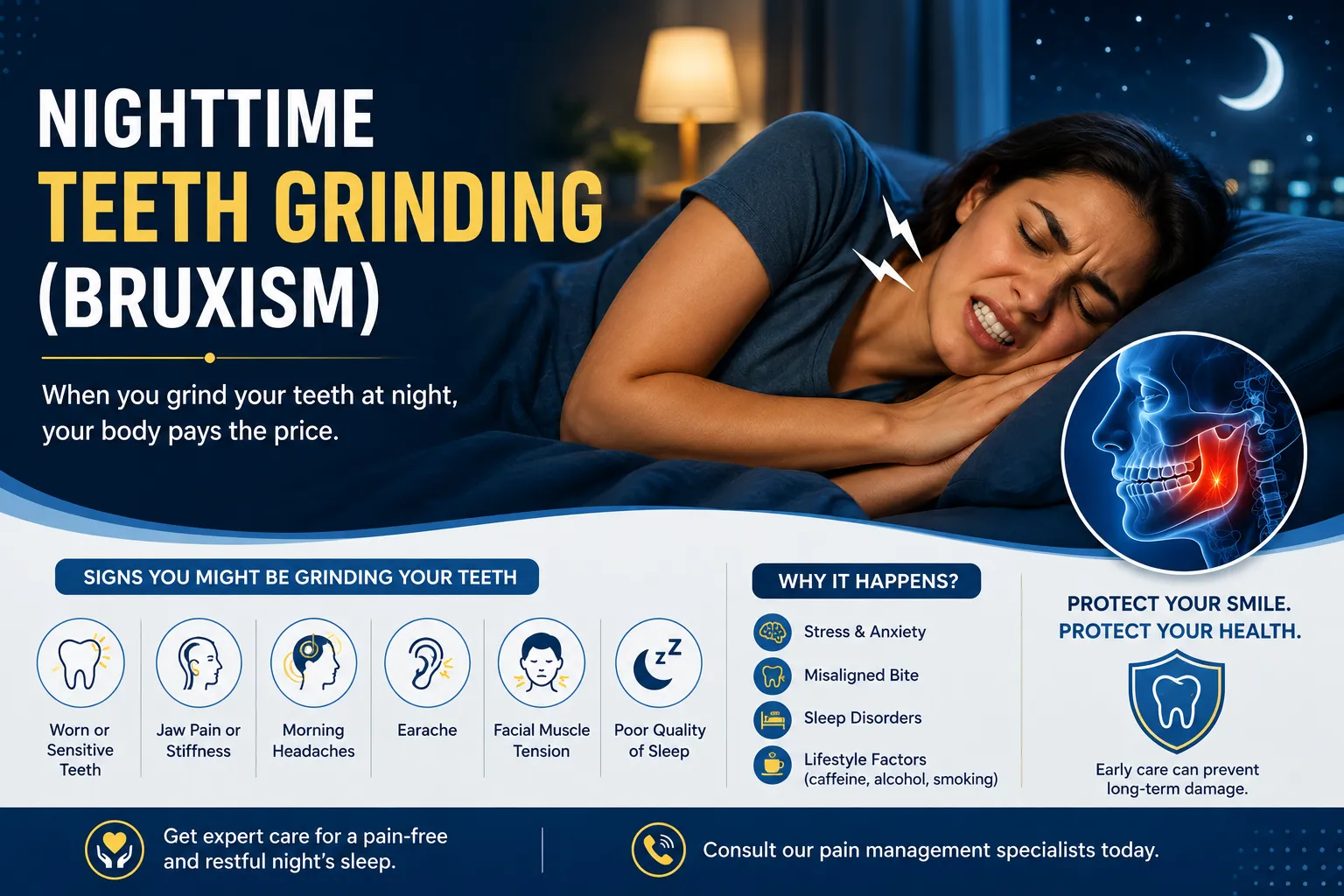

Have you ever woken up with a sore jaw, sensitive teeth, or a dull headache and wondered why? One possible reason is teeth grinding at night, medically known as bruxism. Many people grind or clench their teeth while sleeping without even realising it.
Occasional teeth grinding may not cause serious problems, but frequent or forceful grinding can gradually damage the teeth and affect the jaw muscles. Understanding the causes and early warning signs can help you take the right steps before the problem becomes more severe.
What Is Teeth Grinding at Night?
Teeth grinding, or bruxism, is the unconscious clenching or grinding of teeth. It can happen while you are awake or, more commonly, during sleep.
Because nighttime grinding happens when you are not consciously controlling your jaw, you may not know you are doing it. In many cases, a partner or family member may notice the grinding sound first.
Over time, repeated pressure can put excessive stress on your teeth, jaw muscles, and temporomandibular joints.
What Causes Nighttime Teeth Grinding?
There is no single cause of bruxism. Several physical, emotional, and lifestyle factors may contribute to it.
Stress and Anxiety
Daily stress, anxiety, emotional tension, or difficulty relaxing can contribute to jaw clenching and teeth grinding during sleep. People experiencing stressful periods may notice that their jaw feels tight or tired in the morning.
Sleep-Related Problems
Certain sleep-related conditions may be associated with nighttime teeth grinding. If you regularly grind your teeth while sleeping, discussing your symptoms with a dentist can help determine whether further evaluation is needed.
Lifestyle Habits
Excessive caffeine, alcohol consumption, smoking, and irregular sleep habits may contribute to poor sleep and can potentially worsen grinding in some people.
Dental and Bite-Related Factors
Changes in the way your teeth come together may sometimes contribute to discomfort or uneven pressure. A dental examination can help identify signs of excessive tooth wear or other oral problems.
What Are the Signs of Teeth Grinding?
You may not always hear yourself grinding your teeth at night. However, certain symptoms can provide clues.
Common signs include:
- Jaw pain or stiffness after waking up
- Morning headaches, particularly around the temples
- Tooth sensitivity
- Flattened, chipped, or worn teeth
- Increased tooth or jaw discomfort
- Facial muscle soreness
- Clicking or discomfort around the jaw joint
- A partner noticing grinding sounds while you sleep
If these symptoms occur regularly, it is worth discussing them with a dentist rather than ignoring them.
Can Teeth Grinding Damage Your Teeth?
Yes. Persistent and forceful grinding can gradually wear down the protective enamel covering your teeth. As the enamel becomes thinner, teeth may become more sensitive and vulnerable to damage.
Severe grinding may also contribute to chipped or cracked teeth, increased sensitivity, jaw discomfort, and problems involving dental restorations such as crowns or fillings.
Early assessment can help identify signs of wear before significant damage develops.
How Is Teeth Grinding Treated?
Treatment depends on the severity of the problem and what may be contributing to it.
One common approach is a custom night guard. Unlike a generic mouthguard, a dentist can assess your teeth and create an appliance designed specifically for your mouth. A night guard can help protect the teeth from direct grinding forces while you sleep.
Your dentist may also recommend:
- Stress-management techniques
- Improving sleep habits
- Reducing excessive caffeine or alcohol
- Treating existing dental problems
- Jaw and muscle relaxation techniques
- Regular dental examinations to monitor tooth wear
The goal is not simply to protect the teeth but also to identify and manage factors contributing to the grinding.
When Should You Visit a Dentist?
You should consider a dental consultation if you regularly wake up with jaw pain, headaches, tooth sensitivity, or unexplained tooth damage. You should also seek professional advice if someone tells you that you grind your teeth loudly while sleeping.
Early dental evaluation can help identify the problem and prevent further tooth wear.
Teeth Grinding Treatment at Sweet Tooth Dental Care
At Sweet Tooth Dental Care in Naranpura, Ahmedabad, Dr. Charmi Patanvadiya provides personalised dental care based on each patient's oral health needs. The clinic offers a range of preventive, restorative, and general dental treatments.
If you suspect that you are grinding your teeth at night, a dental examination can help assess signs of tooth wear, sensitivity, jaw discomfort, and other related concerns. Based on the findings, your dentist can recommend an appropriate treatment approach.
Protect Your Smile From Nighttime Grinding
Teeth grinding may happen silently while you sleep, but its effects can become noticeable over time. Morning jaw discomfort, headaches, tooth sensitivity, and worn or damaged teeth should not be ignored.
If you suspect teeth grinding at night, getting your teeth examined early can help protect your natural teeth and reduce the risk of long-term damage.
For personalised dental advice, you can consult Sweet Tooth Dental Care, Naranpura, Ahmedabad, where Dr. Charmi Patanvadiya focuses on personalised and comprehensive dental care.

























Sign in to leave a comment.