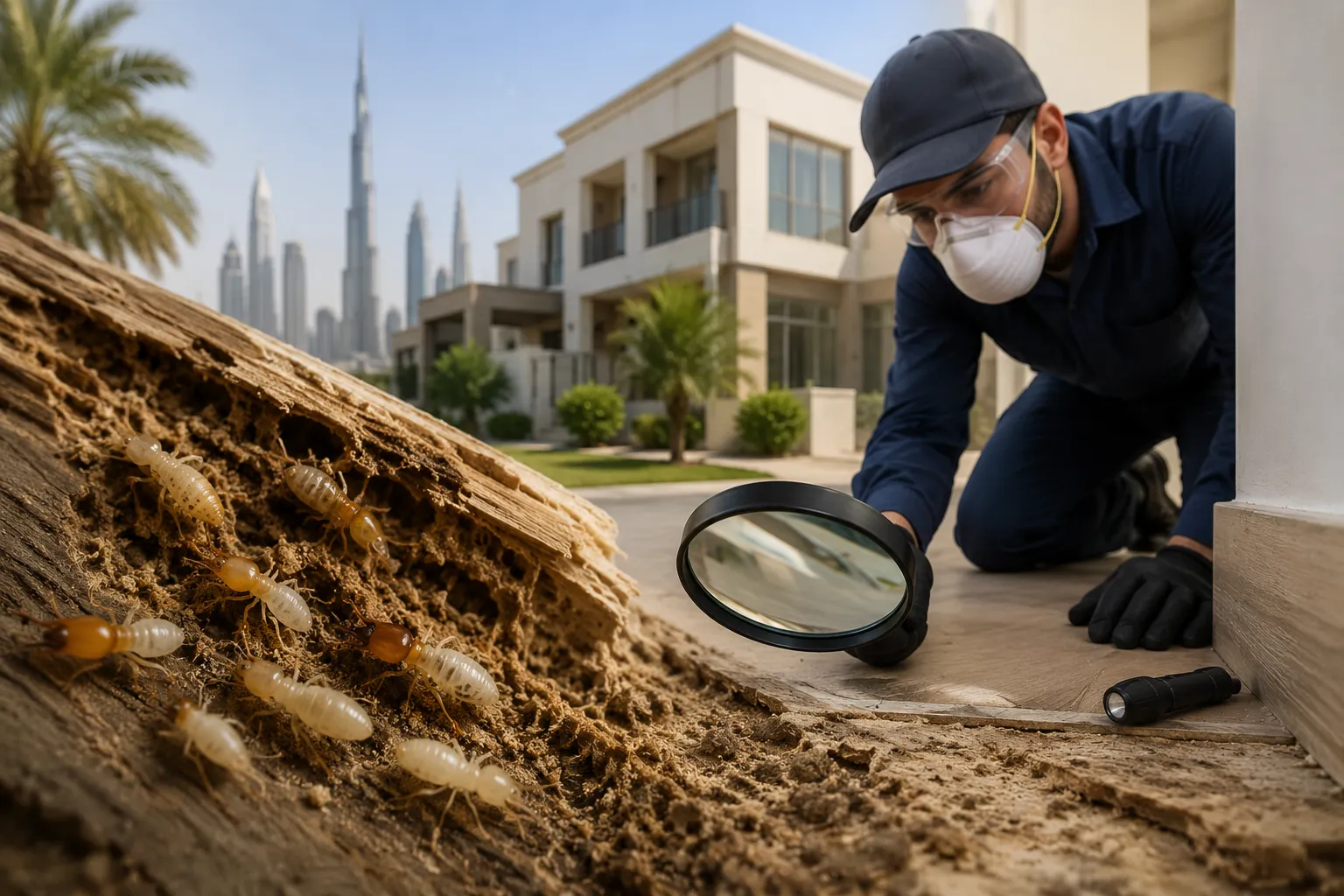

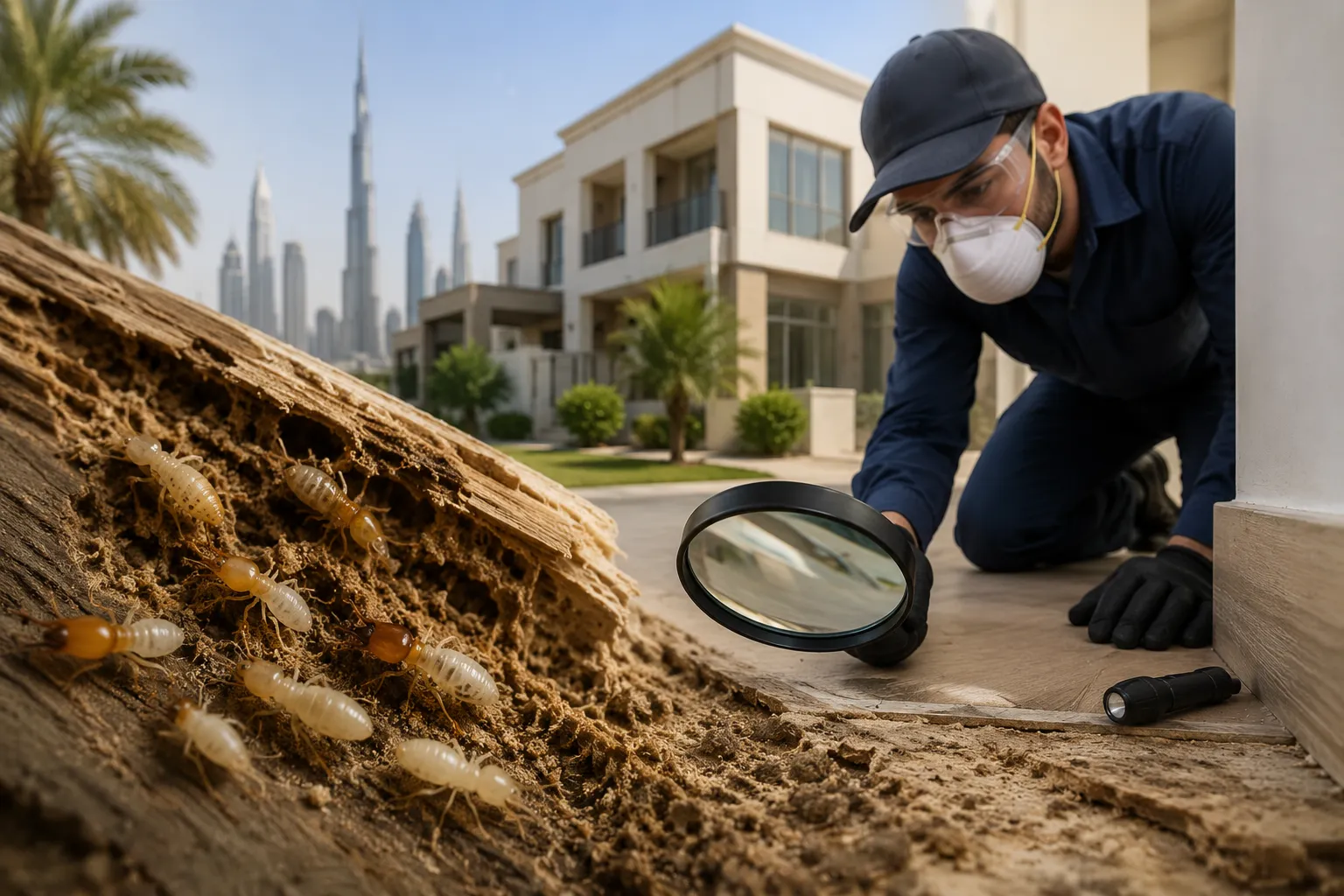
Termites don't announce themselves. No crash, no mess, just quiet damage happening inside your walls and floors while everything looks fine from where you're standing. Most people don't notice until the termites have already been at it for months.
That's the whole problem with termites. Catch them early and treatment is quick and cheap. Catch them late and you're paying for structural repairs, replaced flooring, and a bill nowhere close to what early termite control would have run you.
Why Termites Are Different From Other Pests
A cockroach, you see. A mouse, you see. Termites don't work that way. They feed on wood, paper, and cellulose from the inside, and a door frame can be hollowed out underneath while the paint on top looks untouched.
The UAE's climate makes this worse. Heat and humidity, especially around villas with gardens, wooden fixtures, and damp corners, is close to ideal for termites.
How to Spot Termite Activity Before It's Too Late
A property can look completely fine and still have termites working through the structure underneath it. The upside is that termites do leave clues, if you're looking in the right places.
A few signs turn up again and again:
- Discarded wings near doors, windows, or wooden structures, left behind once a swarm has moved on to start a new colony.
- Mud tubes on walls, beams, or foundations. These pencil-thin tunnels are one of the clearest signs of an active infestation.
- Hollow wood, either a hollow sound when tapped, or wood that crumbles under light pressure.
- Tiny holes in wood, the entry and exit points termites use to move in and out of a structure.
We've written a fuller breakdown here: How to Spot Termite Activity Before It's Too Late. The short version: act the moment you spot one of these, don't wait to see if it gets worse.
Why Waiting Costs More
A colony doesn't stay small. It grows, and it keeps eating the whole time it's growing. Minor damage to one door frame can turn into damaged flooring and compromised ceiling structures if nobody deals with it.
Catch it early and treatment is usually a straightforward barrier or bait setup. Wait a year or two and the same infestation might mean replacing structural timber or repairing flooring outright, sometimes enough to knock down the resale value of the property. That gap in cost isn't small. It's the difference between a routine callout and a renovation.
What Professional Treatment Looks Like
A real inspection isn't a five-minute walk-through. Technicians check foundations, skirting boards, wooden fixtures, and damp spots, often with moisture meters or other tools that can pick up activity without tearing into a wall.
Once something's confirmed, treatment usually falls into one of a few buckets: liquid termiticide barriers around the property's perimeter, bait systems aimed at the colony itself, or a smaller spot treatment if the problem's contained. New builds can also get pre-construction treatment, which is a lot easier than fixing an infestation after the fact.
Termite Control Across the UAE
Risk isn't the same everywhere, but every emirate has properties suited to termites, older buildings especially, and villas with gardens and exposed wood. Whether it's termite pest control in Dubai, termite control Abu Dhabi, or termite control in Sharjah, the approach doesn't change much: inspect properly, treat based on what's actually there, then follow up to make sure it worked.
Make Inspections a Habit, Not a Reaction
Properties that dodge serious termite damage tend to be the ones getting inspected on a schedule, not just when something already looks wrong. An annual check catches activity early, for a fraction of what repairs cost once the damage is visible.
If you own a villa, especially one with a garden, wooden doors, or older construction, this is worth folding into regular maintenance rather than waiting for a reason to call someone.
Protecting Your Property the Right Way
At Debug, we run licensed termite control across Abu Dhabi, Dubai, and Sharjah, using approved products and certified technicians. We start with a proper inspection, work out how far any activity has spread, then recommend the right treatment for that specific property, barrier, bait, or spot treatment.
Noticed any of the signs above? Or just haven't had an inspection in a while? Get in touch. Catching termites early is still the single biggest factor in keeping repair costs down and your property intact.




























Sign in to leave a comment.