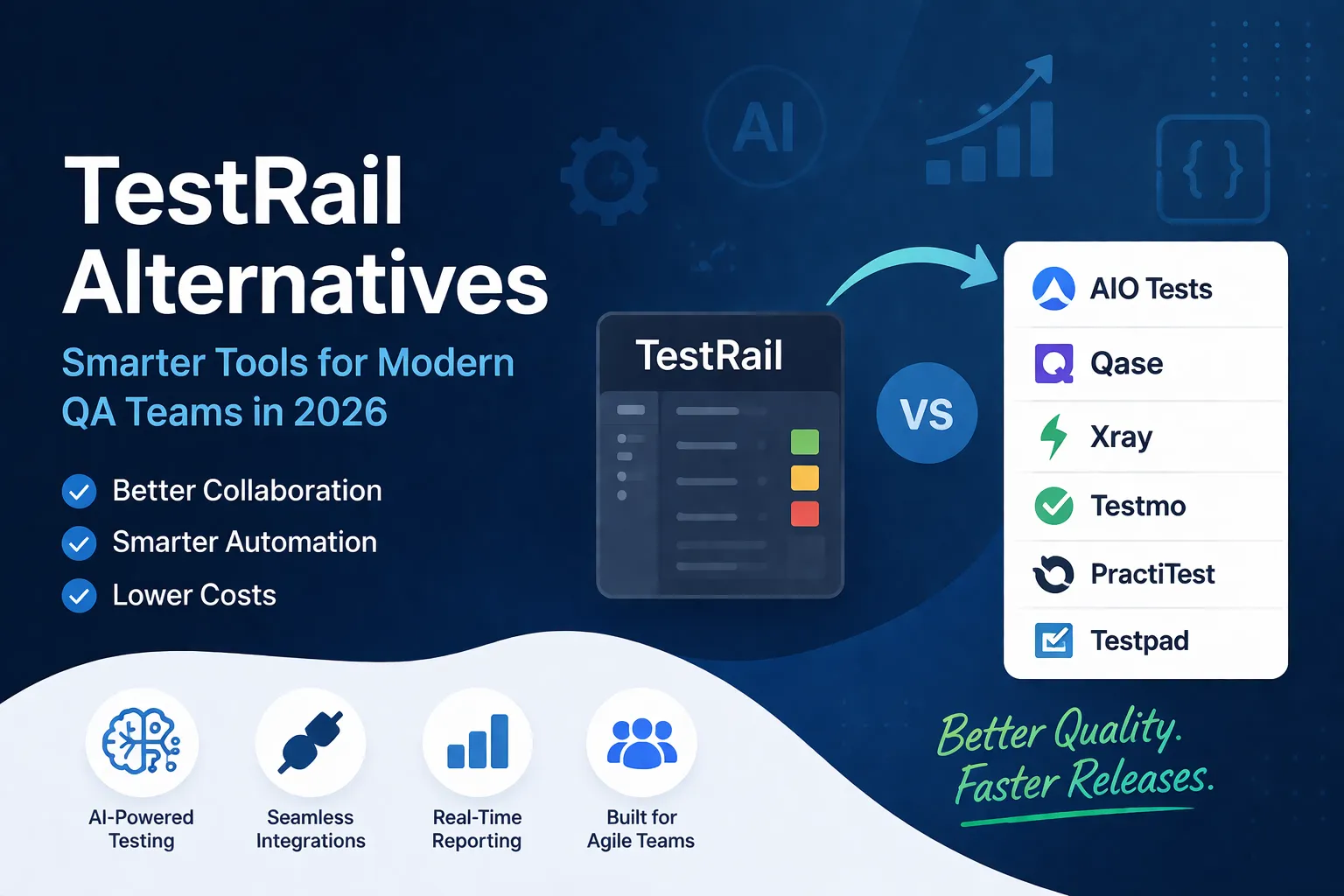

Choosing the right test management tool is one of the most critical decisions a QA team can make. While TestRail has long been recognized as a powerful platform for organizing test cases and tracking execution, it isn’t always the best fit for every team — especially when it comes to cost, collaboration, automation integration, or flexibility. That’s why exploring TestRail alternatives can help teams improve efficiency, reduce manual overhead, and better support modern DevOps and agile workflows.
Why Look Beyond TestRail?
TestRail is a solid solution for structured test case management with features like unified test tracking, customizable workflows, and strong reporting. Yet, many teams find challenges with its licensing costs, limited real‑time collaboration, or interface complexity — particularly when requirements grow beyond basic test case documentation.
Alternatives can provide more cost‑effective options, better automation support, different workflows, or tighter integrations with tools like Jira, CI/CD pipelines, and AI‑assisted testing — making them compelling alternatives for modern QA teams.
1. AIO Tests — AI‑Powered Test Management
AIO Tests stands out as a next‑generation alternative that goes beyond simple test case storage. Fully embedded within Jira, it offers AI‑generated test case creation, both manual and automated test support, and comprehensive reporting directly inside your existing workflow. With built‑in cycle planning and logical test sets, teams can manage execution and outcomes without switching tools. AIO Tests also supports integration with automation frameworks, REST APIs, and CI/CD pipelines — ideal for teams looking to unify manual and automated testing under one roof.
💡 Best for teams already using Jira who want AI features, real‑time test reporting, and seamless automation integration.
2. Testpad — Simple, Checklist‑Driven Management
For teams that prefer simplicity over complexity, Testpad offers a unique twist on test management. Instead of rigid test case hierarchies, it uses a checklist‑style format that’s easy to learn and quick to implement. Testpad’s intuitive, spreadsheet‑like interface lets teams start testing without heavy configuration, making it particularly useful for startups and small teams with lighter QA processes.
💡 Best for teams valuing speed, simplicity, and collaborative manual testing.
3. Qase — Modern & Scalable Test Management
Qase is a modern, user‑friendly alternative designed to balance both manual and automated testing needs. With AI‑powered automation capabilities, intuitive dashboards, and solid reporting features, Qase helps teams streamline test case creation, execution, and cross‑team collaboration. It also offers flexible pricing with a free plan, making it accessible for teams of all sizes.
💡 Best for small to mid‑sized teams that want strong automation support without complex setup.
4. Xray — Native Jira Test Management
If your team’s development workflow revolves around Jira, Xray might be worth evaluating. It turns Jira itself into a full test management platform, supporting both manual and automated testing with traceability reports that link test results back to requirements and defects. It also integrates with automation pipelines and supports Behavior‑Driven Development (BDD) via Cucumber.
💡 Best for teams that want tight Jira integration with advanced traceability.
5. Testmo — Unified Testing Ecosystem
Testmo combines test case management, exploratory testing, and automation in a single platform. It’s built for teams that need a centralized hub for all testing activities, including CI/CD and DevOps workflows. Testmo’s flexibility and integration range make it a good fit for teams embracing continuous testing practices.
💡 Best for teams seeking a unified tool for manual, exploratory, and automated tests.
6. PractiTest — Data‑Driven QA with Analytics
PractiTest offers deep traceability and real‑time dashboards with advanced analytics — ideal for teams that want test management tied closely to metrics and decision‑making. Its integration with Jenkins, GitHub, and Selenium makes it suitable for mature QA teams that rely on automation.
💡 Best for analytics‑driven teams looking for strong reporting and traceability.
7. SmartBear Zephyr — Flexible Test Management
Zephyr delivers a flexible approach with both Jira‑native and standalone versions. It supports manual and automated testing, dashboards, traceability matrices, and integrations with popular test automation tools.
💡 Best for teams that want multiple deployment options and integration flexibility.
Final Thoughts
There’s no one‑size‑fits‑all solution in test management. Choosing the right TestRail alternative depends on your team’s goals — whether that’s stronger integration with Jira, cost efficiency, AI‑assisted testing, or unified manual and automation workflows. Exploring these alternatives can help your QA process become more agile, collaborative, and future‑proof as testing demands continue to evolve.

























Sign in to leave a comment.