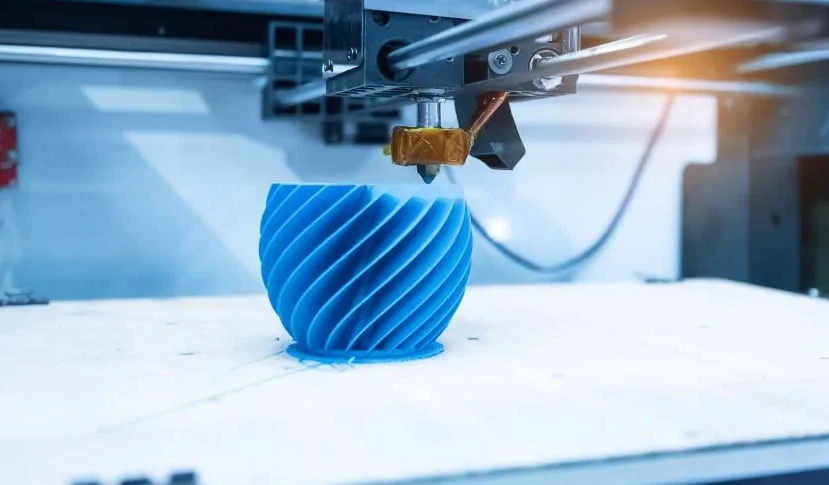

In the realm of modern manufacturing, 3D printing has emerged as a transformative technology, redefining the way we produce everything from intricate prototypes to customized consumer goods. This innovative approach, also known as additive manufacturing, has gained significant traction in various industries, sparking a revolution that promises to reshape the future of production.
3D printing, at its core, is a process of creating three-dimensional objects from a digital model by adding successive layers of material. While the concept has been around for decades, recent advancements in materials, hardware, and software have catapulted it into mainstream manufacturing. Today, the 3D printing market is witnessing exponential growth, driven by its versatility, cost-efficiency, and sustainability.
One of the key drivers behind the rapid expansion of the 3D printing market is its ability to revolutionize the traditional manufacturing process. Unlike traditional subtractive manufacturing, which involves cutting, drilling, or carving away material to create an object, 3D printing is an additive process. This means that materials are deposited layer by layer, allowing for greater design flexibility and minimizing waste. As a result, companies can reduce production costs and create more complex and customized products with ease.
Another significant advantage of 3D printing is its versatility across various industries. It has found applications in aerospace, healthcare, automotive, fashion, and even construction. In aerospace, for instance, 3D printing is used to manufacture lightweight and intricate components that were previously impossible to produce using traditional methods. In healthcare, it has enabled the fabrication of patient-specific implants and prosthetics, improving patient outcomes. The adaptability of 3D printing technology makes it an indispensable tool for countless industries looking to innovate and streamline their manufacturing processes.
The 3D printing market has also witnessed substantial growth in the consumer sector. With the availability of affordable desktop 3D printers, individuals and small businesses can harness the power of additive manufacturing for various purposes. From creating custom jewelry to prototypes of inventions, 3D printing has democratized product development and customization, allowing entrepreneurs and hobbyists to bring their ideas to life.
Sustainability is another critical aspect driving the adoption of 3D printing. Traditional manufacturing processes often generate a significant amount of waste, but 3D printing minimizes this waste by only using the material needed for the object being printed. Additionally, 3D printing allows for the use of recycled materials, contributing to a more environmentally friendly approach to production. As the world becomes increasingly concerned about the ecological footprint of manufacturing, 3D printing offers a more sustainable alternative.
The global 3D printing market is projected to continue its impressive growth in the coming years. The technology is continually evolving, with ongoing research and development efforts focused on improving the speed, accuracy, and materials used in 3D printing. Furthermore, as more companies and industries recognize the benefits of 3D printing, the demand for 3D printing services and solutions is expected to surge.
The 3D printing market is experiencing a revolution that is reshaping the landscape of manufacturing. Its additive approach, versatility, cost-efficiency, and sustainability make it a game-changer in various industries, from aerospace to healthcare. As the technology continues to evolve, we can expect even more exciting developments on the horizon, cementing 3D printing's place as a driving force in the future of production.
























Sign in to leave a comment.