
The business landscape thrives on efficiency and cost-effectiveness. In today’s dynamic world, companies are constantly seeking ways to streamline operations, optimize resources, and gain a competitive edge. This is where Business Process Outsourcing (BPO) steps in, offering a strategic solution for businesses of all sizes.
BPO Defined: A Global Delegation of Tasks
BPO refers to the practice of contracting specific business tasks or functions to a third-party service provider. These functions can encompass a wide range of activities, from customer service and human resources to finance and accounting, data entry, and even content creation. By outsourcing these non-core processes, companies can free up valuable internal resources to focus on their core competencies, ultimately driving innovation and growth.
Market on the Rise: A Flourishing Industry
The BPO market is experiencing phenomenal growth. According to Grand View Research, the global BPO market was valued at a staggering USD 280.64 billion in 2023 and is projected to reach a staggering USD 517.6 billion by 2030, boasting a healthy Compound Annual Growth Rate (CAGR) of 9.4%. This upward trajectory is fueled by several key factors:
- Cost Reduction: BPO service providers, often located in regions with lower operational costs, can deliver significant cost savings for companies.
- Increased Efficiency: BPO firms specialize in handling specific tasks, leading to improved efficiency and streamlined processes.
- Enhanced Scalability: Businesses can easily scale their operations up or down by adjusting their BPO contracts, fostering agility in a dynamic market.
- Access to Expertise: BPO providers often have a deep pool of skilled and experienced professionals, ensuring high-quality service delivery.
- Technological Advancements: The rise of automation, cloud computing, and artificial intelligence (AI) is further propelling the BPO market by enabling cost-effective and efficient service delivery.

Segmenting the Market: A Multifaceted Landscape
The BPO market can be segmented based on various factors, providing a clearer picture of its complexities:
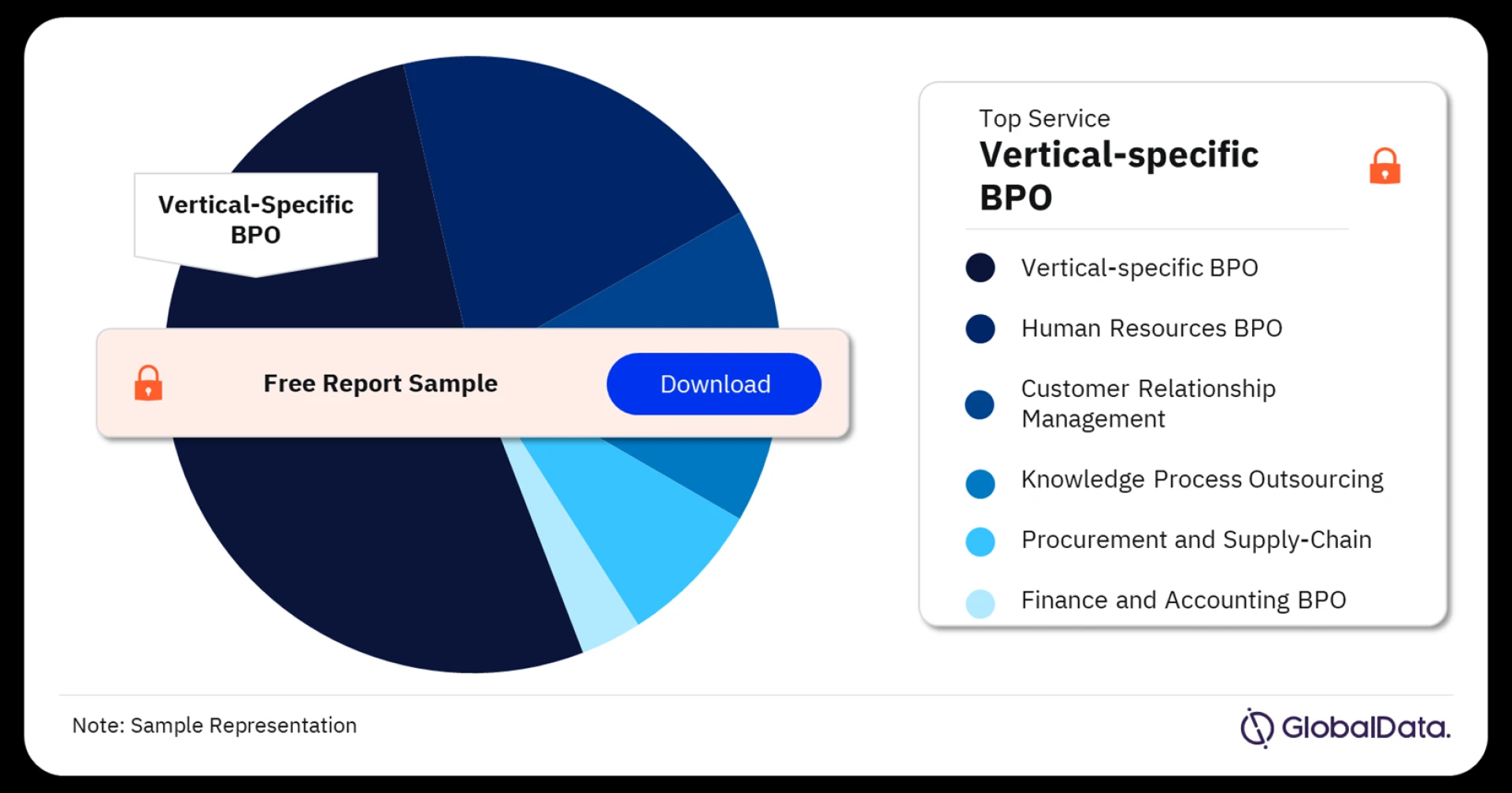
- By Service Type:
- Customer Service (CX): One of the largest segments, encompassing tasks like call centers, email support, and social media management.
- Back-Office Operations: Includes finance and accounting, human resources, and payroll processing.
- Knowledge Services: Involves specialized tasks like legal process outsourcing, medical transcription, and research and development.
- By Deployment Model:
- On-Premise: BPO services are delivered from the client’s own infrastructure.
- Offshoring: Services are outsourced to a provider in a different country, typically with lower labor costs.
- Nearshoring: Outsourcing to a provider in a geographically close country with similar time zones.
- Cloud-Based: Services are delivered through a cloud-based platform, offering scalability and flexibility.
- By End-Use Industry:
- IT & Telecommunications: A major user of BPO services for tasks like network management and customer support.
- Banking, Financial Services and Insurance (BFSI): Leverages BPO for back-office operations like loan processing and claims management.
- Healthcare: Utilises BPO for medical transcription, coding, and revenue cycle management.
- Retail & E-commerce: Employs BPO for customer service, order processing, and logistics management.
The Competitive Landscape: A Global Stage
The BPO market is a global one, with major players operating across different regions. Some of the key industry leaders include:
- Accenture
- Amdocs
- Capgemini
- HCL Technologies
- Infosys
- Wipro
- Teleperformance
- Sitel Group
- Concentrix
- Genpact
These companies offer a comprehensive range of BPO services, catering to diverse industry needs.
Emerging Trends: The Future of BPO
As the BPO market continues to evolve, several trends are shaping its future:
- Automation and AI: The integration of AI and automation technologies will further streamline BPO processes, reducing costs and improving service quality.
- Cybersecurity: With increased data sensitivity, robust cybersecurity measures will be crucial for BPO providers to ensure client trust.
- Focus on Specialisation: BPO firms will likely specialise in niche areas, offering industry-specific services with deep domain expertise.
- Rise of the Gig Economy: The BPO landscape might see an influx of freelancers and gig workers, offering greater flexibility and cost-effectiveness.
- Sustainability: Companies will increasingly look for BPO partners with strong sustainability practices, aligning with environmental and social responsibility goals.
Challenges and Considerations: Navigating the BPO Landscape (continued)
While BPO offers numerous advantages, it’s important to acknowledge some potential challenges and considerations for companies before venturing into outsourcing:
- Data Security and Privacy: Entrusting sensitive data to a third-party provider necessitates robust data security measures and strict adherence to data privacy regulations.
- Communication and Cultural Differences: Effective communication and cultural understanding are vital for successful BPO partnerships. Companies need to bridge potential cultural gaps to ensure smooth collaboration and task execution.
- Quality Control and Performance Management: Maintaining quality standards and monitoring BPO provider performance is critical. Establishing clear metrics and performance indicators allows for continuous evaluation and improvement.
- Vendor Lock-In: Overreliance on a single BPO provider can create vendor lock-in, making it difficult to switch partners if needed. Companies should develop exit strategies and maintain flexibility within their BPO contracts.
- Integration Challenges: Integrating BPO services with existing internal systems and processes requires careful planning and execution to ensure seamless operation.
Building a Successful BPO Partnership
To maximize the benefits of BPO, companies should adopt a strategic approach when selecting and managing their partners:
- Conduct thorough due diligence: Evaluate the BPO provider’s experience, expertise, security protocols, and track record.
- Define clear service level agreements (SLAs): Establish clear expectations for service delivery, performance metrics, and communication channels.
- Invest in building a strong relationship: Foster open communication, collaboration, and regular performance reviews with your BPO partner.
- Embrace continuous improvement: Regularly assess the BPO partnership and adapt to evolving needs and industry trends.
The Future of BPO: A Collaborative Ecosystem
As the BPO market continues its upward trajectory, the future promises a more collaborative ecosystem. Companies will likely leverage a mix of in-house resources, automation tools, and specialized BPO partners to create a dynamic and efficient operational model. AI and automation will further augment human expertise, enabling BPO providers to deliver higher-value services. With a focus on specialization, security, and sustainability, the BPO industry is poised to play a vital role in driving business growth and success in the years to come.
Conclusion
In conclusion, BPO presents a compelling proposition for businesses seeking to streamline operations, optimize costs, and gain a competitive edge. By understanding the market dynamics, key segments, and emerging trends, companies can make informed decisions about leveraging BPO services to their advantage. However, careful consideration of potential challenges and a strategic approach to partner selection and management are crucial for maximizing the benefits of BPO and achieving long-term success.
Buy the Full Report for Additional Service-type Insights on the Business Process Outsourcing (BPO) Market, Download a Free Sample



























Sign in to leave a comment.