
The business landscape thrives on efficiency and focus. In today’s dynamic environment, companies are increasingly looking to streamline operations and optimize resource allocation. This is where Business Process Outsourcing (BPO) steps in, offering a strategic solution for maximizing productivity and achieving business goals.

Understanding BPO: The Core and its Benefits
BPO refers to the practice of contracting specific business tasks or functions to a third-party service provider. These tasks can encompass a wide range, including customer service, human resources, data entry, accounting, and even technical support. By delegating non-core activities to specialized BPO partners, companies gain access to expertise, cost-effectiveness, and the freedom to focus on their core competencies.
The benefits of BPO are well documented and contribute significantly to a company’s success. Here are some key advantages:
- Cost Reduction: BPO providers often operate in locations with lower labor costs, allowing companies to save on salaries, benefits, and infrastructure expenses.
- Increased Efficiency: BPO partners are specialists in their respective fields, equipped with the latest tools and technologies to handle outsourced tasks efficiently. This translates to faster turnaround times and improved accuracy.
- Enhanced Scalability: BPO services offer flexibility, allowing companies to scale their operations up or down as needed. This is particularly beneficial for businesses experiencing rapid growth or seasonal fluctuations.
- Improved Focus: By outsourcing non-core functions, companies can dedicate their internal resources to strategic initiatives that drive innovation and competitive advantage.
- Access to Expertise: BPO providers employ skilled professionals with specialized knowledge in specific areas. This expertise can be invaluable for companies seeking to improve their processes and stay ahead of the curve.
Market Dynamics: Growth Trajectory and Future Outlook
The BPO market is experiencing phenomenal growth, fueled by a confluence of factors. Technological advancements, globalization, and the increasing need for cost optimization are all contributing to the industry’s expansion.
- Market Size and Growth Projections: According to Grand View Research, the global BPO market size was estimated at USD 280.64 billion in 2023 and is projected to grow at a CAGR of 9.6% from 2024 to 2030. This significant growth indicates the rising adoption of BPO services across various industries.
- Geographical Landscape: The BPO market is geographically diverse, with established players in North America, Europe, and Asia. However, India is emerging as a major hub, owing to its large talent pool, competitive pricing, and government support for the BPO sector.
Market Segmentation: A Look at Different Service Types
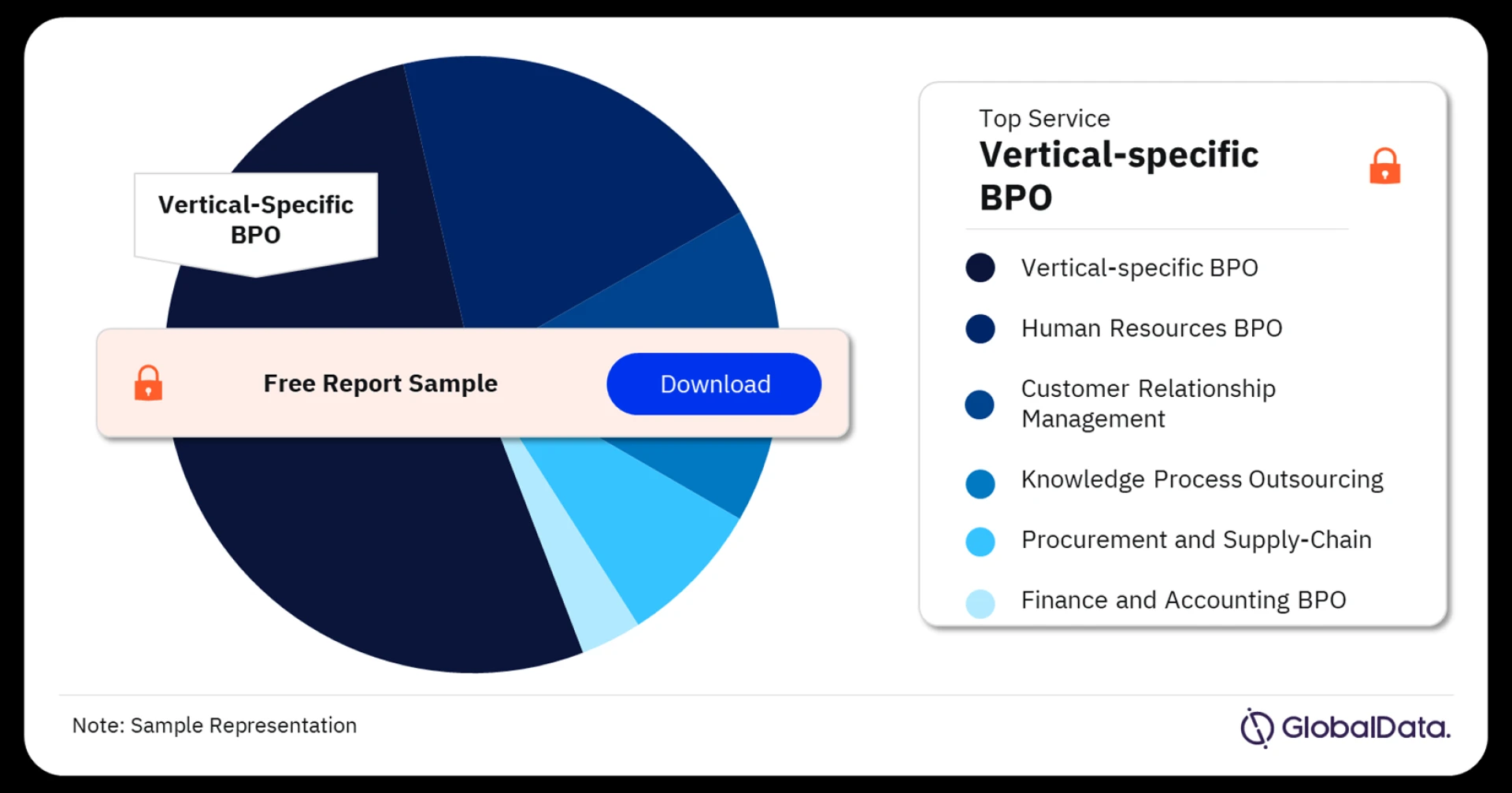
The BPO market can be segmented based on the type of services offered. Here’s a breakdown of the major categories:
- Front-Office BPO: This segment focuses on customer-facing interactions, including customer service, telemarketing, and sales support.
- Back-Office BPO: Back-office BPO deals with internal operations such as accounting, human resources, data processing, and transaction processing.
- Knowledge Process Outsourcing (KPO): KPO services involve tasks requiring specialized knowledge and skills, such as legal processes, research and development, and intellectual property management.
Key Trends Shaping the BPO Landscape
The BPO industry is constantly evolving, driven by technological innovation and changing business needs. Here are some key trends shaping the future of BPO:
- Automation and Artificial Intelligence (AI): Automation and AI are transforming the BPO landscape, enabling providers to automate repetitive tasks and deliver more complex services. This trend is expected to further enhance efficiency and accuracy in BPO operations.
- Cloud-Based Solutions: The adoption of cloud-based technologies is simplifying BPO service delivery and facilitating collaboration between companies and providers.
- Cybersecurity Concerns: As data security becomes paramount, BPO providers are investing heavily in robust cybersecurity measures to ensure client data privacy.
- Focus on Specialization: The BPO market is witnessing a growing demand for specialized services in areas such as digital marketing, social media management, and big data analytics.
The Competitive Landscape: Major Players and Strategies
The BPO market is a competitive landscape with a mix of established players and emerging companies. Some of the key players include Accenture, Capgemini, Infosys, Teleperformance, and Wipro. These companies compete on factors such as cost, service quality, scalability, and industry expertise.
Buy the Full Report for Additional Service-type Insights on the Business Process Outsourcing (BPO) Market, Download a Free Sample



























Sign in to leave a comment.