

I remember the exact moment I typed “OPRA exam syllabus” into Google for the first time.
I had just found out that KAPS was gone — replaced by something called OPRA, and I had absolutely no idea where to begin. There were forum posts, Telegram groups, random PDFs floating around everywhere. And honestly? Most of it just made me more confused than when I started.
So I’m writing this for anyone who’s sitting in that exact spot right now. This is everything I wish someone had told me, what the OPRA syllabus actually covers, how it’s structured, what to focus on, and how to build a study plan that actually makes sense.
No fluff. Just what you need to know.
First Things First — What Even Is OPRA?
Before we get into the syllabus, let’s clear up the basics, because a lot of candidates are still fuzzy on this.
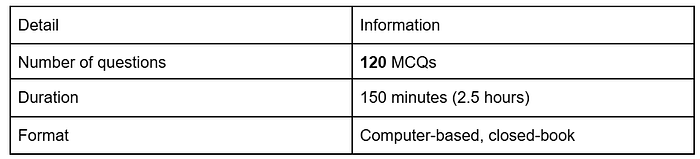
OPRA stands for Overseas Pharmacist Readiness Assessment. It’s the exam you need to pass if you got your pharmacy degree outside of Australia and want to register and work as a pharmacist here. It’s run by the Australian Pharmacy Council (APC) and it officially replaced the old KAPS exam in March 2025.
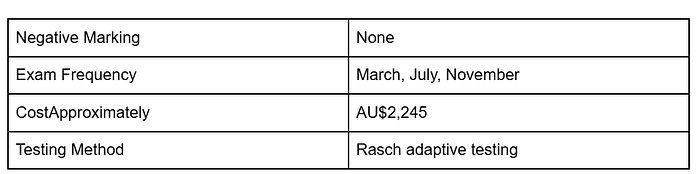
Here’s a quick snapshot of what the exam looks like:
Press enter or click to view image in full size
Press enter or click to view image in full size
To be eligible, you need:
- An overseas pharmacy degree
- Current registration in your home country
- English proficiency — IELTS 7.5, OET Band B, or PTE 65
And here’s the single most important thing I want you to take away from this section:
OPRA is not KAPS. If you’ve been studying using old KAPS materials or downloaded a PDF that mentions KAPS anywhere, set it aside right now. The syllabus structure, the content weightings, and the exam approach are all different. Using outdated materials is one of the fastest ways to waste months of preparation.
The OPRA Exam Syllabus — Broken Down Simply
Here’s the official breakdown of the five content areas and how much of the exam each one carries:
Press enter or click to view image in full size
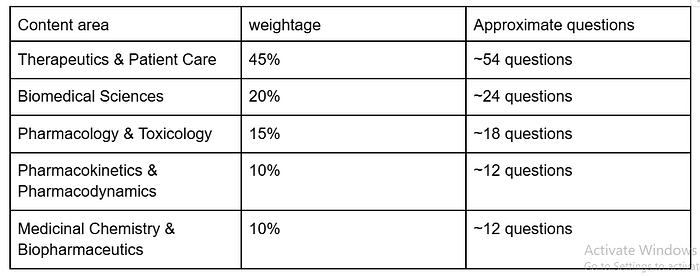
When I first saw this breakdown, my instinct was to start with pharmacology because it felt familiar. That was the wrong instinct.
The numbers tell you exactly where the exam is won or lost, and it’s won or lost in Therapeutics & Patient Care. I’ll come back to this.
What Each Section Actually Tests
Therapeutics & Patient Care — 45%
This is the section that separates pharmacists who are book-smart from pharmacists who are genuinely practice-ready. And that’s exactly the point of OPRA, it’s a readiness assessment, not a knowledge quiz.
What the questions look like:
You’re given a patient, a diagnosis, a current medication list, and you have to make clinical decisions, which drug, which dose, which interaction to flag, when to refer, how to counsel.
Topics you’ll encounter:
- Cardiovascular disease and hypertension management
- Diabetes — type 1, type 2, gestational
- Respiratory conditions — asthma, COPD
- Mental health medications — antidepressants, antipsychotics, mood stabilisers
- Infectious disease and antibiotic selection
- Pain management — acute and chronic
- Oncology basics
- Gastrointestinal conditions
- Special populations — renal impairment, elderly patients, pregnancy, paediatrics
Best resources for this section
- Australian Medicines Handbook (AMH)
- Therapeutic Guidelines (eTG)
These are the references Australian pharmacists use in daily practice. The exam reflects their language, their recommendations, and their decision-making framework. Nothing maps more directly to this section than these two resources.
Biomedical Sciences — 20%
This section covers the science behind how diseases actually work.
What’s tested:
- Anatomy and physiology relevant to drug action
- Pathophysiology of major disease states
- Microbiology and immunology — infections, vaccination
- Biochemistry relevant to drug metabolism
- Genetics and pharmacogenomics
- Haematology and coagulation
The smart way to study this section: Map it directly to therapeutics. The disease areas that appear in biomedical sciences, cardiovascular, respiratory, renal, endocrine — are the same ones that dominate the therapeutics section. Study them together and you cover both at once.
Pharmacology & Toxicology — 15%
Most internationally trained pharmacists feel comfortable here. And they’re usually right — but the trap is assuming the questions are straightforward recall.
What’s tested:
- Mechanisms of action across drug classes
- Receptor pharmacology and signal transduction
- Drug interactions at the molecular level
- Adverse drug reactions and their mechanisms
- Autonomic pharmacology
- Toxicology — recognising and managing overdose and poisoning
The key thing to remember: You won’t just be asked what a beta-blocker does. You’ll be given a patient scenario and asked what the clinical implication is for that specific patient. Know the pharmacology, but practise applying it.
Pharmacokinetics & Pharmacodynamics — 10%
This is where calculations live, and where a lot of candidates lose easy marks simply because they haven’t practised enough.
What’s tested:
- Absorption, distribution, metabolism, excretion (ADME)
- Bioavailability and first-pass metabolism
- Half-life and steady-state concepts
- Volume of distribution and protein binding
- Clearance and dose adjustment in renal and hepatic impairment
- Therapeutic drug monitoring
What to practise specifically:
- Cockcroft-Gault formula for creatinine clearance
- Dose adjustment calculations for renal impairment
- Basic infusion rate problems
- Half-life and time-to-steady-state calculations
Practise these under timed conditions. Reading about PK is not the same as doing the calculations when the clock is running.
Medicinal Chemistry & Biopharmaceutics — 10%
The most science -heavy section and the one candidates most commonly underestimate — or skip entirely.
What’s tested:
- Structure-activity relationships
- Drug stability and degradation
- Formulation science — tablets, capsules, injectables, modified-release forms
- Bioavailability and bioequivalence
- Biopharmaceutics Classification System (BCS)
- Pharmaceutical incompatibilities
- Storage conditions and their effect on medicine quality
Bottom line: These are 12 questions. Candidates who skip this section are giving away marks they didn’t need to give away. A focused few weeks on Aulton’s Pharmaceutics covers this section well.
The Mistake Most Candidates Make With the Syllabus
Here’s the honest truth and I say this because I made this exact mistake myself.
Most candidates read the syllabus once and then study based on what they know rather than what the exam tests.
I spent the first few weeks going deep into pharmacology because I was comfortable there. My notes were detailed. My understanding was solid. I felt productive. Then I looked at the numbers and realised I had been spending 60% of my study time on a section worth just 15% of the exam.
The syllabus weightings are not suggestions. They are a direct signal from the APC about where the exam is focused.
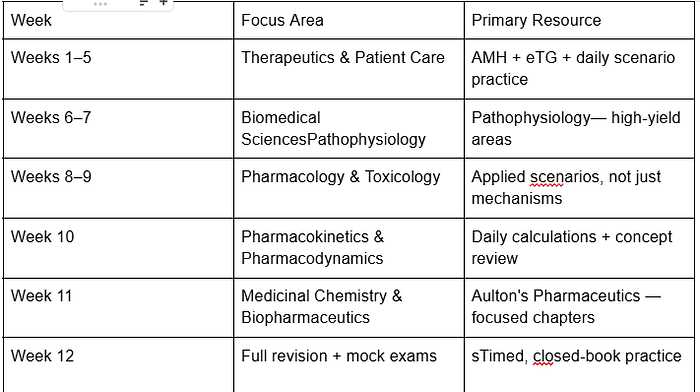
If you have 12 weeks to prepare — five of those weeks belong to Therapeutics & Patient Care. No exceptions.
Where to Get the Official Syllabus Documents
This matters more than most candidates realise.
The only source you should trust is the Australian Pharmacy Council website. They publish two key documents:
- OPRA Candidate Information Guide — exam format, eligibility, logistics, broad content overview
- OPRA Assessment Blueprint — deeper competency mapping within each content domain
Both are free to download directly from the APC website. Download both. Read both before you buy a textbook or sign up for any course.
Why this matters:
There are a lot of unofficial PDFs circulating in WhatsApp groups and Telegram channels right now. They fall into a few categories:
- Outdated official documents from the KAPS era
- Notes compiled by previous candidates — useful as supplementary material, not as a primary reference
- Repurposed KAPS question banks relabelled as OPRA content
- In rare cases, completely fabricated documents
The rule is simple: if it didn’t come from the APC website, verify it against the APC blueprint before you study from it.
Building a Study Plan Around the Syllabus
Here’s roughly how I structured my 12-week preparation — built directly around the official weightings:
Press enter or click to view image in full size
The habit that made the biggest difference:
Active recall from week one. Every single study session ended with questions — either practice MCQs or self-testing on what I’d just covered. Passive reading does not prepare you for 120 questions in 150 minutes.
Toward the end of my preparation, I also got structured coaching support — particularly for the therapeutics section. Working through applied clinical scenarios with experienced OPRA trainers made a significant difference to how I approached questions on exam day. Elite Expertise, led by trainers Arief Mohammad and Harika Bheemavarapu, is worth looking into if you want that level of guidance. Their applied scenario practice and clinical focus is genuinely hard to replicate on your own.
Things Nobody Told Me Before I Started
These are the things I had to figure out the hard way. Hopefully they save you some time.
- The exam is more applied than you expect
Fewer straightforward recall questions. More scenario-based ones where you have to synthesise information and make a clinical call. Knowing the drug is not enough — you have to know what to do with it in context.
- The adaptive testing format is real
OPRA uses Rasch adaptive testing, which means question difficulty adjusts as you go. You can’t predict what’s coming. The only strategy that works is knowing the content well enough that difficulty level doesn’t shake you.
- Australian clinical context is genuinely different
The guidelines, the formularies, the scheduling system, the treatment protocols — all of it is specific to Australia. If you trained elsewhere, this is the adjustment that takes the most deliberate effort. It’s not just about what you know. It’s about knowing it within the Australian healthcare system.
- No negative marking is your friend
Never leave a question blank. An educated guess will always score better than an empty answer.
- The therapeutics section is an Australian exam
This is the one I wish someone had told me explicitly. The AMH and eTG aren’t just useful references — they are essentially the language the exam is written in. If you’re not studying from them, you’re studying for a different exam.
Final Thoughts
The OPRA exam syllabus is genuinely clear and well-structured. The APC has done a good job of telling candidates exactly what they need to know — five content areas, defined weightings, clear competency expectations. There’s no mystery about what’s tested.
What’s harder is the preparation itself.
Staying consistent over 10 to 16 weeks. Studying the right things in the right proportions. Building the applied clinical thinking that OPRA actually rewards rather than just the content knowledge you feel comfortable with.
Here’s what I’d tell anyone just starting out:
- Download the official APC documents today — before anything else
- Build your study plan around the weightings, not your comfort zones
- Use the AMH and eTG as your core therapeutics references
- Practise calculations until they’re automatic
- Do active recall every single study session
- Get proper support for the parts of the syllabus where self-study isn’t enough
You can pass this exam on the first attempt. Most people who prepare properly do.
Good luck — you’ve got this.



























Sign in to leave a comment.