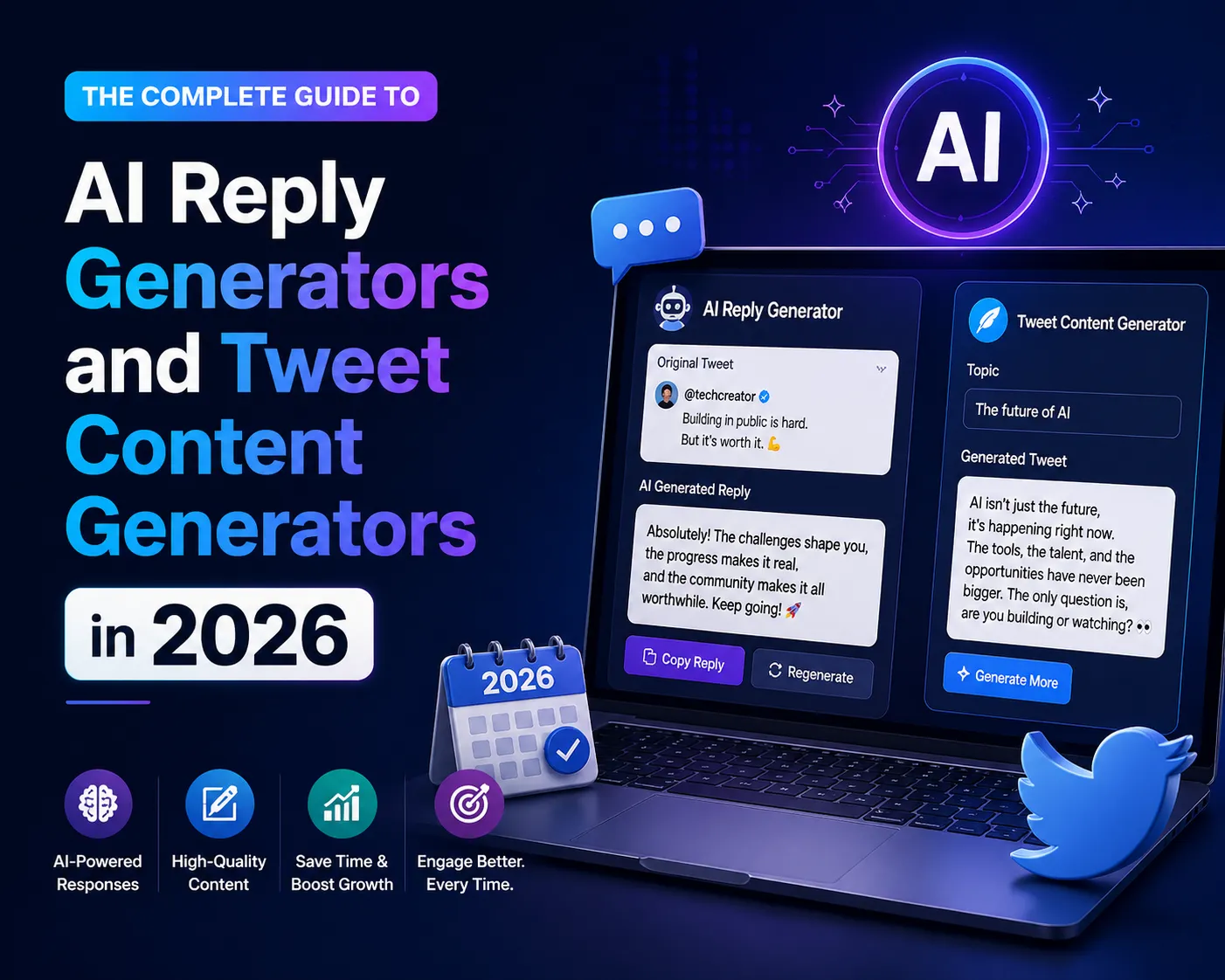

How the Right AI Tools Can Transform Your Twitter Strategy Without Making You Sound Like a Bot
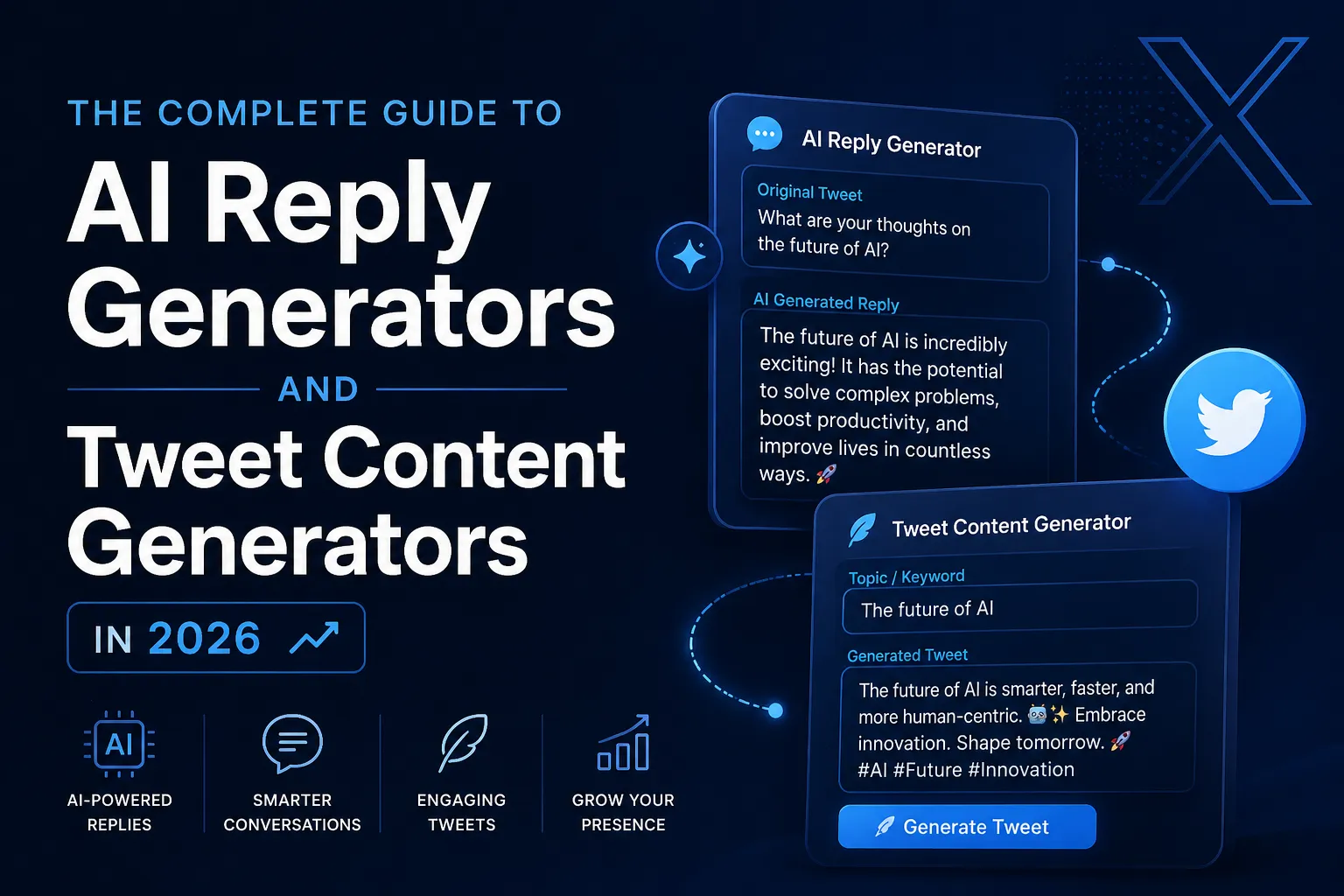
If you've been staring at a mention on X for the last ten minutes, trying to craft the perfect reply that lands your wit without sounding tone-deaf, you're not alone. The gap between having something to say and saying it at the right moment is where a lot of Twitter momentum dies.
That's the problem AI reply generators and tweet content generators solve. Not by replacing your voice, but by giving you a faster first draft to work with. And if you pick the right tool, one built around pattern recognition instead of template filling, the difference between a generic AI response and something that actually sounds like you gets much smaller.
This guide covers the landscape of AI tweet generators in 2026, how they fit into a creator strategy, where they actually help, and what to watch for so you don't end up sounding like everyone else using the same tool.
Why Creators Are Actually Using AI Tweet Generators Now
Three years ago, AI tweet generators meant picking a tone from a dropdown and hoping the output didn't sound like a car commercial written by a committee. The tools have moved beyond that.
What changed is the context. Modern AI tweet content generators understand virality patterns. They can analyze what structure made a post spread, separate that pattern from the exact wording, and then help you remix that skeleton into your voice. That distinction matters because it changes the tool from a substitute for thinking into a thinking accelerator.
The timing problem is real. Twitter moves fast. A trend that makes sense at 8 AM has a different energy by noon. A reply that would have landed at the start of a thread gets buried after fifty other responses pile on. The difference between drafting a reply at speed and drafting it at the right moment can be the difference between engagement and invisibility.
That's where an AI reply generator with momentum tracking becomes useful. Instead of writing blind, you're drafting against live data about what's resonating right now. The tool doesn't replace judgment. It gives you better raw material to judge.
The Three Problems AI Tweet Generators Actually Solve
Before we look at specific tools, it helps to understand what problem you're actually trying to solve, because not all tweet generators solve the same problem.
1. The Blank Page Problem
You know you should post more consistently. You have ideas. But sitting down to write seven quality tweets for the week hits differently than knowing someone else posted two tweets, and they're already at ten thousand likes. The comparison trap is real, and it kills consistency.
A viral tweet generator that works well removes the comparison feeling. Instead of starting from zero, you start from "this structure works, now how do I make it mine?" That's not cheating. That's how writers have always worked. You study what works, you steal the underlying pattern, and you rebuild it in your own voice.
A good AI tweet content generator does this by showing you the mechanism. It doesn't just spit out random variations. It breaks down why a post spread. Then it helps you apply that same logic to your angle, your data, your perspective.
2. The Consistency Problem
Posting once is easy. Posting the same quality six times a week is hard. Most creators know this. Their Twitter feeds look like they're run by three different people because the quality, tone, and focus shift with their energy level that day.
An AI tweets generator built around voice matching can help here. If the tool learns your actual voice—your word choices, your rhythm, your perspective—it can generate drafts that already sound like you. That doesn't mean you're not reviewing. It means your first pass is actually usable instead of something that needs a full rewrite.
That matters for consistency because it removes the friction between "I want to post" and "this is ready to publish." The closer that gap gets, the more you actually ship.
3. The Reply Speed Problem
Replies are where a lot of Twitter growth happens. But replies have a time window. The best reply to a hot thread comes in the first two hours, ideally before fifty other people have already said the same thing. After that, even a clever response gets buried.
An AI reply generator solves the time problem. You still need to think about what you want to say. But you don't need to think about how to phrase it. A good reply tool suggests three or four angles in fifteen seconds, you pick one, maybe edit one line, and you're live.
The key is that it's still your take. The tool is just helping you express it faster. If a tool produces something so generic that you don't recognize yourself in it, it's not helping. If it produces something close enough that a small edit makes it sound like you, it's doing the job.
Why Not All AI Tweet Generators Are Equal
The market is crowded now. There are at least a dozen tools that will claim they can generate viral tweets. Most of them are pretty similar. That makes picking one harder, not easier, because the differences that matter aren't always obvious from the feature list.
Virality is a pattern, not magic.
A viral tweet generator that actually understands virality doesn't predict which specific tweet will go viral. That's impossible. What it can do is recognize structures that have worked before. A good hook. A clear point. Tension or curiosity. A specific detail that makes it believable. Then it can help you rebuild that same structure for your angle.
Bad viral tweet generators just randomize phrases and call it variation. They're also usually pretty obvious because the output sounds generic and slightly off. You notice it immediately.
Voice matters more than creativity.
This is the part a lot of people get wrong. A good AI tweet content generator isn't trying to be clever. It's trying to sound like you. That's harder than it sounds because it requires the tool to actually understand your perspective, your word choices, and your rhythm.
That's why some tools ask you to connect your Twitter history. They're not creepy. They're building a model of your actual voice so the generated drafts actually feel like your voice. The tools that skip this step and just generate tweets from scratch tend to sound pretty generic.
Timing and momentum matter.
The single biggest advantage that modern AI tweet generators have over older ones is momentum data. They don't just know what posts went viral in the past. They know what's gaining traction right now. That's the difference between being inspired by a post from six months ago and being inspired by something that's actively spreading this morning.
A tool that shows you momentum before you draft is giving you better raw material to work with. Your take on a rising trend is going to get more engagement than your take on something everyone already discussed last week.
The Current Best Options for AI Tweet Generators in 2026
The landscape has consolidated. There are a few serious tools that creators actually pay for and use consistently. There are also a bunch that sound good but get abandoned after the free trial because they don't actually help.
The Momentum-First Approach
Some tools treat discovery as the main event and writing as the supporting feature. You start by seeing what's actually gaining traction in your space. Then you remix, riff on, and rebuild that into your angle.
This approach works well if you get stuck on ideas. It's less useful if you already know what you want to say but just need help saying it fast.
The advantage is that it tends to produce more original, less generic output because you're starting from a real trend instead of a random template. The disadvantage is that it takes a few extra minutes because you're browsing momentum data first.
Best for: Creators who want to ride trends but stay original. Founders are building an audience around ideas and analysis. People who struggle with what to write about.
The Voice-Matching Approach
Other tools focus on learning your voice first. You give them access to your past tweets. They build a model of how you actually write. Then, when you ask for a draft, they generate something that already sounds like you.
The advantage is speed and consistency. Your drafts need minimal editing. The disadvantage is that the tool is only as good as the pattern it learned from you.
If your old tweets were generic, the new tweets will be too. If you were inconsistent before, the tool gets confused. It requires you to have some existing voice for it to mirror.
Best for: People who already have a strong, consistent voice and just need it amplified. Creators with a strong posting history. Anyone who doesn't want to sound different from their usual style.
The Reply-First Approach
A few tools were built specifically around replies instead of initial posts. The idea is that replying is where engagement happens, so that's where the tool should focus.
These tools usually emphasize speed. You see a reply you want to engage with, you use the tool to draft something fast, you edit if needed, and you publish. The window is small, so the tool can't slow you down.
The advantage is that they're actually optimized for the most time-sensitive Twitter moment. The disadvantage is that they're less useful if you mostly post original content instead of replying.
Best for: Community builders. People who spend time replying and engaging instead of just broadcasting. Anyone who wants to stay active without spending all day on Twitter.
How to Actually Use an AI Tweet Generator Without Sounding Like an AI Tweet Generator
The biggest mistake people make is thinking the tool's job is to make the post perfect. It's not. The tool's job is to make the first draft usable so you don't have to stare at a blank page.
That shift in mindset changes everything.
If you treat the AI output as a draft to edit, you're going to get good results. If you treat it as a final product, you're going to sound like everyone else using the same tool.
The practical workflow is simple:
1. Start with momentum or a direction. Know what you want to talk about or what trend you're riffing on.
2. Generate three to five options.
3. Pick the one closest to what you'd actually say.
4. Edit one to three lines to make it sound like you.
5. Publish.
That whole process should take five to ten minutes for a reply. Maybe fifteen for an original post. If it's taking longer, the tool isn't saving you time, and you should skip it.
The editing step is non-negotiable. It's where your voice gets added back. A tool that produces something so close to your actual voice that editing feels optional is rare and valuable. Most tools produce something 70 percent there, and you have to add the last 30 percent.
How to Pick Between Viral Tweet Generator Options
The market will try to confuse you with feature lists. Here's what actually matters.
Does it let you control momentum vs. randomness?
Some tools show you live data about what's spreading. Others generate random tweets hoping one sticks. The first category is better because you're not gambling.
Does it learn from your voice or just from templates?
If the tool asks for your Twitter history and builds a voice model, it's taking you seriously. If it just asks you to pick a "tone" from a dropdown, it's pretty generic.
How fast is the workflow?
If using the tool takes longer than just writing the tweet yourself, it's pointless. The tool should save time. If it creates more steps, skip it.
What's the approval workflow?
Never use a tool that auto-posts. You need to review everything before it goes live. Twitter is a small enough world that a bad response can damage your reputation. Tools that force a review step are the ones that take responsibility seriously.
Does it actually sound like you?
Use the free trial. Ask it to generate ten tweets. Read them out loud. Do you hear yourself in them? If not, the tool isn't a good fit, no matter what the feature list says.
The Bigger Picture: AI Tweet Generators as Part of Your Creator System
One tool doesn't fix everything. An AI reply generator helps with engagement speed. A tweet content generator helps with consistency and volume. A viral tweet generator helps with pattern recognition.
But they're most useful when they're part of a system.
If you're using a viral tweet generator to find ideas but then moving to another app to draft, another to schedule, and another to analyze performance, you're paying the switching cost that makes AI tools less useful overall.
The best setups combine tools that actually work together. You're using a tool for momentum discovery that also handles writing and replies. You're using the same place for drafting and scheduling. You're getting feedback on what worked so you can adjust.
That's the difference between using AI to move faster and using AI to build a smarter workflow.
For X-focused creators specifically, a tool that combines momentum data, voice-matched generation, reply assistance, and scheduling in one place is going to save more time than three separate tools, even if each of those three is slightly better at its specific job.
The hidden cost of tool-hopping is context-switching. The hidden benefit of consolidation is consistency. A creator who drafts, publishes, and replies all in one system where everything has the same voice is going to look more coherent than a creator using best-in-class point solutions that require manual editing between each step.
What Actually Matters for Growth on Twitter in 2026
The thing that tools tend to under-emphasize is that virality has a lot to do with timing, authenticity, and momentum you can't force.
An AI tweet generator is good at helping you express yourself faster and with better pattern recognition. It's not good at making you something you're not. If you're trying to become a trend-focused thought leader but you actually care about deep work, the tool will make you sound like someone else, and your audience will feel it.
The creators who see the biggest gains from AI tweet generators are the ones who already have something real to say. They just wanted help saying it faster and more consistently. The tool removes friction. It doesn't manufacture authenticity.
So the real lever isn't the tool. It's the clarity of your actual perspective. If you know what you want to build an audience around, an AI tweet generator helps you ship more of it. If you're still figuring out what you want to say, the tool will just help you ship more confusion.
The Reality Check: You Still Need Judgment
This might be the most important thing to say clearly.
An AI reply generator can draft your response in twenty seconds. But it can't know if this specific moment is the right moment to reply. It can't know if silence is actually more powerful than a quip. It can't know if you should step in or step back.
A viral tweet generator can show you a structure that's worked before. But it can't tell you if you have the credibility to use that structure. It can't tell you if your audience actually wants you to take that angle.
A tweet content generator can produce consistent output. But it can't tell you if consistency is what you need right now or if you should try something different.
In other words, the tools are for speed and pattern recognition. Your job is still taste, judgment, and timing. The tools that work best are the ones that never make you forget that distinction.
Your Next Move: Test One Tool for One Week
Don't try to optimize your entire Twitter strategy at once.
Pick one part of your workflow that's actually slower than it needs to be. Maybe it's replying. Maybe it's finding ideas to post about. Maybe it's maintaining consistency when life gets busy.
Pick a tool built for that specific job. Use it in real work for a week. Judge it by whether it actually saved you time, whether the output sounded like you, and whether you'd pay for it after the trial.
If it passes that test, keep it. If it doesn't, the tool isn't a fit. There's no shame in that. Not all tools work for all creators.
The goal is not to use more AI. The goal is to ship more of your actual work with less friction. An AI tweet generator that helps you do that is worth it. One that just adds another app to your workflow is not.
FAQ: Common Questions About AI Tweet Generators
Do AI tweet generators get flagged as spam?
No, as long as you're using them as drafting tools that you review before posting. If you're auto-posting or being careless with tone, that's on you, not the tool. Twitter's system is pretty good at spotting patterns of low-effort engagement. Tools that produce thoughtful, personalized content from human judgment don't trigger those signals.
Will my audience know I'm using an AI tool?
Only if the output doesn't sound like you. If the tool learns your voice and you're actually reviewing and editing the output, there's no way for your audience to tell. If you're just hitting publish on whatever the tool generates without editing, yeah, it becomes obvious pretty fast.
Is using an AI tweet generator cheating?
No more than using spell-check is cheating. You're using a tool to move faster. Writers have always done this. The question is whether you're using it to add your voice or to substitute for it.
Which is better, an AI reply generator or a viral tweet generator?
It depends on your bottleneck. If you struggle with engagement and replies, go with reply-focused tools. If you struggle with finding ideas and consistency, go with trend-focused tools. If you struggle with voice, go with voice-matching tools. Most creators benefit from trying both and seeing which one actually saves them time.
How much should I budget for AI tweet generators?
Most good options are between fifteen and fifty dollars a month. Some are cheaper, some are more expensive. Don't pick based on price. Pick based on whether it saves you time and money on subscriptions it replaces. If it only adds cost, it's not worth it.
The bottom line: AI tweet generators and AI reply tools have become practical enough that they can actually save you time on Twitter. But only if you pick the right tool for your actual workflow and only if you use them as drafting aids, not replacements for judgment. The creators seeing the biggest gains are the ones who already had something to say and just needed help saying it faster.
Start with one tool. Test it for a week. Keep it if it works. Move on if it doesn't. Your Twitter strategy is too important to let tool marketing tell you what you need.





















Sign in to leave a comment.