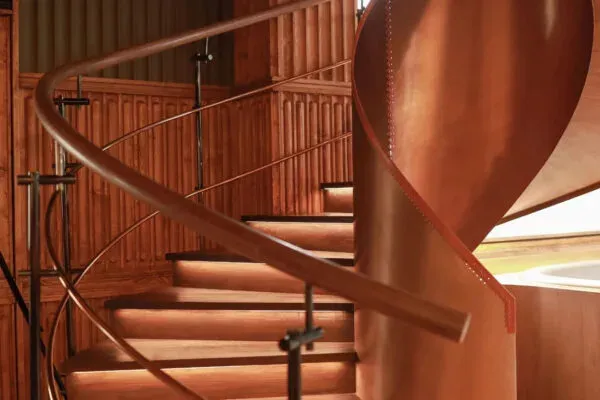

There was a time when a staircase was just a staircase. Something you climbed without giving it a second thought. That's not really the case anymore. More architects and homeowners are starting to treat staircases as a focal point rather than something tucked away, and helical designs are very much at the centre of that shift. If you're looking into options for your own space, here's a rundown of how these staircases actually work and what makes them stand out.
Helical or Spiral? They're Not the Same Thing
Although they are used interchangeably, they are not the same. Spiral staircase uses a tight spiral design to keep the stairs compact but in some cases, steeper and tighter. The helical one avoids this middle pole, gracefully carving a curve and unfurling as it ascends. Upclimbing it has a non-ladder-like character.
Why This Style Keeps Showing Up in Modern Builds
A big part of the appeal is just how open everything feels. There's no harsh turn, no sudden angle, just a continuous curve that fits naturally into open-plan spaces. And because there's no column in the middle, light moves through differently, nothing's blocking the view or throwing odd shadows across the steps.
This is honestly where helical staircase design gets pretty fascinating from an engineering perspective. Getting a structure to curve that smoothly while still holding weight safely takes real planning. It's that balance between how it looks and how it actually performs that turns a staircase into something closer to art.
What It's Usually Made From
Steel tends to be the go-to for the frame, since it bends into smooth curves without losing structural strength. Glass railings pair beautifully here too, mainly because they don't break up that flowing line the way a solid railing would. Timber treads bring some warmth against all that steel and glass, while stone or polished concrete can add a more dramatic feel in bigger spaces.
Space Is the Big Trade-Off
Here's something worth knowing going in: a modern helical staircase generally eats up more floor space than a tight spiral one does. That sweeping curve needs room to breathe. In larger homes, lobbies, or commercial buildings with a bit of extra square footage, that's rarely a problem and usually works in the design's favour anyway. In smaller homes though, it's something to think about early on, squeezing one into a cramped stairwell after the fact can get messy.
Proportion Makes or Breaks It
This is where things can go right or wrong fast. Too steep, and that elegant curve suddenly feels tight and uncomfortable. Too shallow, and it ends up taking far more space than it's worth. Getting the proportions right from the start, before construction even begins, really is the difference between something that looks effortless and something that just feels off.
Wrapping Up
A modern Helical Staircase Design is the first thing people notice walking into a room, and there's a reason for that. Pulling one off well takes a mix of solid engineering and a good eye for proportion, but when it comes together, it changes the whole feel of a space. If you're curious about how something like this might work for your own project, Hekur India will walk you through the engineering behind these staircases.



















Sign in to leave a comment.