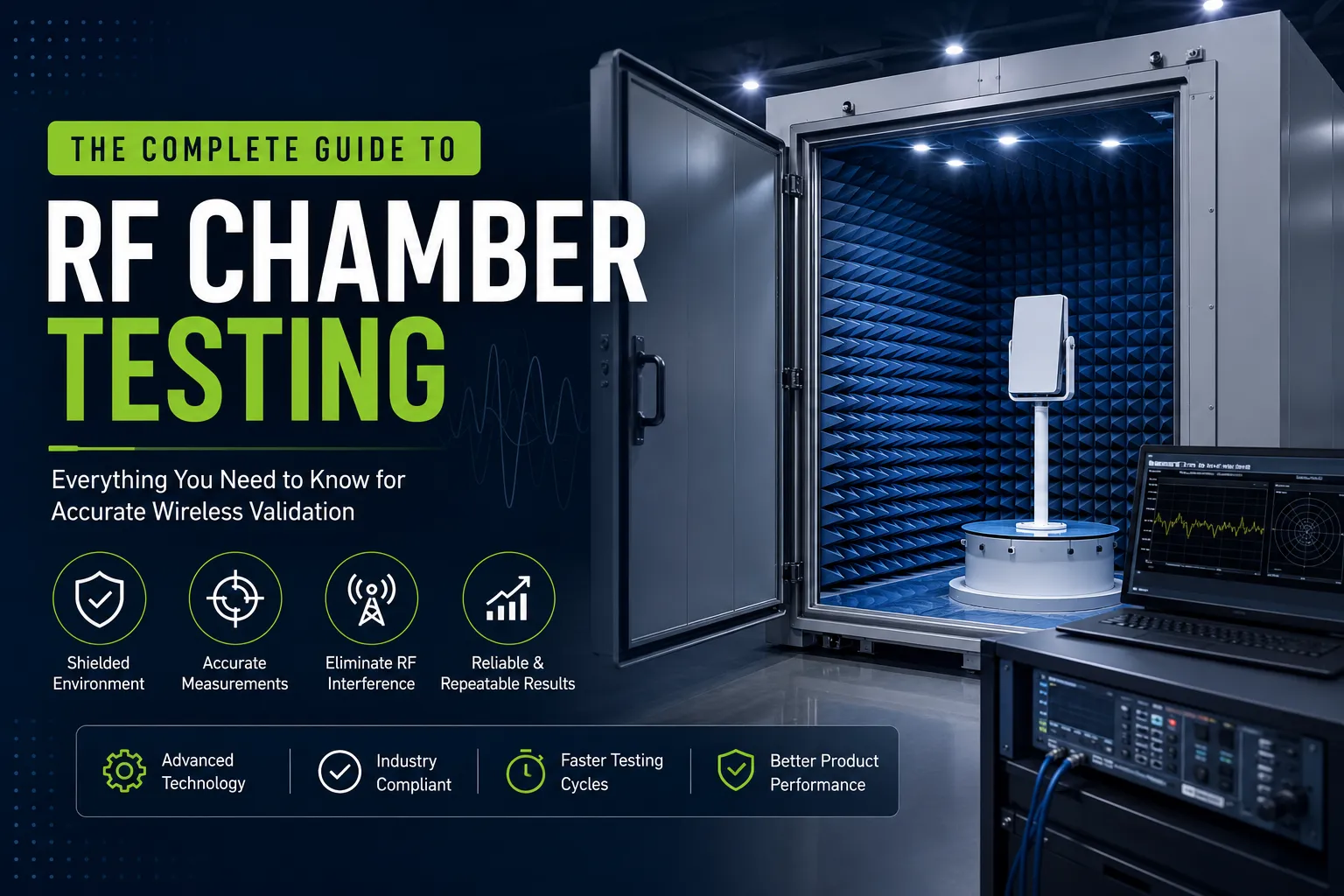

Modern wireless technologies require precise validation before reaching the market. Whether testing antennas, IoT devices, automotive electronics, or communication equipment, engineers rely on RF chamber testing to ensure consistent performance under controlled conditions.
An RF shielded chamber creates an isolated testing environment that minimizes external interference, allowing engineers to perform repeatable and highly accurate RF measurements. These chambers play a vital role in research, product development, certification, and manufacturing across multiple industries.
This guide explains how RF chamber testing works, why it is important, and how businesses can choose the right solution for their RF testing requirements.
What Is RF Chamber Testing?
RF chamber testing is the process of evaluating wireless devices inside a controlled environment that blocks external radio frequency signals. Testing inside an RF shielded chamber ensures that measurements are not affected by surrounding wireless networks, electronic equipment, or environmental interference.
By creating an isolated RF environment, engineers can accurately analyze antenna performance, signal strength, radiation patterns, receiver sensitivity, and overall wireless communication reliability.
Why Is RF Chamber Testing Important?
Reliable RF measurements are impossible when external interference affects the testing environment. RF chamber testing provides consistent conditions that improve measurement accuracy and reduce testing errors.
Key advantages include:
- Eliminates external RF interference
- Produces repeatable test results
- Improves wireless product quality
- Supports regulatory compliance
- Reduces testing uncertainty
- Accelerates product development
These benefits make RF chamber testing an essential part of modern wireless product validation.
How an RF Shielded Chamber Works
An RF shielded chamber is designed with conductive shielding materials that prevent external radio signals from entering the testing environment.
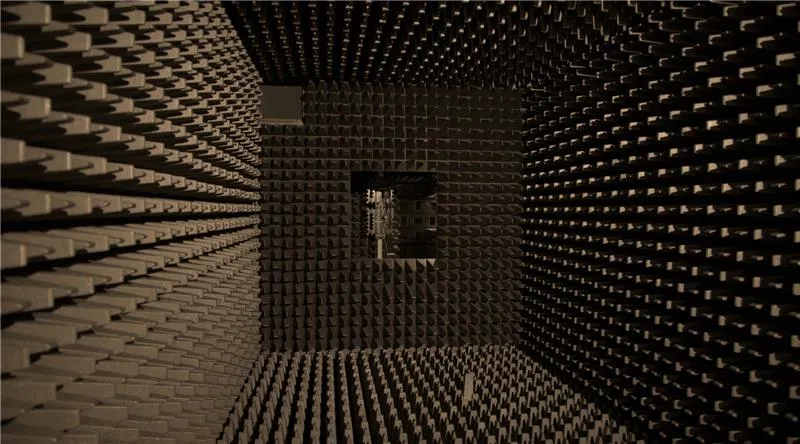
Inside the chamber, RF absorbers reduce unwanted reflections that could otherwise affect measurement accuracy. Together, the shielding and absorbers create a controlled space where only the intended RF signals are measured.
This controlled environment allows engineers to perform accurate and repeatable wireless testing.
Key Components of an RF Chamber
Several components work together to create a reliable RF testing environment.
RF Shielding
Metallic shielding prevents outside RF signals from entering the chamber.
RF Absorbers
Specialized absorbers minimize signal reflections and improve measurement accuracy.
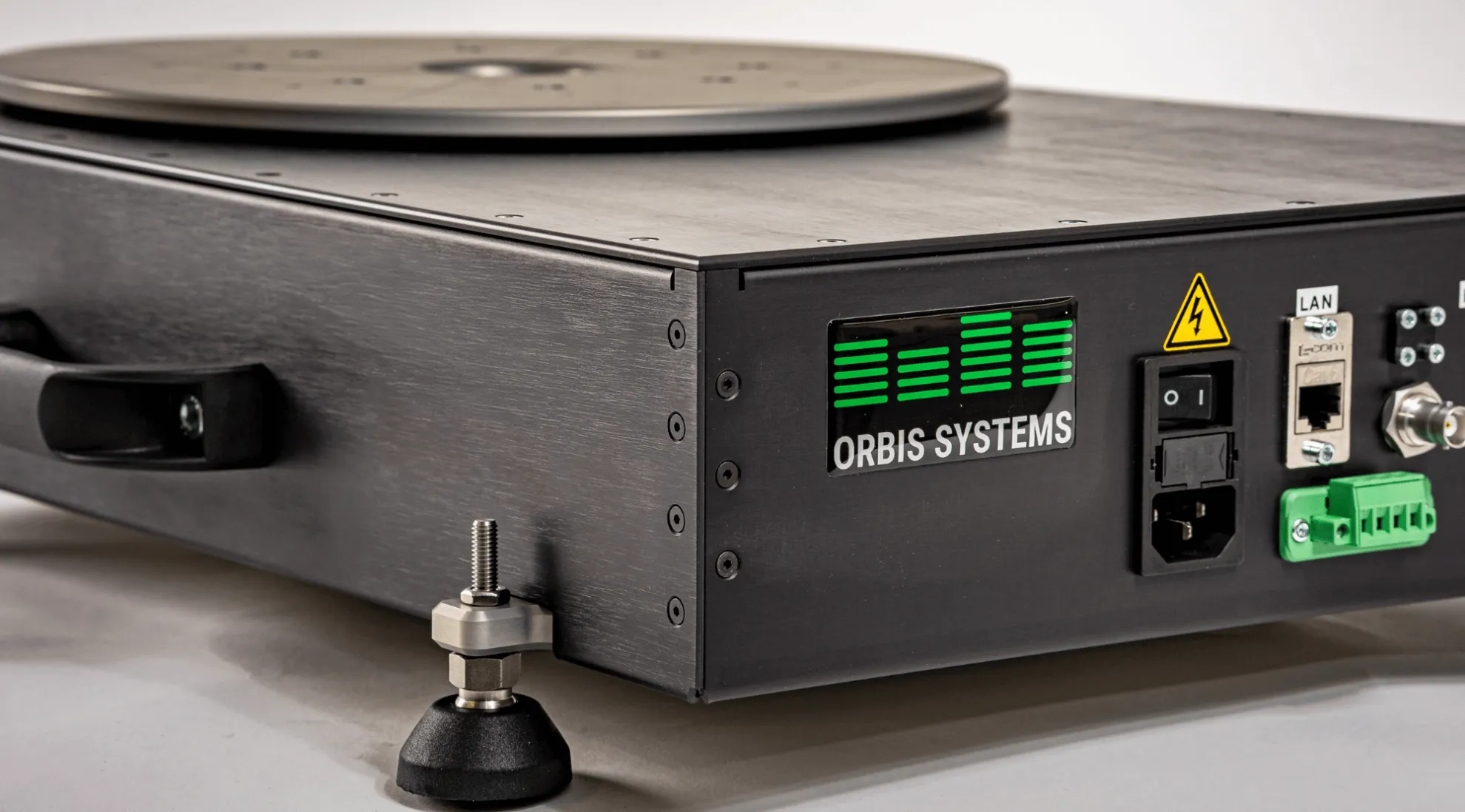
Positioning Systems
Automated positioners rotate or move the device under test to measure performance from multiple angles.
Instrument Interfaces
The chamber integrates with spectrum analyzers, vector network analyzers, signal generators, and automated RF test equipment.
Applications of RF Chamber Testing
RF chamber testing supports a wide variety of wireless technologies and industries.
Common applications include:
- 5G device validation
- Wi-Fi performance testing
- Bluetooth certification
- IoT device evaluation
- Automotive radar testing
- Satellite communication systems
- Aerospace electronics
- Defense communication equipment
- Antenna pattern measurements
- Wireless product development
As wireless technology continues to evolve, the demand for reliable RF testing environments continues to grow.
Benefits of Using an RF Shielded Chamber
Organizations invest in RF shielded chambers because they provide long-term improvements in testing quality and efficiency.
Major benefits include:
- Higher measurement accuracy
- Improved test repeatability
- Reduced environmental interference
- Faster testing workflows
- Enhanced product reliability
- Better compliance with industry standards
- Support for automated testing
- Lower retesting costs
- Greater laboratory productivity
- Scalable testing capabilities
These advantages help manufacturers deliver higher-quality wireless products while reducing development time.
Common Challenges in RF Chamber Testing
Although RF chamber testing improves measurement quality, laboratories should address several factors that influence testing performance.
Chamber Size
The chamber should match the dimensions of the device under test.
Shielding Performance
Poor shielding may allow unwanted RF signals to enter the chamber.
Equipment Calibration
Regular calibration ensures accurate measurements throughout the testing process.
Device Positioning
Incorrect positioning can produce inconsistent antenna measurements.
Automation Integration
Connecting positioning systems with RF instruments improves testing efficiency and repeatability.
Proper planning helps laboratories overcome these challenges while maximizing testing accuracy.
Best Practices for Accurate RF Chamber Testing
Organizations can improve testing quality by following several best practices.
- Perform regular chamber maintenance.
- Verify shielding effectiveness periodically.
- Calibrate RF instruments before testing.
- Use automated positioning whenever possible.
- Maintain consistent testing procedures.
- Monitor environmental conditions.
- Document testing configurations for repeatability.
- Train personnel on standardized testing methods.
Following these practices helps ensure reliable and repeatable RF measurements.
Choosing the Right RF Chamber
Selecting the appropriate RF chamber depends on several factors.
Consider the following:
- Device size and application
- Frequency range
- Shielding effectiveness
- Chamber dimensions
- Automation compatibility
- Future scalability
- Integration with RF instruments
- Maintenance requirements
Choosing the right solution improves testing efficiency while supporting long-term business growth.
Improve Your RF Chamber Testing with Orbis Systems
Reliable wireless testing begins with the right testing environment. Orbis Systems provides advanced RF Tunnel Shielded Chamber solutions designed for accurate RF chamber testing across research, development, manufacturing, and product validation.
Explore our RF Chamber Testing solutions here:
https://www.orbissystems.eu/solutions/rf-tunnel-shielded-chamber/



























Sign in to leave a comment.