
The allure of striking gold has captivated humanity for centuries. Today, small-scale gold mining represents a thriving industry and a rewarding venture for independent operators worldwide. However, the difference between a highly profitable operation and a frustrating, costly endeavor comes down to one critical factor: choosing the right gear.
In the past, small-scale mining relied almost entirely on massive amounts of water. But with growing environmental regulations, arid climates, and the sheer logistical nightmare of hauling thousands of gallons of water to remote claims, the industry has shifted. Modern, efficient operations now prioritize dry processing and high-recovery tools.
Whether you are working an arid desert claim or looking to upgrade your current setup, here is the ultimate small-scale gold mining equipment list to maximize your recovery rate while minimizing your environmental footprint.
1. Prospecting and Ground Preparation Tools
Before you can process tons of material, you have to find the gold and get it out of the ground. Sampling is the foundation of any successful mining operation.
- Heavy-Duty Picks and Shovels: Steel-forged tools designed to break through packed gravels, caliche, and rocky terrain.
- Geological Hammers: Essential for chipping away at quartz veins or bedrock where gold may be trapped.
- Classification Sieves (Screens): A set of nested screens (ranging from 2-mesh down to 50-mesh) used to sort raw material by size. Removing large rocks early prevents your processing equipment from getting choked.
2. Dry Processing Equipment (The Arid Zone Essentials)
If your mining claim is located in a desert region or far from a viable water source, traditional wet sluicing isn't an option. Dry Mining Equipment relies on a combination of air pressure, vibration, and static electricity to separate heavy gold from lighter sands.
The Drywasher
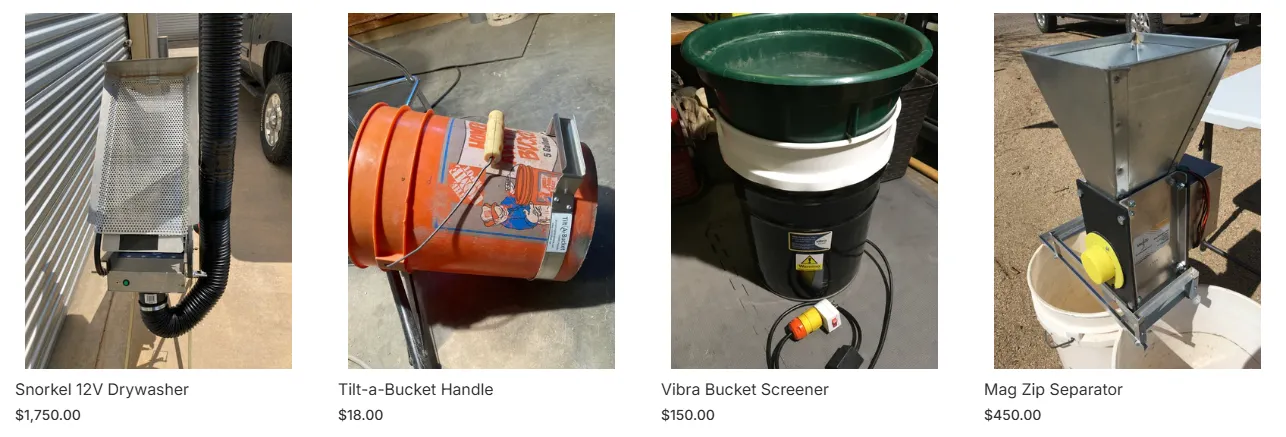
The absolute king of desert gold mining is the drywasher. This machine uses a bellows or a blower fan to push air upward through a porous fabric riffle tray. As material vibrates down the tray, the air lifts the lighter dirt, allowing the heavy gold to settle behind the riffles.
- Static Cling Sluice Boxes: Advanced dry processing systems use materials that generate a natural static charge as dry sand slides over them. This static charge grabs fine gold particles that might otherwise blow away in the airflow.
- Electrostatic Separators: For fine gold recovery in dry concentrates, these machines use a high-voltage field to pull non-conductive materials away from precious metals.
3. High-Efficiency Concentrators
Once you have run your bulk material through a drywasher or a primary separator, you are left with "concentrates"—a heavy mix of black sands (magnetite, hematite) and gold. You need specialized tools to reduce this pile down to pure gold.
- Centrifugal Concentrators: These units use extreme gravitational force ($G\text{-force}$) combined with a fluid bed or specialized dry ribbing to trap ultra-fine gold particles that traditional gravity separation methods miss.
- Vibrating Spiral Wheels: Ideal for finishing, these auto-panners slowly feed concentrates onto a spinning, grooved wheel. The gold travels up the spirals into a center cup, while the black sand washes away.
- Magnetic Separators: A high-quality magnetic wand or separator is crucial for lifting out magnetic black sands from your concentrates without accidentally pulling out fine gold flakes.
4. Power and Material Handling
A small-scale mining operation can quickly become bottlenecked if you rely purely on manual muscle to move material.
- Portable Generators or Small Gas Engines: Most drywashers and high-bankers run on small, fuel-efficient 4-stroke engines or portable solar-powered battery banks.
- Small-Scale Feeders and Conveyors: A mechanical hopper with an adjustable feed gate ensures a steady, metered flow of dirt into your recovery system, preventing overloading.
- Heavy-Duty Buckets and Tubs: Industrial-grade, UV-resistant 5-gallon buckets are the unsung heroes of any mining site for organizing and transporting high-grade paydirt.
5. Final Recovery and Refining
This is where the hard work pays off. The final step involves separating the clean gold from the remaining microscopic particles.
- Gold Pans (Plastic with Sharp Riffles): Even the most high-tech operation needs a reliable 10-inch or 14-inch plastic gold pan for field sampling and final cleanups.
- Snuffer Bottles: A simple vacuum bottle used to suck up fine gold flakes and flour gold directly from the bottom of your pan.
- Digital Pocket Scales: High-precision scales capable of measuring down to 0.01 grams to accurately weigh your daily take.
Why Dry Mining Equipment is the Future of Small-Scale Mining
Choosing dry processing tools over traditional wet systems offers massive competitive advantages for small-scale miners today:
- Zero Water Dependance: You can operate in the middle of the desert, on high ridges, or during freezing seasons where water is unavailable or restricted.
- Simpler Permitting: Many regulatory agencies look far more favorably on dry mining operations because they do not risk contaminating local waterways or creating muddy runoff.
- Increased Mobility: Without the need for heavy water pumps, hundreds of feet of hose, and settling ponds, your entire footprint is lighter, making it easy to pack up and move to the next hot spot.
Gear Up with DryMiningEquipment.net
Investing in the right tools is what separates successful miners from those who simply move dirt. By building your small-scale gold mining equipment list around high-recovery, waterless technology, you set your operation up for maximum efficiency, portability, and profitability.


























Sign in to leave a comment.