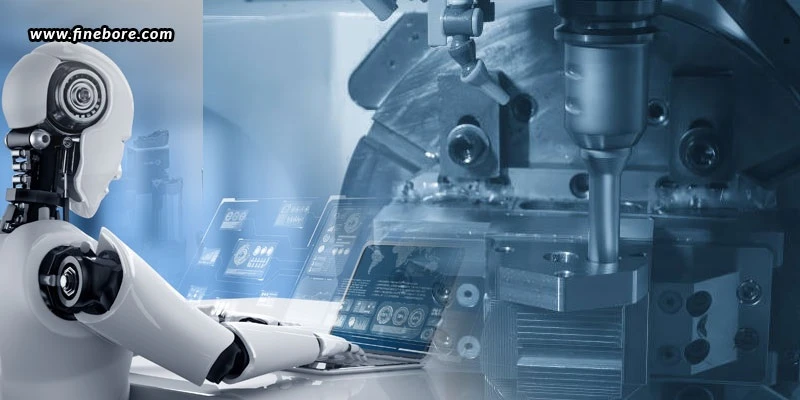

Boring heads are essential to obtaining machining accuracy and efficiency in the manufacturing of intricate components in the constantly evolving discipline of machining. As technology continues to progress, the future of boring heads is full of exciting new developments and trends that are expected to completely transform the machining operations. This article examines the cutting-edge innovations influencing the future of boring head technology and its consequences for the machining sector, ranging from improvements in tool materials and coatings to the incorporation of automation and artificial intelligence.
Advancements in tool materials and coatings
In order to increase performance, durability, and efficiency, one of the major developments influencing boring heads in the future is the ongoing development of tool materials and coatings. While carbide and high-speed steel (HSS) are still commonplace in machining, new materials with better qualities have recently been developed as a result of technological developments.
Cubic boron nitride (CBN), a synthetic compound with remarkable heat conductivity and toughness, is one such material. Increased tool life and productivity are possible with CBN inserts and cutting tools, especially in demanding machining applications requiring hardened steels and exotic alloys.
Moreover, the creation of sophisticated coatings like nanocomposite and diamond-like carbon (DLC) improves tool performance by lowering wear, friction, and built-up edge formation, which leads to better surface finish and dimensional accuracy.
The use of cutting-edge tool materials and coatings will be essential to maximizing boring head performance and reaching greater levels of output and quality as machining specifications become more demanding.
Integration of artificial intelligence and automation
The use of automation and artificial intelligence (AI) in machining operations is a key development that will influence boring heads in the future. AI-driven systems and machine learning algorithms are being used to forecast tool wear and breakage, optimize toolpath creation, and make real-time adjustments to machining settings, resulting in more adaptable and efficient machining processes.
To create the best toolpaths that minimize machining time, minimize tool wear, and maximize material removal rates, AI-based toolpath optimization algorithms examine complicated geometries and machining restrictions. Similar to this, proactive tool replacement and maintenance are made possible by predictive maintenance systems that are outfitted with sensors and AI algorithms to track the performance and condition of tools. This helps to avoid expensive tool breakdowns and unplanned downtime.
Additionally, unmanned machining activities are made possible by the automation of boring operations using robotic systems and integrated machining cells, which increase productivity and flexibility, while lowering labour costs and cycle times. Even in chaotic and dynamic settings, robotic boring heads fitted with force sensors and vision systems can consistently and precisely complete complex machining tasks.
Boring head automation with artificial intelligence (AI) has the potential to completely transform machining operations and provide businesses with unprecedented flexibility, productivity, and quality in a highly competitive global market.
Advancements in multi-tasking and multi-functional boring heads
Manufacturers are creating cutting-edge boring head designs that offer more versatility and efficiency in machining processes in response to the rising need for multitasking and multifunction machining capabilities. Multiple features and tasks may be machined simultaneously in a single configuration, thanks to multi-tasking boring heads, which combine many cutting tools and functions into a single toolholder.
For instance, rapid and simple tooling setup reconfiguration for various machining operations is made possible by modular boring systems with interchangeable tool modules, which decrease setup time and maximize machine utilization. Furthermore, greater damping and stability are provided by sophisticated toolholder designs, such as hydrostatic and hydrodynamic toolholders, which enhance surface finish and enable smoother machining processes.
Furthermore, new opportunities for on-demand tooling and repair applications are made possible by the introduction of hybrid boring heads, which combine traditional cutting tools with additive manufacturing capabilities. By allowing material to be directly deposited onto worn or damaged tool surfaces, additive manufacturing methods like laser metal deposition (LMD) and directed energy deposition (DED) increase tool life and decrease the frequency of tool replacements.
In conclusion, Boring heads are leading the way in this technical advancement that will greatly expand the possibilities in machining in the future. The increasing convergence of modern materials, AI integration, and multi-function capabilities underscores the critical role that boring heads play in guaranteeing accuracy, productivity, and excellence in a variety of sectors. The way forward is obvious: by embracing emerging trends and innovations, machining companies can not only stay ahead of the curve, but also unlock new realms of growth, competitiveness, and innovation in the ever-dynamic manufacturing landscape. FineTech Toolings, for example, is leading the charge as precision boring head manufacturers in Bangalore when it comes to precision, passion, and innovation.























Sign in to leave a comment.