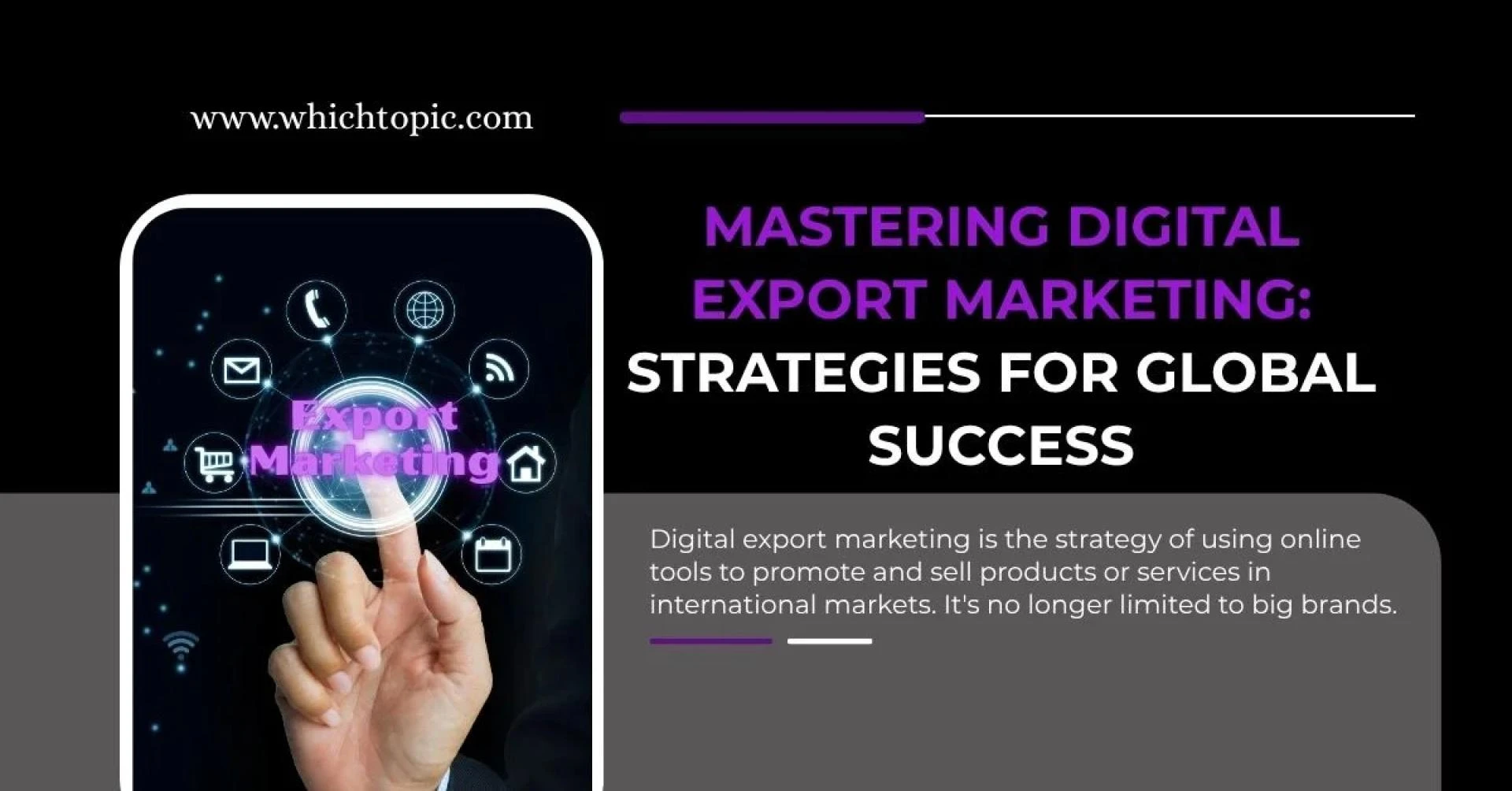

The evolution of the internet and digital technologies has fundamentally altered how businesses approach international trade. In a world where physical boundaries no longer limit consumer reach, Digital Export Marketing has emerged as a key strategy for global expansion.
Rather than relying solely on distributors, agents, or international trade shows, today’s businesses are embracing digital tools to reach global audiences directly. Whether it's through localized websites, international SEO, or culturally adapted social media campaigns, Digital Export Marketing offers the agility and precision that modern brands need to thrive in foreign markets.
Defining Digital Export Marketing
Digital Export Marketing refers to the strategic use of digital channels to market and sell products or services in international markets. These channels include search engines, social media platforms, online marketplaces, websites, content marketing, and email campaigns.
It allows businesses to connect with potential customers across borders without the high costs typically associated with traditional export activities. Digital export efforts are measurable, adaptable, and scalable—making them ideal for businesses of all sizes looking to grow globally.
Why Digital Export Marketing Is Essential in 2025
The demand for cross-border digital commerce continues to rise, with consumers increasingly searching for international products online. From fashion to software and electronics to digital education, every sector is seeing a global shift in buyer behavior.
Here’s why Digital Export Marketing matters more than ever:
Faster market entry through online platforms.
Real-time performance metrics and insights.
Localized campaigns with minimal operational overhead.
Lower upfront investment compared to physical expansion.
Greater control over branding and messaging in each market.
Whether you're targeting North America, Southeast Asia, Europe, or the Middle East, digital strategies allow for high-impact campaigns tailored to each region’s preferences and behaviors.
Core Elements of Digital Export Marketing
International SEO
Optimizing your website for international search engines and user behavior is crucial. Use country-specific keywords, create multilingual content, and structure your site with regional domains or subdirectories. Implement hreflang tags to help search engines serve the correct language version of your site to users.
Paid International Advertising
Use geo-targeted Google Ads, Facebook Ads, or LinkedIn campaigns to reach users in specific countries. Tailor your ad creatives and messaging to local cultures and trends for better conversion rates.
Localized Content Strategy
From product descriptions to blog posts and videos, your content should reflect local preferences. What works in one region might not resonate in another—so cultural context and language accuracy are key.
Social Media Localization
Different countries prefer different platforms. While Instagram and Facebook dominate in the West, TikTok, LINE, and WeChat are prominent in Asia. Tailoring your content and channel strategy ensures better reach and engagement.
E-commerce and Marketplace Integration
If you’re selling physical products, integrating with platforms like Amazon Global, Etsy, or regional marketplaces such as Flipkart or Lazada can expand your reach instantly.
Payment and Fulfillment Optimization
Offer multiple currency options, local payment methods, and seamless international shipping. Consider logistics partners that specialize in cross-border delivery to minimize friction.
Challenges You Should Prepare For
While Digital Export Marketing opens up new opportunities, it also comes with challenges:
Language barriers and poor translations can alienate potential customers.
Compliance issues, including GDPR or data laws in markets like the EU.
Payment gateways and financial regulations vary by region.
Cultural missteps in messaging, design, or tone can hurt your brand reputation.
Proper market research, localization expertise, and legal consultation can help navigate these obstacles effectively.
Best Practices for Success
Pilot your campaign in 1–2 markets before a wider rollout. Use initial data to refine your approach.
Invest in quality localization, including native copywriters, culturally relevant images, and local user testing.
Automate marketing workflows, such as email funnels, chatbots, and retargeting ads, to scale efficiently.
Monitor and analyze KPIs for each market individually to optimize ad spend, website performance, and conversion rates.
Adapt regularly based on market feedback, seasonal trends, and user behavior.
Final Thoughts
In a borderless digital economy, global growth is no longer dependent on large trade budgets or physical presence. Digital Export Marketing provides the tools and strategies to reach the right audiences, with the right message, at the right time—no matter where they are in the world.
As consumer behavior becomes increasingly digital and global, companies that invest in smart, scalable export strategies will hold the competitive edge. The future of global trade is digital—and it’s already here.























Sign in to leave a comment.