

On-site repairs have dramatically evolved in the last decade. With the integration of smart tools and digital systems, electrical field services, and other industries are seeing a significant boost in efficiency and accuracy. This shift is not just about convenience; it’s about creating sustainable systems that benefit technicians and clients alike.
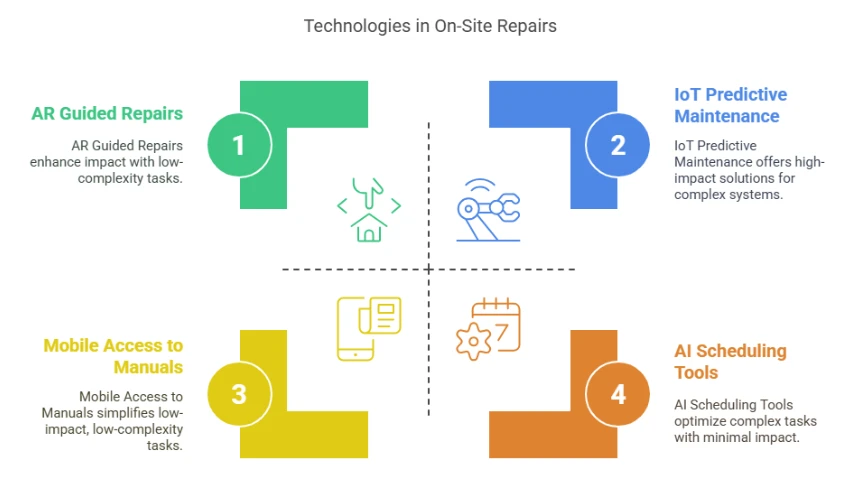
Key Technologies Revolutionizing On-Site Repairs
1. Internet of Things (IoT)
The IoT has turned traditional repairs into proactive solutions. Devices fitted with sensors deliver real-time data about their performance. These insights allow technicians to address issues before they lead to breakdowns, reducing downtime and costs.
Benefits of Field Services
- Predictive maintenance reduces unexpected failures.
- Technicians can solve problems remotely through diagnostics.
- Less reliance on guesswork, and faster resolutions.
2. Augmented Reality (AR) and Smart Tools
Augmented reality tools help technicians visualize repairs and troubleshoot efficiently without needing extensive physical resources.
Example
AR glasses can overlay wire schematics directly on machinery, guiding workers step-by-step. This is particularly useful in on-site mechanical tasks, such as adjusting intricate machinery systems.
Pro Tip: Invest in AR training programs for your team. They improve skills and speed up repair times.
3. Mobile Technology
Mobile apps are becoming indispensable. Technicians can access manuals, work orders, and service records from smartphones or tablets.
Enhanced Workflow
- Location-based job alerts help technicians prioritize tasks.
- Instant access to digital documentation saves time.
- Paperless billing ensures quicker payments and reduces errors.
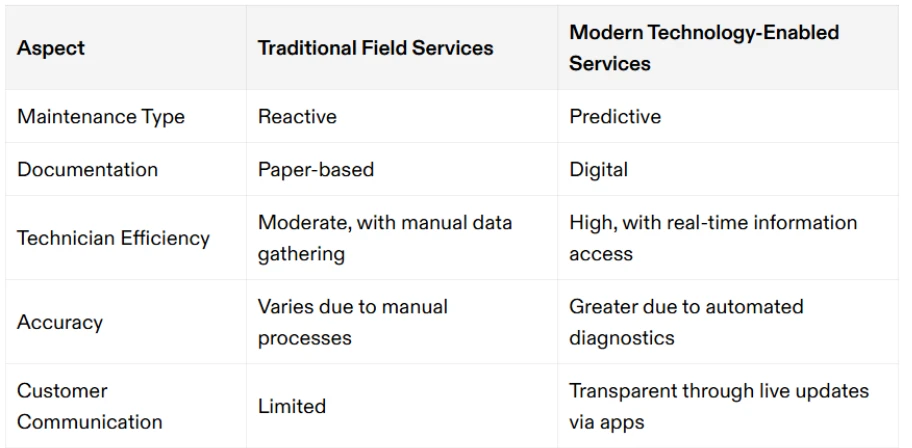
Comparison Table: Traditional vs. Technology-Driven Field Services
4. Artificial Intelligence (AI) and Automation
AI is the backbone of many field service advancements. From scheduling tasks to diagnosing system issues, automation ensures a seamless repair process.
How AI Enhances Electrical Services
- AI can predict electrical system inefficiencies based on historical data patterns.
- Smart notifications alert technicians about potential hazards.
- Automated scheduling tools help assign the best person for the job.
Note: While implementing AI, focus on systems with user-friendly interfaces to ensure smooth adoption by field operators.
Benefits for Electrical Field Services and On-Site Mechanical Repairs
Modern technology has significantly impacted these niches. Here’s how:
For Electrical Field Services
- Improved Safety: Connected machinery warns technicians about live wires or other hazards.
- Energy Efficiency: Smart systems identify energy wastage and suggest optimizations.
- Faster Diagnostics: Handheld diagnostic machines integrated with IoT provide instant results.
For On Site Mechanical Tasks
- Customized Tools: Devices tailored to monitor mechanical equipment streamline repair time.
- Remote Monitoring: Problems can be resolved without waiting for manual inspections.
- Enhanced Collaboration: AR and cloud platforms allow teams to work as one, even from different locations.
Challenges in Adopting Technology
While technology has made field services easier, challenges exist.
1. Initial Investments
Adopting tools like IoT sensors or AR equipment requires significant investment. It’s critical to look at the long-term ROI when making decisions.
2. Technological Training
Field service workers must adapt to operating smart technology. Companies are often hesitant due to additional training costs.
3. Cybersecurity Concerns
With an increase in connected devices, there’s a growing need for robust cybersecurity measures.
Pro Tip: Partner with cybersecurity firms when adopting IoT in-field services. Ensure all devices are encrypted and secured from potential threats.
Industry Trends That Shape the Future
Remote Services and Contactless Repairs
The pandemic accelerated the need for contactless diagnostics. Remote inspection tools, combined with AR, have become a standard.
Sustainability
Renewable energy systems integrate with field repairs. Electric vehicle charging station installations and solar panel maintenance are growing markets for electrical field service providers.
Advanced Workforce Tools
Wearable tech, like smart goggles or gloves, is making fieldwork safer while boosting productivity.
For predictions and market statistics, explore Mordor Intelligence's field service reports for in-depth data. For cybersecurity best practices in IoT, visit Cybersecurity & Infrastructure Security Agency (CISA).
Final Thoughts
Technological advancements are reshaping the field services industry. From predictive maintenance to AR-guided repairs, the future looks promising for technicians and clients relying on electrical field services.
To fully harness its advantages, businesses must overcome challenges like training costs and cybersecurity risks. However, the rewards far outweigh the hurdles when it comes to improved efficiency, lower operational costs, and happier customers.
Also Read: The Hidden Costs of Neglecting Motor Maintenance
FAQs
1. How does IoT improve field services?
IoT enables real-time monitoring of equipment through sensors, allowing technicians to predict and address issues before they escalate. This minimizes downtime and improves efficiency in tasks like diagnostics and maintenance.
2. Can augmented reality (AR) help with on-site mechanical repairs?
Yes, AR provides step-by-step visuals of the machinery, guiding technicians through complex repairs. It enhances accuracy and reduces the need for additional resources on-site.
3. What role does AI play in field services?
AI automates routine tasks like scheduling and diagnostics. It also analyzes historical data to predict system inefficiencies, ensuring swift and accurate repairs based on real-time insights.



























Sign in to leave a comment.