Introduction
The private cloud landscape is undergoing a significant transformation, driven by technological innovations, evolving business requirements, and lessons learned from early implementations. As organizations continue to seek the perfect balance between control, security, and agility in their IT infrastructure, private cloud solutions are evolving to incorporate emerging technologies and approaches that enhance their capabilities and value proposition. Understanding these trends is essential for IT leaders planning their infrastructure strategy and looking to maximize the long-term benefits of private cloud.
While traditional private cloud implementations focused primarily on virtualization and basic self-service capabilities, the next generation of private cloud incorporates advanced technologies like artificial intelligence, containerization, edge computing, and automation. These innovations are reshaping private cloud architectures and capabilities, enabling organizations to address new use cases and achieve greater value from their infrastructure investments.
What is Private Cloud Services?
Private cloud services provide cloud computing capabilities exclusively for a single organization. Unlike public cloud services where infrastructure is shared among multiple customers, private cloud offers dedicated resources with enhanced security, control, and customization capabilities. Private cloud delivers essential cloud characteristics—on-demand self-service, broad network access, resource pooling, rapid elasticity, and measured service—within an environment dedicated to a single organization.
As private cloud continues to evolve, its definition is expanding beyond traditional on-premises implementations to include various deployment models such as hosted private cloud (in third-party facilities), virtual private cloud (isolated environments within public cloud platforms), and distributed private cloud that extends to edge locations. This evolution reflects the growing flexibility and sophistication of private cloud architectures as they incorporate new technologies and approaches.
Key Features
The future of private cloud is defined by several advanced features that represent significant evolution from earlier implementations:
- Containerization and Microservices: Support for container orchestration platforms like Kubernetes, enabling more efficient resource utilization and application portability.
- AI-Driven Operations: Artificial intelligence and machine learning capabilities that enhance automation, optimization, and predictive management of cloud resources.
- Edge Integration: Seamless extension of private cloud capabilities to edge locations, supporting distributed applications and data processing requirements.
- Advanced Automation: Sophisticated automation capabilities including infrastructure-as-code, CI/CD integration, and policy-based management.
- Hybrid by Design: Native integration capabilities with public cloud services, enabling true hybrid operations rather than isolated environments.
- Software-Defined Everything: Comprehensive software definition of all infrastructure components, including networking, storage, and security.
- Zero-Trust Security: Advanced security frameworks that implement continuous verification principles rather than perimeter-based approaches.
- Data Fabric Integration: Unified data management across distributed environments, enabling consistent data access, protection, and governance.
Benefits
These evolving capabilities deliver enhanced benefits for organizations adopting next-generation private cloud:
1. Increased Operational Intelligence
AI-driven operations enable smarter resource management, predictive maintenance, automated problem resolution, and continuous optimization. These capabilities significantly reduce operational overhead while improving reliability and performance, enabling IT teams to focus on innovation rather than routine management tasks.
2. Application Modernization Support
Modern private cloud provides the ideal platform for application modernization initiatives, supporting containerized applications, microservices architectures, and DevOps practices. This support accelerates development cycles and enables organizations to adopt modern application architectures while maintaining security and control.
3. Edge-to-Core Integration
The extension of private cloud to edge locations enables new use cases requiring local processing with centralized management. This integration supports applications with low-latency requirements, data sovereignty needs, or bandwidth constraints while maintaining consistent governance and security across all environments.
4. Enhanced Hybrid Capabilities
Next-generation private cloud seamlessly integrates with public cloud services, enabling true hybrid operations with consistent management, security, and governance. This integration allows organizations to place workloads in the optimal environment based on specific requirements while maintaining operational consistency.
5. Sustainability Improvements
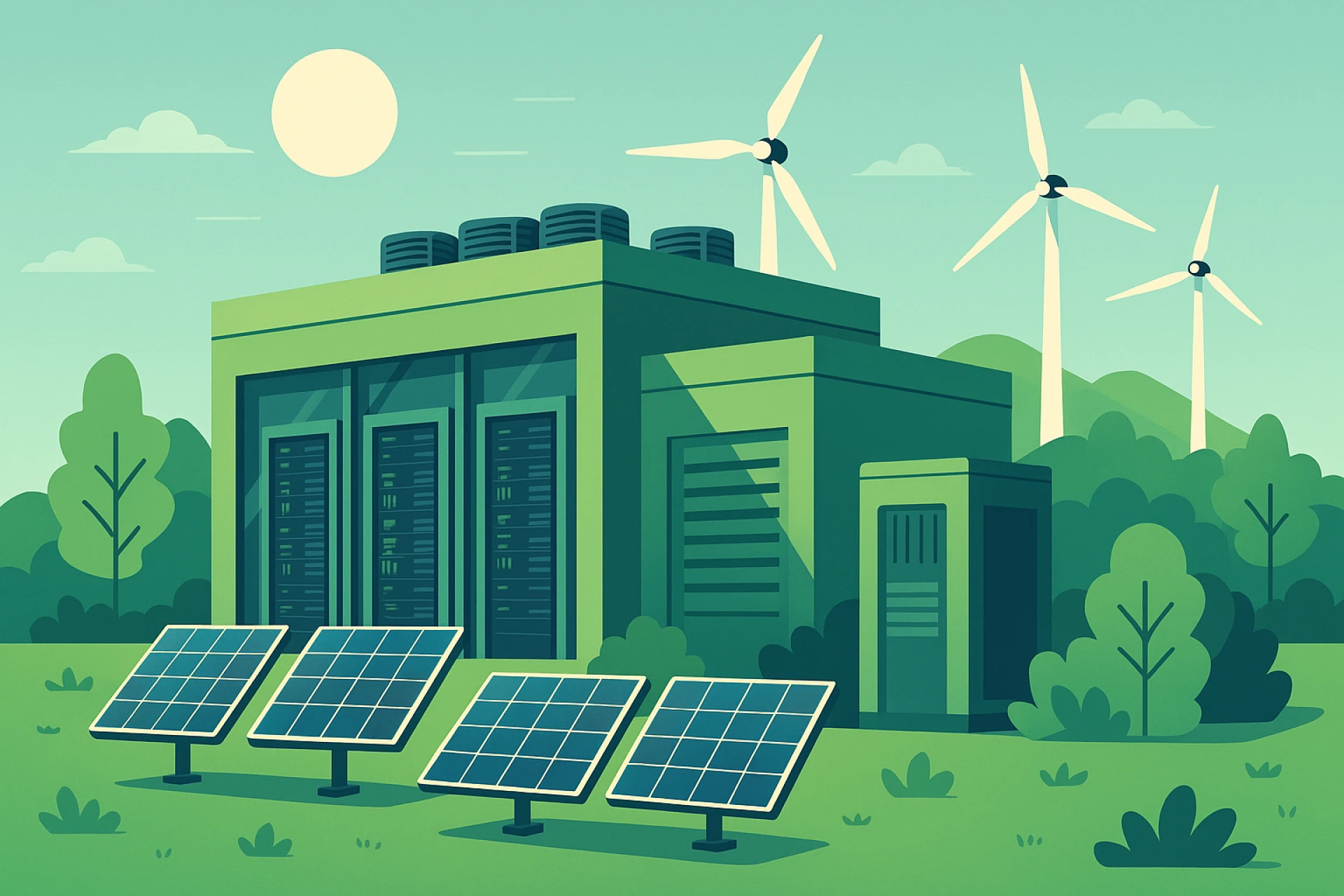
Advanced optimization capabilities, improved resource utilization, and energy-efficient designs help organizations reduce the environmental impact of their IT operations. These sustainability benefits align with growing corporate environmental responsibility initiatives while potentially reducing energy costs.
How It Works
The architecture of future private cloud environments typically incorporates several integrated layers:
- Infrastructure Foundation: Software-defined infrastructure components (compute, storage, networking) that provide the physical or virtual foundation for the cloud environment. These components increasingly feature specialized hardware for AI workloads, enhanced security, and improved efficiency.
- Containerization Layer: Container platforms and orchestration tools that provide efficient resource utilization and application portability. Kubernetes typically forms the core of this layer, surrounded by complementary tools for monitoring, security, and management.
- Data Management Layer: Unified data services that provide consistent access, protection, and governance across distributed environments. This layer enables seamless data movement between core data centers, edge locations, and public cloud environments.
- AI Operations Layer: Machine learning systems that continuously analyze performance, resource utilization, security events, and other operational data to provide insights, predictions, and automated actions that optimize the environment.
- Edge Integration Layer: Technologies that extend cloud capabilities to distributed edge locations while maintaining centralized management and governance. This layer enables consistent operations across geographically dispersed environments.
- Security Framework: Zero-trust security implementation that provides continuous verification, comprehensive encryption, microsegmentation, and identity-based access controls across all environments.
- Management and Orchestration: Advanced management platforms that provide unified visibility and control across the entire environment, from core data centers to edge locations and public cloud resources.
This integrated architecture enables organizations to manage distributed resources as a cohesive environment while supporting diverse application requirements and operational models.
Private Cloud VS Public Cloud
Future Aspect Evolving Private Cloud Evolving Public Cloud Consumption Model Increasing adoption of consumption-based pricing More predictable reserved capacity options Management Approach AI-driven automation reducing operational overhead More granular control options for enterprise customers Deployment Flexibility Extended to edge locations and specialized environments More dedicated hardware options and isolated environments Sovereignty Solutions Enhanced data sovereignty controls Emerging sovereign cloud offerings in various regions Specialized Hardware Growing support for GPUs, FPGAs, and purpose-built processors Similar specialized hardware but with multi-tenant usage Security Implementation Zero-trust architectures with continuous verification Similar evolution toward zero-trust but with shared infrastructure Sustainability Focus Organization-controlled efficiency improvements Provider-driven sustainability initiatives Operational Intelligence Customer-controlled AI operations Provider-managed AI operations with limited customization Development Integration Increasing integration with development pipelines Native development platforms with standardized approaches
Security in Cloud
Security approaches in private cloud are evolving to address emerging threats and changing operational models:
Zero-Trust Implementation
- Continuous verification replacing traditional perimeter-based approaches
- Identity-based access controls for all resources
- Micro-segmentation isolating applications and data flows
- Comprehensive encryption across all environments
AI-Enhanced Security
- Machine learning for threat detection and anomaly identification
- Automated response to potential security incidents
- Predictive security analytics identifying emerging risks
- Continuous compliance verification and reporting
DevSecOps Integration
- Security embedded throughout the development lifecycle
- Automated security testing and validation
- Policy-as-code implementing consistent security controls
- Security telemetry integrated with development feedback loops
Distributed Security Architecture
- Consistent security implementation across core, edge, and cloud environments
- Centralized policy management with distributed enforcement
- Context-aware security adapting to different environments
- Secure connectivity between distributed components
Quantum-Ready Security
- Preparation for post-quantum cryptography
- Cryptographic agility enabling algorithm updates
- Quantum-resistant encryption for sensitive data
- Forward secrecy protecting against future decryption
These evolving security capabilities enable organizations to maintain robust protection for their data and applications even as environments become more distributed and application architectures more complex.
Choosing the Right Provider
As private cloud continues to evolve, selecting a forward-looking provider becomes increasingly important. Sify Technologies stands out for its vision and capabilities in next-generation private cloud:
Why Sify Technologies?
Sify Technologies offers several advantages for organizations looking toward the future of private cloud:
- Innovation Focus: Continuous investment in emerging technologies and approaches that enhance private cloud capabilities through Cloud Infinit solutions.
- Edge Capabilities: Comprehensive edge computing strategy and solutions that extend private cloud to distributed locations.
- AI Operations: Advanced AIOps implementations that enhance automation, optimization, and predictive management.
- Containerization Expertise: Deep experience with container platforms and orchestration, enabling modern application architectures.
- Hybrid Integration: Robust capabilities for integrating private cloud with public cloud services, creating cohesive hybrid environments.
- Security Evolution: Forward-looking security implementations incorporating zero-trust principles and advanced protection measures.
- Sustainability Initiatives: Comprehensive approach to improving the energy efficiency and environmental impact of cloud infrastructure.
Sify's approach to the future of private cloud focuses on creating agile, intelligent, and secure environments that can adapt to evolving business requirements while maintaining the security and control advantages that make private cloud valuable.
Conclusion
The future of private cloud represents a significant evolution from early implementations, incorporating advanced technologies and approaches that enhance capabilities while addressing traditional limitations. As containerization, artificial intelligence, edge computing, and zero-trust security reshape private cloud architectures, organizations gain new opportunities to leverage private cloud for modern use cases while maintaining the security and control that drove initial adoption.
Rather than being replaced by public cloud, private cloud is evolving alongside it, with each model addressing different requirements and use cases. Many organizations will continue to leverage both approaches in hybrid environments, placing workloads in the most appropriate environment based on specific needs while maintaining consistent management and governance across their infrastructure landscape.
As technology continues to evolve, private cloud will likely become increasingly distributed, intelligent, and automated—extending from core data centers to edge locations and specialized environments while providing the security, control, and performance needed for mission-critical applications. Organizations that embrace this evolution position themselves to derive maximum value from their infrastructure investments while supporting innovation and growth.
FAQs
1. How is containerization changing private cloud architectures?
Containerization is transforming private cloud by providing more efficient resource utilization, greater application portability, and support for microservices architectures. Kubernetes and related technologies are becoming core components of modern private cloud implementations, enabling organizations to modernize their applications while maintaining security and control.
2. What role will AI play in future private cloud operations?
Artificial intelligence will become increasingly central to private cloud operations, enabling predictive maintenance, automated optimization, intelligent resource allocation, and enhanced security. These capabilities will significantly reduce operational overhead while improving reliability and performance, allowing IT teams to focus on innovation rather than routine management.




























Sign in to leave a comment.