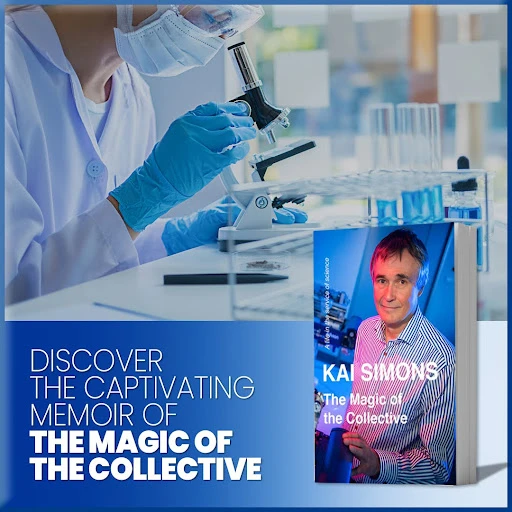

Recent years have seen tremendous progress in molecular biology, the study of biological processes at the molecular level, thanks to interdisciplinary collaborations and state-of-the-art tools. The study of molecular biology has enormous potential to transform healthcare, advance biotechnology, and solve urgent global issues in the future. Here, we examine new trends and avenues for molecular biology research, taking inspiration from the life and work of renowned scientist Kai Simons, as portrayed in "The Magic of the Collective: A Life in the Service of Science."
If you wish to learn more about science and a life spent in this field, get your copies of "The Magic of the Collective: A Life in the Service of Science" by Kai Simons, from Amazon now.
Harnessing the Power of Genomics
High-throughput sequencing technologies are driving genomics advances that are changing our understanding of genetics and disease. Genomic research has enormous promise to change healthcare, from identifying the genetic causes of complicated disorders to developing tailored therapy techniques. The groundbreaking research on membrane biology by Kai Simons emphasizes how crucial genomic knowledge is for understanding cellular processes and disease routes.
Exploring the Microbiome
Molecular biology research has turned its attention to the billions of bacteria that live in our bodies, known as the human microbiome. Comprehending the function of the microbiome in both well-being and illness presents prospects for creating innovative treatments and measures. Simons\' multidisciplinary research methodology emphasizes how crucial it is to examine intricate biological systems, like the microbiome, in order to understand their functional value.
Advancements in Single-Cell Analysis
Recent developments in single-cell analysis tools are fundamentally changing how we think about the dynamics and heterogeneity of cells. Scientists are able to discover new cell kinds and understand intricate biological processes by analyzing individual cells at a resolution never before possible. In order to fully understand the complexity of molecular biology, Simons\' emphasis on interdisciplinary collaboration highlights the significance of combining several approaches, particularly single-cell research.
CRISPR-Cas9 and Genome Editing
The discovery of the CRISPR-Cas9 genome editing system has transformed molecular biology research by making precise genome manipulation possible with previously unheard-of efficiency. CRISPR-based technologies have exciting opportunities in the fields of agricultural biotechnology, disease modeling, and gene therapy. The innovative leadership of Simons emphasizes how crucial it is to welcome technology developments in order to spur molecular biology research.
Artificial Intelligence and Big Data Analytics
Big data analytics and artificial intelligence (AI) together have the potential to completely transform molecular biology research through data-driven discovery, personalized medicine, and predictive modeling. Through the application of AI algorithms to the analysis of large datasets, researchers can find previously unnoticed patterns and insights that have profound consequences for biotechnology and healthcare. Using computational tools to explore complicated biological concerns is important, as demonstrated by Simons\' dedication to interdisciplinary collaboration.
With the advent of this new sector in molecular biology research, there are countless potential for creativity and advancement. Through the use of novel technologies, the promotion of multidisciplinary teamwork, and the resolution of worldwide issues, scientists can gain fresh perspectives on the molecular underpinnings of life and clear the path for a more promising future. Motivated by the enterprising attitude of Kai Simons and his commitment to expanding scientific understanding, we find ourselves in a position to influence the direction of molecular biology and its influence on the community.
























Sign in to leave a comment.