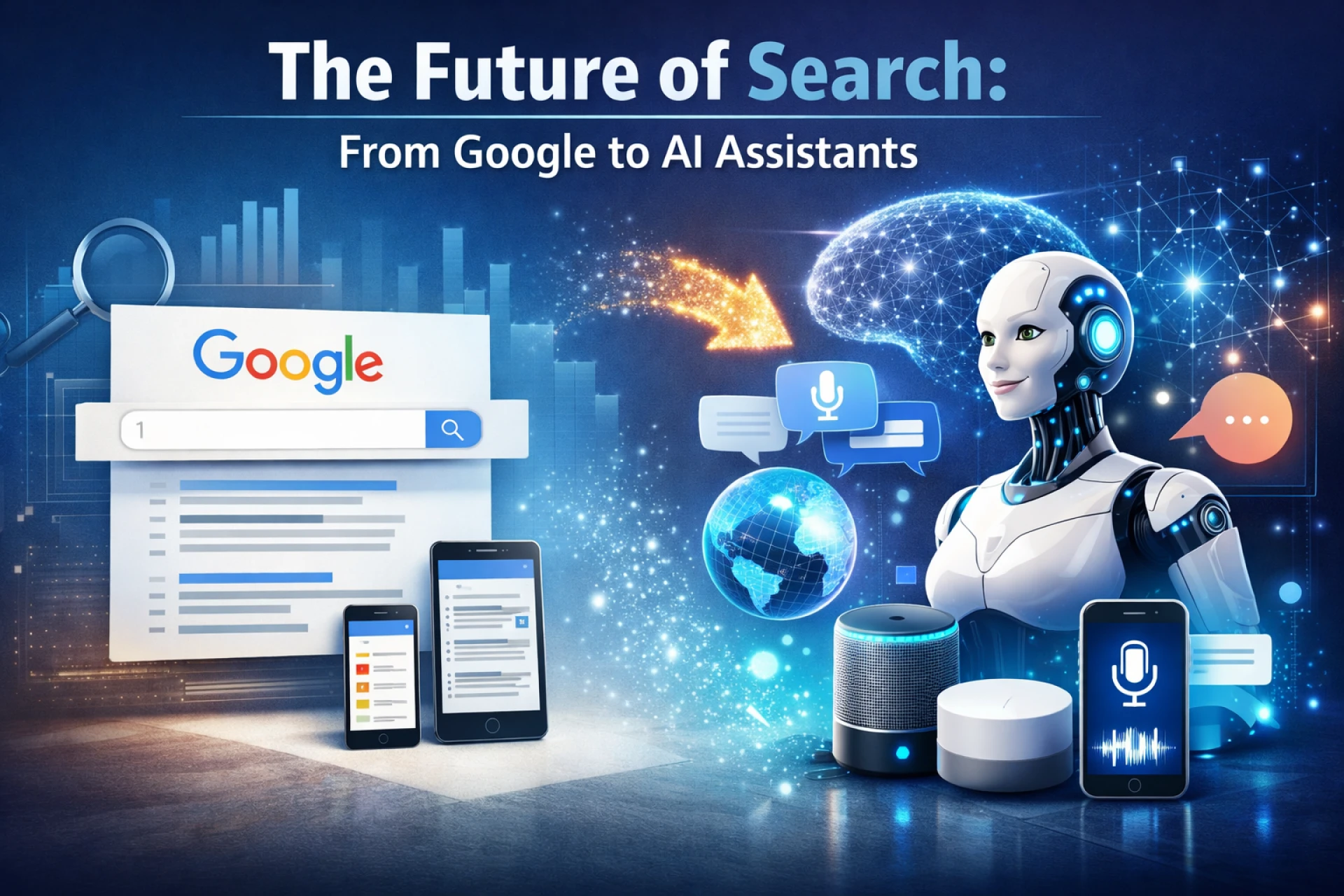

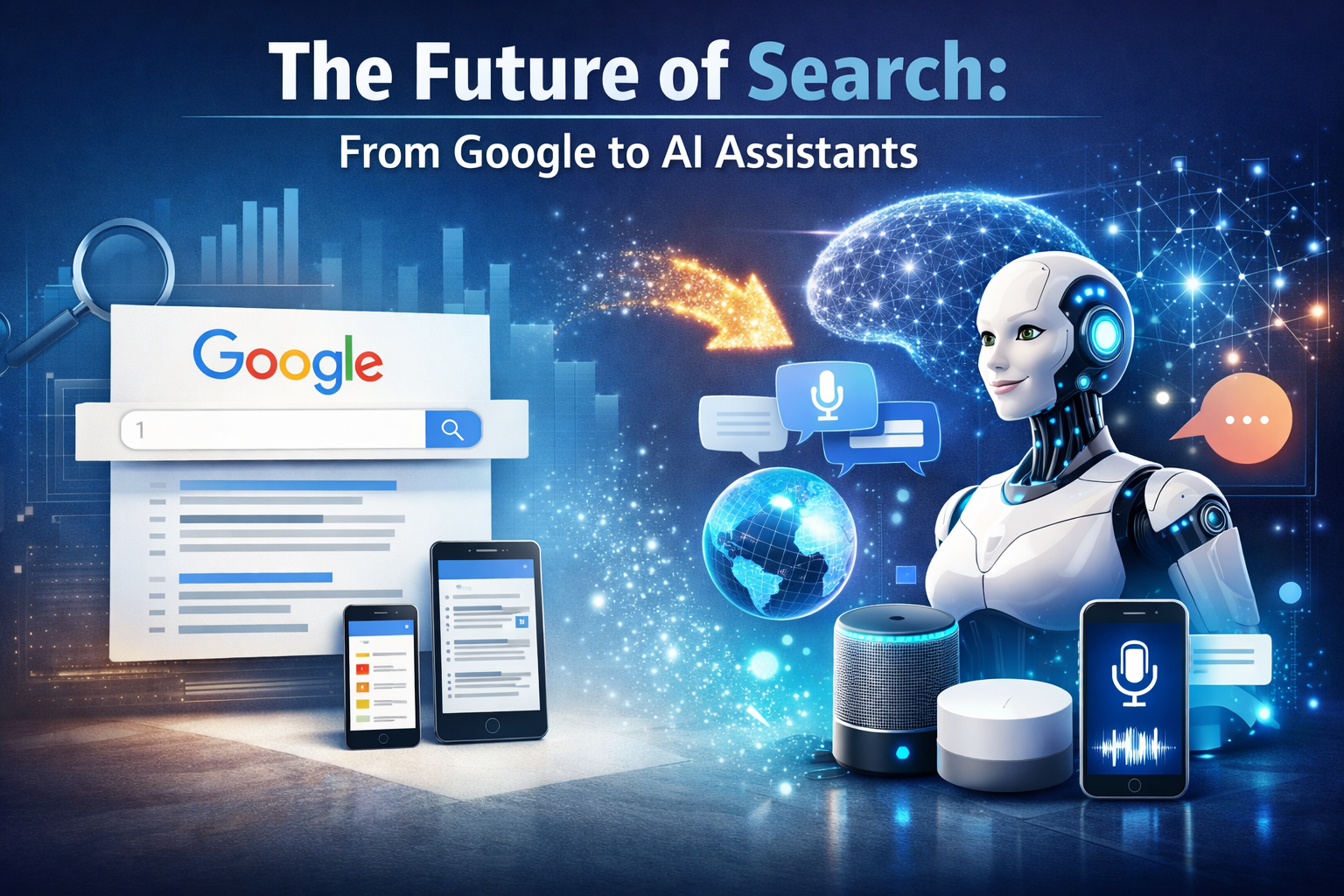
Search has changed dramatically over the past decade. Earlier, people used search engines like Google to type a few keywords, browse multiple websites, and find information manually. Today, the way people search for information is rapidly evolving. Artificial intelligence, voice assistants, and large language models are transforming how users discover information online. The future of search is no longer just about search engines, it is about AI assistants that provide direct answers, recommendations, and solutions.
The Shift from Traditional Search
Traditional search engines work by crawling websites, indexing pages, and ranking them based on hundreds of ranking factors like keywords, backlinks, and content quality. Users search, see a list of links, and then click on different websites to find their answers.
However, AI-powered search works differently. Instead of showing only links, AI assistants provide direct answers, summaries, and recommendations. This reduces the need for users to visit multiple websites. Platforms like AI chat assistants and voice search tools are already changing user behavior significantly.
According to recent digital marketing reports, more than 40% of younger users prefer AI-based search or voice assistants for quick answers instead of traditional search engines. This shows a major shift in how people consume information online.
AI Assistants Are Changing User Behavior
AI assistants understand user intent better than traditional search engines. Instead of matching keywords, AI understands context, conversation, and user intent. This means websites now need to focus more on content quality, authority, and relevance rather than just keywords.
For example, when someone asks an AI assistant a question, it does not show 10 blue links like a search engine. Instead, it generates a single structured answer by collecting information from multiple sources. This means only trusted and authoritative websites are likely to be referenced in AI-generated answers.
This is why businesses and websites need to start optimizing for AI search visibility, not just traditional SEO. Many companies are now focusing on ai seo services to ensure their content is visible not only on search engines but also in AI-generated responses and recommendations.
Content and Authority Will Matter More
In the future of search, content will still be important, but the type of content that ranks will change. Informational, helpful, and experience-based content will perform better than keyword-stuffed content.
Search engines and AI tools are now focusing on:
- Helpful content
- Author expertise
- Website authority
- Brand mentions
- User engagement
- Content relevance
- Structured information
Websites that provide real value, data, insights, and practical information will perform better in both search engines and AI search platforms.
Voice Search and Conversational Search
Another major part of the future of search is voice search. People are increasingly using voice assistants to search for local businesses, ask questions, and get recommendations.
Voice searches are usually longer and more conversational, which means businesses need to optimize content for questions, long-tail keywords, and conversational content. FAQ pages, guides, and blog posts will become even more important in the coming years.
The Role of SEO in the Future
SEO is not disappearing; it is evolving. The future of search will combine:
- Traditional SEO
- Content marketing
- Brand building
- Technical SEO
- AI search optimization
- User experience
- Entity and topical authority
Websites that build strong authority, publish helpful content regularly, and maintain good technical performance will continue to grow their visibility.
Conclusion
The future of search is moving from traditional search engines to AI assistants and conversational search platforms. Users now want direct answers, personalized results, and faster information. This means businesses and website owners must adapt their strategies to focus on content quality, authority, user intent, and AI search visibility.
Search is no longer just about ranking on Google, it is about being visible wherever users search for information, whether on search engines, voice assistants, or AI platforms. Companies like BGBility are already focusing on AI-driven SEO strategies to help businesses stay visible in this changing search landscape. Businesses that adapt early to these changes will have a strong advantage in the future digital world.




























Sign in to leave a comment.