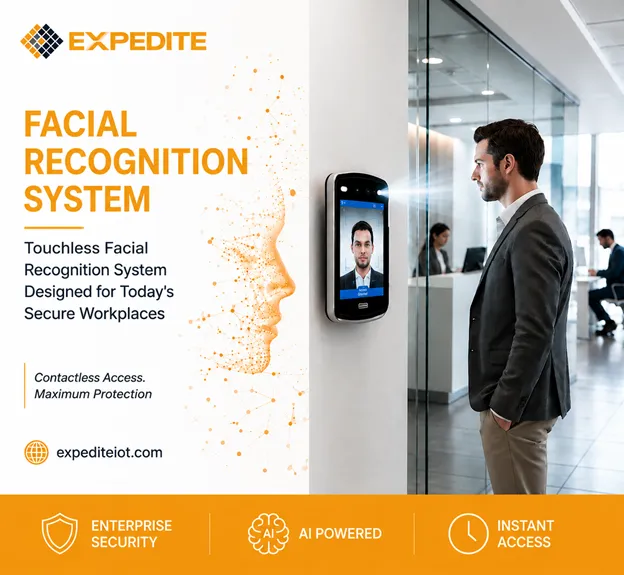

The next chapter of building security in Qatar is being written by the Facial Recognition System, a technology that is quietly retiring the badge, the fob, and the PIN pad across Doha's towers, transit hubs, and government facilities. Where a card only proves possession, a verified face proves presence — and that distinction is reshaping what "secure access" means for a country investing heavily in its digital future. 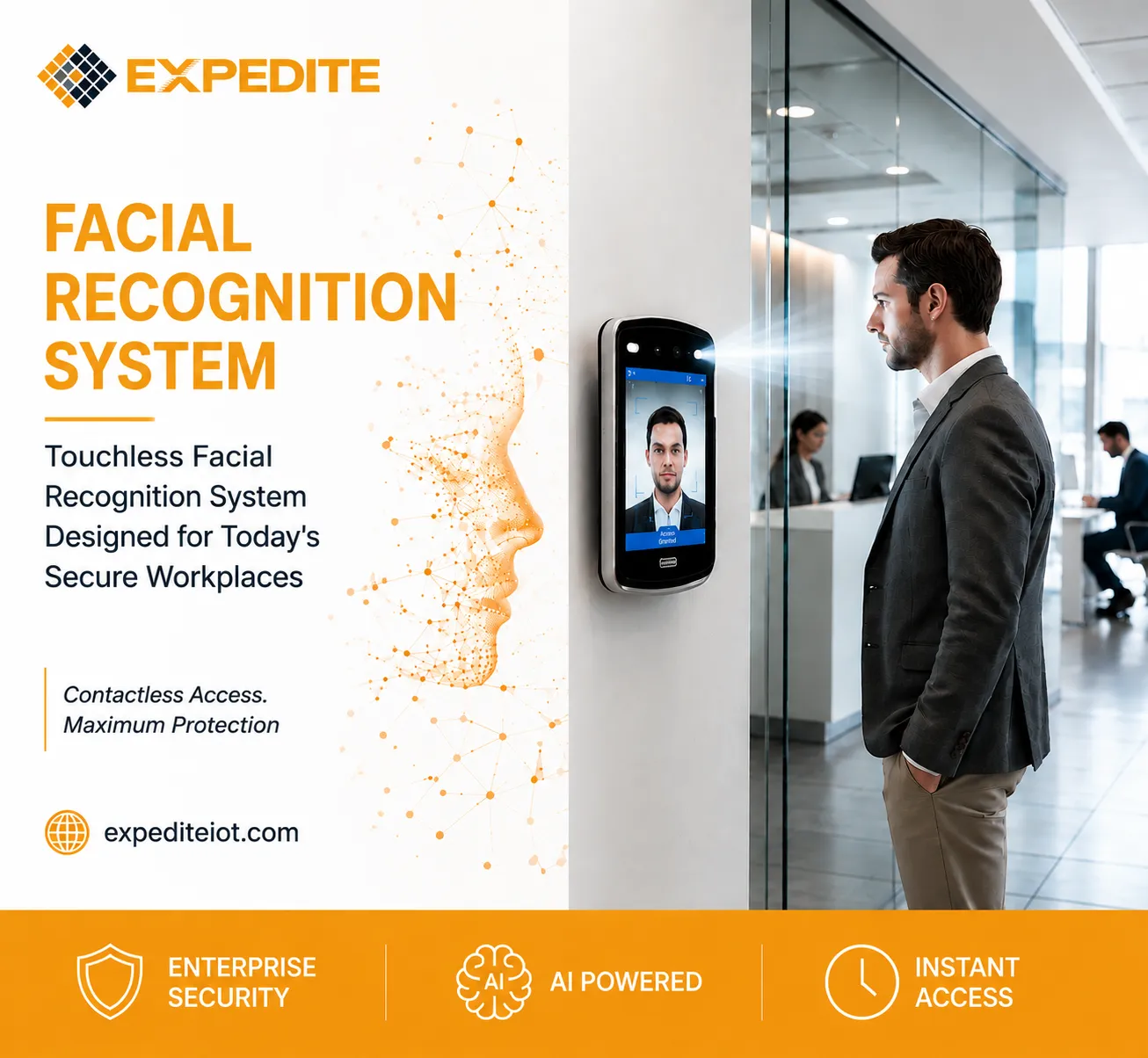
This guide looks ahead at where facial verification is heading across Qatar, the core capabilities that separate a future-ready platform from a basic camera add-on, and how organizations in Doha and beyond can start building toward that future today.
Why Secure Access in Qatar Is Moving Toward Facial Verification
Qatar has invested heavily in world-class infrastructure and smart-building technology over the past decade, and identity verification is quickly becoming the connective tissue that ties it all together. A badge or PIN code can be lost, duplicated, or handed to someone else without anyone noticing; a face cannot. As Doha pushes toward increasingly automated, data-driven building operations, the ability to verify a real person in real time — not just a credential — has become the missing piece that legacy access systems were never built to provide.
The direction of travel is clear: fewer physical tokens, faster verification, and tighter integration between the door and the rest of a building's digital infrastructure. Organizations planning security investments today are increasingly choosing platforms built for that trajectory rather than retrofitting yesterday's card systems.
Facial Recognition Access Control: The Credential That Can't Be Shared
At the center of this shift is Facial Recognition Access Control, which grants or revokes entry based on a verified identity rather than an object someone happens to be carrying. Permissions update instantly across every door the moment an administrator changes them, with no physical reissue, no waiting, and no risk of a former employee's old badge still opening a door months after they've left the company.
In multi-tenant towers — a defining feature of Doha's skyline — this model also scales cleanly. One enrolled profile can carry different permissions across different floors and buildings, replacing the tangle of card types that multi-tenant properties have historically had to manage.
Face Detection: Where Every Verification Begins
Long before a system can confirm who someone is, it first has to notice that a face is there at all. Face Detection is that opening step — locating a face within the camera's frame, tracking it as the person approaches, and passing a clean image forward for the next stage. In busy lobbies with constant foot traffic, detection quality under pressure is what determines whether the rest of the system performs reliably or stumbles from the very first frame.
Facial Identification: Matching a Face to the Right Record
Once a face is detected, Facial Identification searches an enrolled database to determine whose face it is — the process behind watchlist screening at a secure entrance or simply matching an employee to their access profile. As enrollment databases grow into the thousands at large Doha venues and transit interchanges, this stage needs to stay fast and precise at scale, not just in a small pilot.
Facial Authentication: A One-to-One Check for High-Stakes Moments
Facial Authentication asks a narrower, sharper question — not "who is this?" but "is this really the person they claim to be?" That one-to-one check underpins use cases like approving a financial transaction, unlocking a personal device, or confirming access to an individually assigned office, where certainty about a single identity matters more than searching a wide database.
Facial Recognition Device: Hardware Ready for What's Next
The intelligence behind facial verification is only as good as the hardware capturing the image. A future-ready Facial Recognition Device needs a wide dynamic-range camera and adaptive infrared illumination to handle Doha's bright, glass-fronted lobbies without losing accuracy, alongside a design robust enough to handle years of continuous, high-volume use at a corporate entrance or transit gate.
- Wide dynamic-range camera performance for glare, glass reflections, and variable daylight.
- Sub-second matching to keep pace with peak-hour foot traffic.
- Reliable recognition through masks, sunglasses, and headscarves.
- Rugged, tamper-resistant housing built for continuous high-volume use.
- Offline caching so permissions still enforce correctly during a network drop.
Facial Recognition Software: The Engine Driving Long-Term Accuracy
Hardware captures the image; Facial Recognition Software decides what it means. Deep-learning models running at the edge distinguish a live person from a printed photo or replayed video, applying anti-spoofing and liveness checks in the background without slowing down a legitimate user's entry. Because this software layer can be updated over time, a well-built platform keeps improving years after installation rather than freezing in place at day one.
Facial Recognition Solution: Looking Beyond the Camera Alone
Organizations planning for the future should evaluate the complete Facial Recognition Solution — not just the reader on the wall. That means how it connects to access control, visitor management, and building-management systems already in place, how enrollment scales across a growing workforce, and how the platform will evolve as new integrations and capabilities emerge. A camera that can't grow with the building it protects becomes tomorrow's legacy problem.
Facial Recognition System Qatar: Building Toward a Compliant Future
A forward-looking Facial Recognition System Qatar deployment is designed with compliance built in from day one — aligned with Qatar's national data protection guidance governing biometric data, with consent and retention policies that won't need reworking as regulations mature. Bilingual Arabic-English enrollment is a baseline expectation for an international workforce, not an afterthought.
Facial Recognition System Doha: Setting the Pace for the Country
As Qatar's capital and its center of commercial, government, and financial activity, Doha is often where national facial-verification standards get set first. A Facial Recognition System Doha deployment benefits from local partners who understand the city's mix of high-rise offices, government complexes, and hospitality venues, and who can tune hardware and enrollment workflows for real conditions on the ground rather than a one-size-fits-all specification.
How Expedite IoT Is Building the Future of Access in Qatar
Expedite IoT has spent years engineering physical security infrastructure for corporate, hospitality, retail, and government clients across Qatar and the wider Gulf. Our engineering team pairs certified integration experience with a close read of where Qatari regulation and building technology are both heading, so today's deployment doesn't become tomorrow's replacement project.
Organizations planning ahead can review our full facial recognition device solution for Saudi Arabia, Qatar, and Oman to see supported hardware, integration options, and deployment case studies from clients across the region.
Our deployments integrate facial verification with existing CCTV, visitor management, and building-management infrastructure, so organizations gain a unified identity layer without discarding equipment already in place. Every project includes local onboarding, staff training, and ongoing technical support.
For a closer look at how our biometric identity verification platform handles enrollment, liveness checks, and multi-site permission management, explore the dedicated solution page linked above.
Clients who have deployed our platform report faster lobby throughput during peak hours, fewer credential-sharing incidents than card-only systems, and confident rejection of spoofing attempts that legacy readers would have missed.
Why the Right Vendor Matters for a Long-Term Security Investment?
A facial recognition deployment is meant to serve a building for years, so vendor selection deserves scrutiny beyond a feature checklist. Ask how long a prospective integrator has worked in the Qatari market specifically, request references from comparable deployments, and confirm how firmware updates, warranty support, and biometric data governance are handled well after the ribbon-cutting.
A partner with documented deployment history, relevant certifications, and a locally available support team is far more likely to keep a system accurate and current for years, rather than one that only impresses during the initial demo.
Integrating Facial Recognition into a Connected Future
The strongest deployments don't treat the door as an isolated checkpoint. Connecting facial verification to elevator dispatch lets a cabin arrive the moment a tenant is recognized in the lobby. Connecting it to visitor management matches a pre-registered guest's face against their scheduled appointment automatically. Connecting it to fire and emergency systems means an accurate, real-time headcount is available the instant it's needed.
This kind of interoperability is increasingly the baseline expectation across Doha's premium commercial developments, where tenants and property managers alike want one coordinated security experience rather than a collection of systems that don't talk to each other.
Emerging Trends Shaping the Next Generation of Facial Verification
The technology continues to evolve quickly. Multimodal verification — combining facial recognition with voice, gait, or mobile-device signals — is beginning to appear in pilot deployments across premium developments, adding redundancy so a system doesn't depend on a single biometric signal alone. On-device learning is also improving, allowing platforms to adapt to a specific site's lighting and traffic patterns over time rather than relying solely on a static factory-trained model.
Privacy-preserving architectures are advancing in parallel, with some platforms now able to perform matching without ever storing a raw facial image, instead retaining only an encrypted mathematical template — a design choice that matters increasingly to Qatari organizations balancing strong security with growing attention to biometric data handling.
Getting Ready: Best Practices for a Future-Proof Rollout
- Pilot at one high-traffic entrance first to validate lighting and mounting before a full rollout.
- Pair facial verification with mobile or card credentials for visitors and staff still being enrolled.
- Build consent language that satisfies Qatar's data protection requirements from the outset.
- Plan for periodic firmware and model updates rather than treating installation as a one-time event.
- Review access logs regularly so permissions stay aligned with current staff and visitor roles.
Organizations that treat facial verification as an evolving capability — not a fixed installation — are the ones best positioned for whatever comes next.
Conclusion
The future of secure access in Qatar runs through the Facial Recognition System, built on reliable Facial Recognition Access Control, accurate Face Detection and Facial Identification, and secure Facial Authentication. A rugged Facial Recognition Device paired with capable Facial Recognition Software forms the foundation of a complete Facial Recognition Solution. Organizations building a Facial Recognition System Qatar or Facial Recognition System Doha deployment today are the ones best positioned for tomorrow.






























Sign in to leave a comment.